Not wanting a space at meals or photos
A temporary tooth can help, but ask whether it is fixed or removable, what role it plays during healing and which foods it rules out. Those details shape daily life more than the label does.


The real question at the dinner table is whether you can eat with it. From Brampton, talk with us about when an implant tooth may be fitted, when it can start chewing, and why those two moments are often weeks or months apart.
That one question sorts out most of the confusion around immediate implants. A tooth may be fitted soon after the implant goes in, but fitting it and using it to chew are separate milestones. Clinicians call the first restoration and the second loading, and an immediate plan can involve one, both or neither.
There is also immediate placement, which means the implant goes into the socket during the same visit the old tooth is removed. Underneath it all, the implant is a support that has to become firmly joined to the bone. Until that happens, any tooth attached to it is usually a provisional with clear rules about food and pressure.
For households in Brampton juggling shared meals and busy weeks, it helps to know those rules early. Ask which step is described as immediate, what has to be confirmed before it happens, what the alternative would be, and how many appointments come after the first.
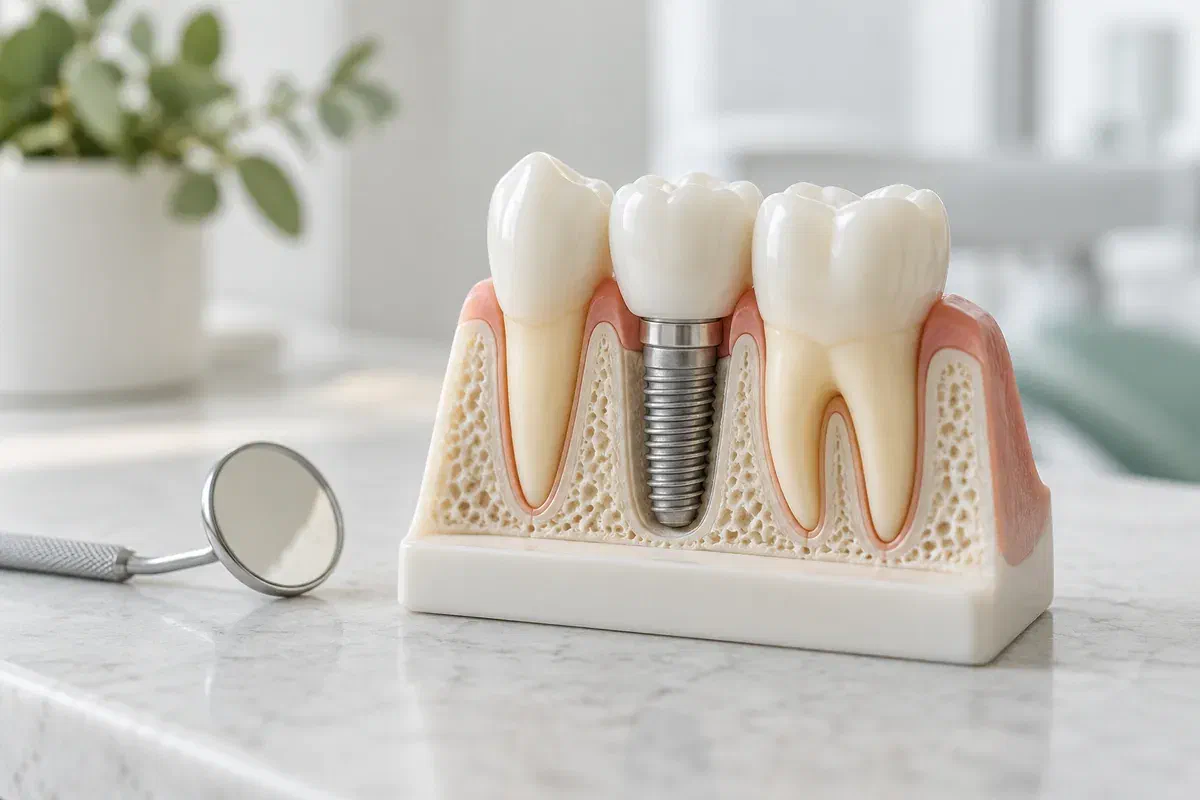
People tend to want different things from an immediate approach. Be clear whether you mainly care about the gap, the number of procedures, or getting back to normal eating.
A temporary tooth can help, but ask whether it is fixed or removable, what role it plays during healing and which foods it rules out. Those details shape daily life more than the label does.
Merging extraction and placement can trim the early part of treatment. Healing checks, impressions, fittings and the final tooth usually remain, so ask what disappears from the plan and what does not.
If one plan says immediate placement and another says immediate loading, they are talking about different events. Asking for both in plain steps makes them much easier to compare.
Nothing about the final tooth should be promised as immediate until the site and the planned restoration have been checked. Assessment and conditions found decide the timing.
For certain carefully chosen sites, joining stages or attaching a suitable early tooth can be a reasonable part of treatment. Any benefit should be explained for your own mouth, with the conditions required and the eating restrictions that would come with it.
Talk about risks and alternatives as well. The stability of the implant, the health of gum and bone, the restoration’s design and your general health all affect what is suitable. Ask what would point toward waiting longer, and what might cause the clinician to alter the plan.
Patient information: International Team for Implantology — implant placement and loading protocols
A provisional may look complete and still be off limits for biting. Once you understand why, the food rules feel less arbitrary and are easier to keep.
Think about family meals, events, work and review visits against the actual stages. Ask which dates are estimates and which depend on what treatment and healing reveal.
If the immediate step is not suitable on the day, an agreed alternative explains how the gap and the site will be managed. That makes for clearer consent than a plan that assumes everything goes perfectly.
An assessment should name both the proposed timing and its conditions. If more than one clinician is involved, ask who places the implant, who makes the tooth, and how they keep each other informed.
Your mouth is examined, your health and any medications are discussed, and suitable images are taken. If the tooth is still in place, its diagnosis and prospects come before any decision to remove it.
The plan lists extraction if relevant, implant placement, the provisional and the final tooth. It also says when you may start chewing on the area and what findings each step relies on.
What the clinician finds can rule out an immediate step. The fallback should be explained in advance, and the plan reassessed rather than carried through simply to keep to the calendar.
Reviews confirm readiness for later stages. Even with an early tooth, the provisional may need replacing, and further records and a fitting usually come before treatment is complete.
Your advice depends on the procedure and the tooth you received. Keep the written instructions in the kitchen or on your phone, and ask about anything unclear before getting back to your usual habits.
Choose softer foods and chew on the other side if advised. Hard, sticky or crunchy foods can put force where it is not wanted, and a fixed provisional is not designed to take the bite of a final tooth.
Ask how to brush and rinse near the implant and how to care for any provisional or removable tooth. Expect your routine to change over time, and confirm when each new step can start.
Come to every follow-up visit, even when things feel fine. Call about unexpected movement, increasing discomfort or anything your instructions list, so the implant and tooth can be checked.
These answers put timing terms into everyday expectations. Your own plan should list which steps are proposed and what has to be confirmed first.
Come in to our Bronte Street practice and sit down with the team about the tooth you are losing and when a replacement could realistically be used. We will hear your priorities first, then walk through what has to be examined before an immediate or staged approach can be recommended.
Bring any earlier proposals or images, and tell us whether eating, appearance or the schedule is the thing you most want answered.
