No visible space, even briefly
Ask about the type of temporary tooth on offer. Fixed and removable options look and behave differently, and both come with rules about biting, especially on front teeth used for tearing food.


A front tooth can’t be saved, and the first worry is the gap in your smile. From Burlington, you can sit down with us to learn whether a tooth could be fitted early, what it would be allowed to do, and what the full timeline still holds.
When the tooth in question sits at the front, the conversation tends to start with appearance. Will there be a space at work on Monday? Can something go in straight away? Those are fair questions, and the honest answer usually begins by explaining that immediate can describe more than one thing.
It might mean placing the implant into the socket on the day the tooth is taken out. It might mean connecting a tooth to the implant shortly after it goes in. The implant itself is a post in the bone that needs to heal; the tooth you see is fastened to it and can be temporary or final. A good-looking temporary is not necessarily one you can bite into.
If you are travelling from Burlington for this, we will help you separate the cosmetic goal from the healing goal. Ask what is planned for the day itself, what conditions have to be met, what the backup would be, and how many appointments follow before the permanent tooth is placed.
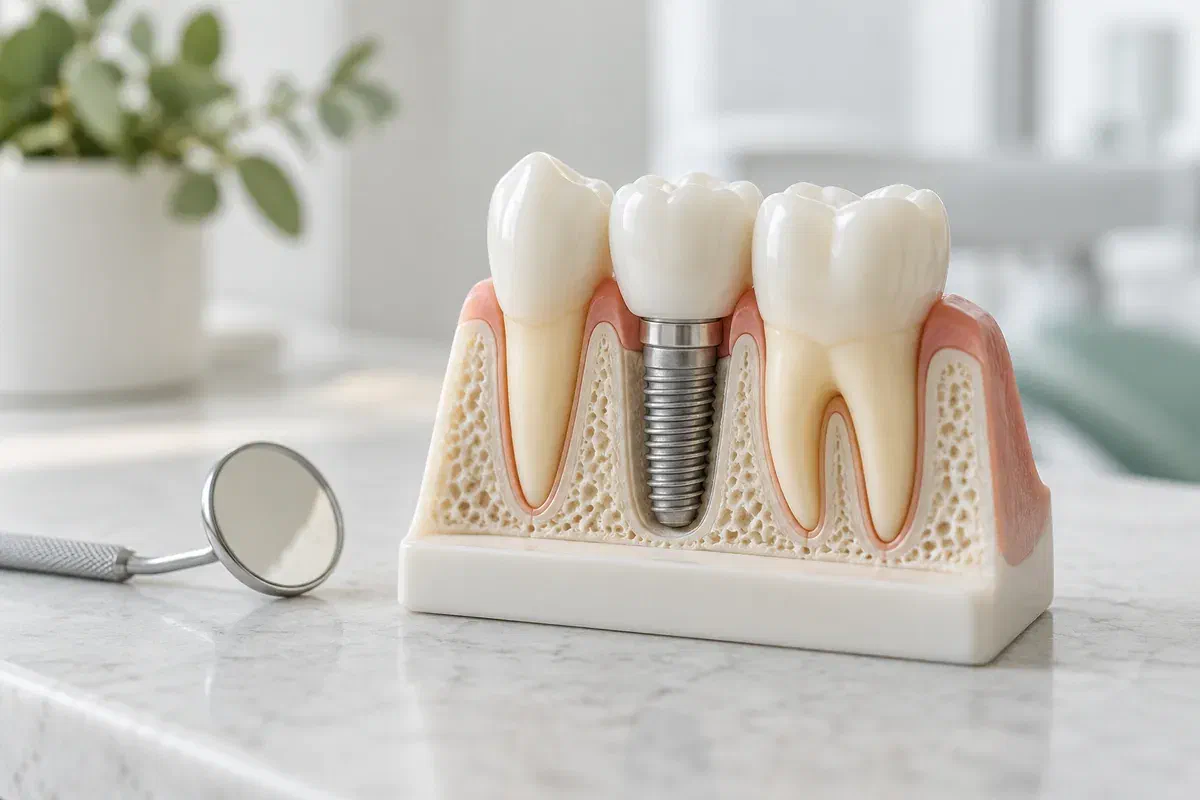
With a front tooth, appearance often leads, but other priorities matter too. Let the clinician know which concern weighs most so the plan can be explained around it.
Ask about the type of temporary tooth on offer. Fixed and removable options look and behave differently, and both come with rules about biting, especially on front teeth used for tearing food.
Combining extraction and placement may reduce one surgical step. It does not usually remove the reviews, impressions and fittings that lead to the permanent tooth, so ask what remains.
Have the plan described as placement, restoration and loading. Those words show exactly when the implant goes in, when a tooth goes on, and when that tooth may work.
An immediate final tooth should never be promised before the site and the restoration have been evaluated. Front-tooth plans in particular depend on gum and bone conditions found at assessment.
In suitable cases, combining stages or fitting an appropriate provisional soon after placement can be part of a careful plan. The likely benefit for your front tooth should be explained along with the conditions involved and the limits during healing.
Risks and other options deserve equal time. How firmly the implant is held, the thickness of the gum and bone, how the tooth is designed and your general health can all change what is advisable. It is reasonable to ask what would make waiting the better choice.
Patient information: International Team for Implantology — implant placement and loading protocols
A provisional can restore your smile long before it can manage a sandwich or an apple. Keeping that in mind helps you follow the rules instead of trusting how the tooth looks.
Map out events, meals, work and reviews against the actual stages. Some dates will be firm and some will depend on how the site behaves in treatment and afterward.
If early placement or a fixed provisional proves unsuitable, an agreed plan should show how the gap will be covered. Knowing this ahead of time makes consent clearer and the day less stressful.
A careful assessment will set out the proposed timing and what it depends on. When a surgeon and a restoring dentist share the work, ask how they will coordinate the look and fit of the final tooth.
The clinician examines the area, asks about your health and medications, and takes suitable images. The tooth’s diagnosis, and whether it could reasonably be saved, come before any plan to replace it.
Write out when extraction, implant placement, the provisional and the final crown are expected. Confirm when the tooth may be used for biting and what findings each step relies on.
If conditions are less favourable than expected, the immediate step may be set aside. The alternative should already be understood, and the team should reassess rather than force the schedule.
Reviews decide when the permanent tooth can be made. Even when a provisional is fitted early, it is often replaced later after further records and a fitting appointment.
Your guidance depends on what was done and what tooth was placed. Keep the written instructions where you can see them, and ask questions before going back to everyday habits.
Front teeth are often used to tear food, so cutting food into small pieces and chewing elsewhere may be advised. Do not test the temporary tooth, and remember it is not built to do the final tooth’s job.
Ask what brushing, rinsing or other aids are appropriate near the gum around the implant. Your instructions may change as tissues settle, so check when to move on to the next step.
Keep follow-up visits even if all seems well. Call if the tooth moves unexpectedly, if discomfort is increasing, or if you notice something your instructions mention.
These answers explain how timing terms play out for a visible tooth. Your own plan should say which steps are proposed and what has to be confirmed before each.
Book a consultation at our Bronte Street practice to discuss a failing front tooth and how its replacement could be timed. We will explain what assessment is needed to compare immediate and staged options.
Let us know about any upcoming events, bring any previous proposals or images, and tell us whether appearance, the schedule or the temporary tooth concerns you most.
