Leaving with a tooth in place
Ask whether the provisional would be fixed or removable, what it is designed to do and what you must avoid with it. A removable one may need adjusting, which can mean another visit.


Travelling in from Etobicoke makes every implant visit count. We help you understand what an immediate timeline would combine, what it leaves for later, and how to organise the trips, including what to do if a concern comes up between them.
When the clinic is not around the corner, an immediate implant can sound like a way to save journeys. Sometimes it does reduce the number of separate procedures. What it rarely does is remove healing time, reviews or the visit when the final tooth is fitted, so it helps to see the full route before choosing it.
Two ideas share the word immediate. Immediate placement puts the implant in the socket during the same appointment as the extraction. Immediate restoration or loading attaches a tooth to the implant soon after placement. The implant is a support that must bond with the bone, and the tooth on top, whether provisional or final, is a separate piece with its own limits.
From the west end of Toronto, the most useful plan is one that tells you exactly which visits are needed and why. Ask what is being done immediately, what conditions it requires, what the alternative would be, and which later appointments are essential rather than optional.
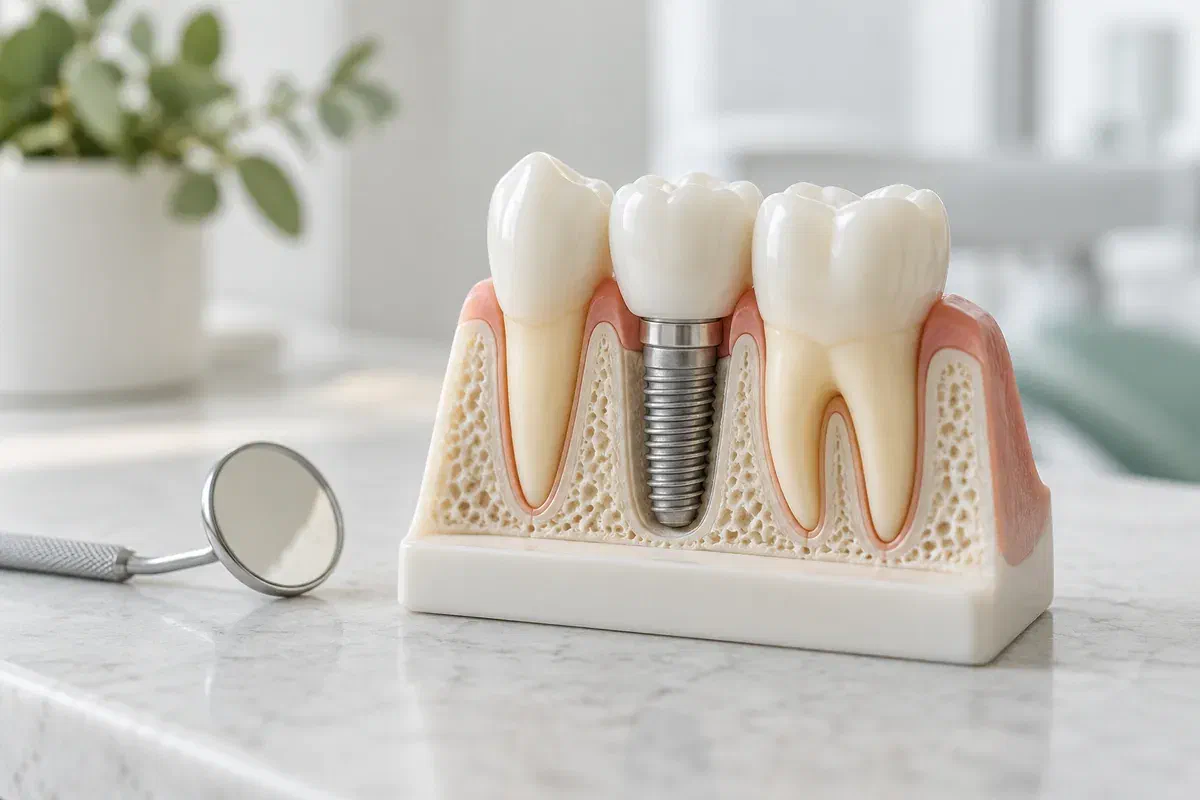
Tell the clinician what matters most: no visible gap, the smallest number of surgical steps, or a clear date for eating normally. Each priority points to different questions.
Ask whether the provisional would be fixed or removable, what it is designed to do and what you must avoid with it. A removable one may need adjusting, which can mean another visit.
Merging extraction and placement may save one surgical appointment. Reviews, impressions and the final fitting usually still require trips, so count them before deciding. A plan that looks shorter on paper may involve just as many journeys in practice.
Ask for every proposal in terms of placement, restoration and loading. That shows which events happen on which day and makes travel planning much more realistic.
An immediate permanent tooth should not be promised before the site and restoration have been properly assessed. What is possible depends on findings, not on distance.
In carefully selected cases, combining stages or placing an appropriate early tooth can be a sensible part of treatment. The benefit for your site should be explained along with what it depends on and the restrictions you would follow while healing.
Alternatives and risks should be discussed too. Implant stability, gum and bone health, the design of the tooth and your general health shape what is wise. It is fair to ask what would make a slower approach safer and what might cause a change of plan partway through.
Patient information: International Team for Implantology — implant placement and loading protocols
An early tooth may close the gap without being ready for chewing. Understanding the difference helps you follow the limits while you are far from the clinic.
Ask which appointments are fixed and which depend on healing. Grouping reviews where clinically reasonable, and booking them early, can save repeated trips.
If the immediate step turns out not to be suitable, an agreed alternative avoids surprises on the day. You leave knowing how the space will be managed and when to return.
Assessment should state both the timing and the conditions it depends on. If the surgery and the final tooth are done by different clinicians, ask whether visits can be coordinated to limit travel.
The clinician examines your mouth, reviews your health and medications, and takes suitable images. If the tooth is still present, its diagnosis and chance of being saved are weighed first.
Extraction where relevant, implant placement, any provisional and the final tooth are each set out. You should know when chewing is allowed and which findings each step needs.
Conditions found during surgery can rule out an immediate step. The alternative should already be understood, and the team should reassess rather than proceed just to save a trip.
Follow-up visits confirm when the final tooth can be made. More records, a fitting or a replacement provisional may still come before the treatment is complete.
Your instructions depend on the procedure and the tooth placed. Keep them handy, and before you leave, ask what should prompt a call and what would need urgent attention closer to home in Etobicoke.
Follow the food guidance carefully, and do not test the tooth by biting normally. A fixed provisional is not meant to carry the load of a final tooth.
Ask how to clean around the implant and any provisional while the gum heals. The routine usually changes over the weeks, so confirm when each step should begin.
If you notice unexpected movement or increasing discomfort, phone first so the team can advise. Severe swelling, fever or bleeding that will not stop may need prompt care nearer home.
Distance changes the practical side of implant care more than the clinical side. The answers below focus on that, while your written plan should still set out each proposed step and the findings it depends on.
Set up a first appointment with us on Bronte Street and we will look at the tooth or space, talk about how the replacement could be timed, and sketch out the visits likely to follow. You will also hear what has to be assessed before an immediate or staged plan can be chosen.
Bring recent images, any earlier proposals and a medication list, and let us know your travel constraints so we can plan appointments sensibly.
