Looking presentable at work
Ask about the temporary tooth on its own terms. Is it fixed or removable, what is it for during healing, and what are you not allowed to do with it at meetings, meals or the gym?


A packed work calendar makes a shorter implant timeline sound appealing. For people in Mississauga, we explain which stages an immediate approach might combine, which ones it cannot skip, and how to plan time off around them.
For many working adults the appeal of an immediate implant is simple: less disruption. It is worth knowing exactly what is being shortened. Immediate can refer to placing the implant during the visit when a tooth is extracted, or to fixing a tooth onto the implant soon after it goes in. Sometimes both are proposed, sometimes only one.
Healing does not speed up because steps are combined. The implant is a support that has to bond with the jawbone, while the visible tooth is a separate piece attached through planned parts. A provisional tooth placed early is usually there for appearance and has firm limits on what it can do until the bone has done its work.
Coming from Meadowvale, Churchill Meadows or elsewhere in Mississauga, it helps to see the whole calendar before you commit. Ask which step is immediate, what conditions it depends on, what replaces it if those conditions are not met, and how many follow-up visits remain afterward.
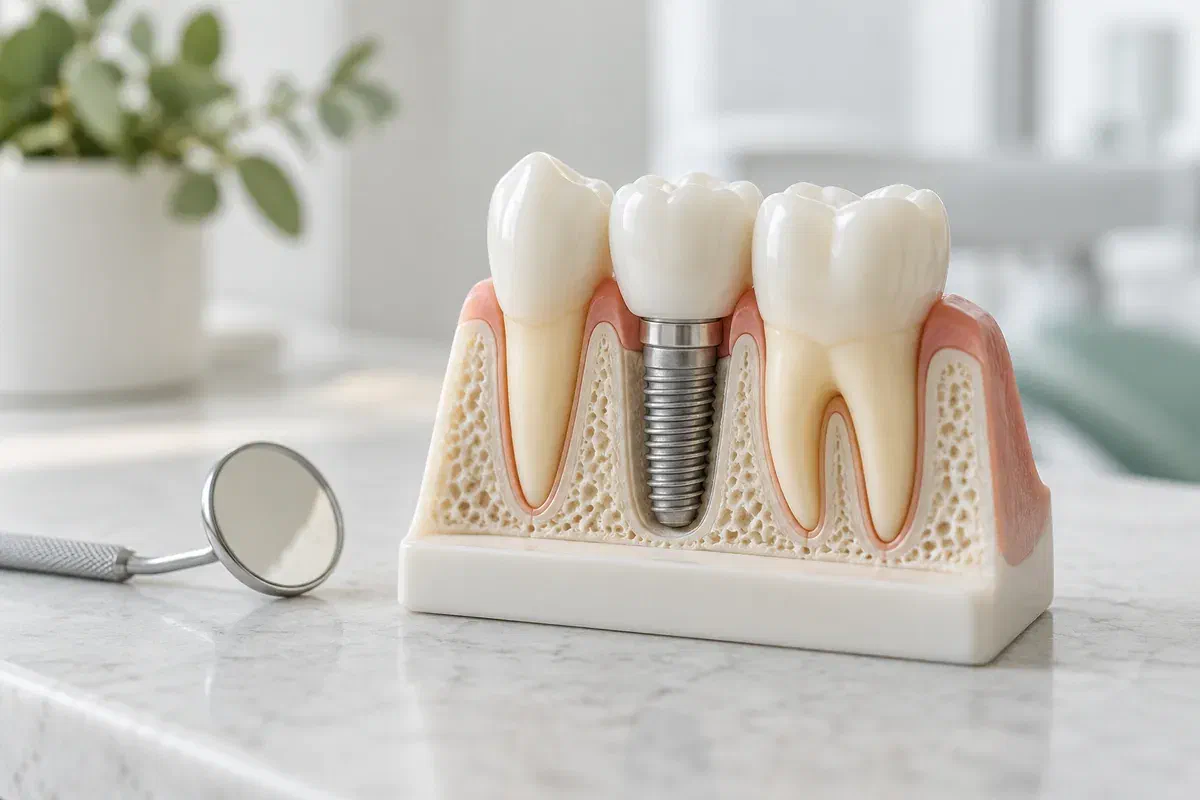
Saving time can mean different things. Tell the clinician whether you mostly want to avoid a gap at work, cut the number of surgical visits, or reach normal chewing sooner.
Ask about the temporary tooth on its own terms. Is it fixed or removable, what is it for during healing, and what are you not allowed to do with it at meetings, meals or the gym?
Ask which procedures are merged and which still stand alone. Reviews, impressions, fittings and the permanent tooth often stay on the list, so count those visits too.
One clinic’s immediate may be another’s early. Ask both to describe the plan by placement, restoration and loading, and the overlap and gaps will be easier to see.
The schedule depends on what assessment finds. A responsible plan will not promise a same-day permanent tooth before the site and the restoration have been evaluated.
In some well-chosen situations, combining stages or fitting a suitable early tooth may form part of a sound plan. The advantage, if any, should be explained in relation to your site, the conditions it relies on and the restrictions you would need to follow.
Equally, a plan has to cover risk and alternatives. How firmly the implant engages the bone, the condition of the gums, the design of the tooth and your medical history all influence what is wise. Ask what would argue for a slower approach and what might change the plan midway.
Patient information: International Team for Implantology — implant placement and loading protocols
An early tooth can make a gap disappear without being ready for normal chewing. Understanding that keeps you from treating a good-looking tooth as a fully working one.
Map work, meals, travel and reviews to the real sequence. Know which appointments are fixed and which depend on findings during treatment or how healing goes.
If an immediate step is ruled out, an agreed alternative explains what happens to the space and the site. That makes your consent better informed than a plan built for an ideal day.
Assessment should state the timing proposed and what it depends on. If surgery and the final tooth are handled by different clinicians, ask who you will see at each stage and how they stay in touch.
The mouth is examined, health and medications are reviewed, and suitable images are taken. If the tooth is still present, the clinician weighs its diagnosis and whether keeping it is realistic.
The plan lists extraction where needed, implant placement, any provisional and the final restoration. It should note when you may bite on the area and which findings each step needs.
Conditions on the day may make an immediate step inappropriate. You should already know the alternative, and the team should reassess instead of keeping to the timetable at any cost.
Follow-up shows when the next stage can start. Even after an early tooth, more records, a fitting visit or a replacement provisional may come before the work is complete.
Instructions vary with the procedure and the tooth placed. Keep the written version somewhere you can check during the workday, and ask about anything unclear before resuming normal habits.
Choose foods as advised, even at business lunches. Avoid seeing whether the new tooth can handle a normal bite; a fixed provisional is not designed to do the permanent tooth’s work.
Early care around the implant is usually gentler than your normal routine. Ask what to use near the gum and on any provisional, and when to move to the next step as healing progresses.
Keep follow-up appointments even when nothing hurts. Call about unexpected movement, worsening discomfort or anything flagged in your instructions so the implant can be checked.
These answers turn timing terms into practical planning. Your own plan should specify which steps are proposed and what must be confirmed before each one.
Schedule a consultation with us on Bronte Street to talk through implant timing and how the tooth could be replaced. We will explain the assessment needed to weigh immediate and staged approaches.
Bring your work schedule, any earlier proposals or images, and say which worries you more: hours away from the office, how the space will look, or living with a provisional for a while.
