Avoiding a visible gap
Bring up any concern about appearance early. The appliance needs time to be made, and the dentist can explain whether the immediate approach suits you and what can be previewed before removal.


Not every tooth on a worrying X-ray has to go. From Erin and Hillsburgh, start with which teeth can be kept, then plan an immediate denture, partial or full, that replaces only what truly needs replacing.
Before talking about replacement, it is worth asking a simpler question: which teeth are you losing, and why? Sometimes only a few need to come out, and a partial appliance can work alongside the rest. An immediate denture, partial or complete, is made ahead of removal and placed during that appointment when suitable.
Whatever is replaced, the supporting tissues will keep changing as sockets heal. That affects how the appliance sits and how it bears on any natural teeth nearby. Adjustments, relining or a later denture are common, and the teeth you keep will need regular care so they continue to do their part.
For people coming from Erin, the first appointment with our Bronte Street team begins with your diagnosis, tooth by tooth, using an examination and any X-rays the dentist needs. Tell us what you hope to keep, whether you already wear a partial, and who can help at home during recovery. Then we can discuss whether an immediate denture fits your plan.
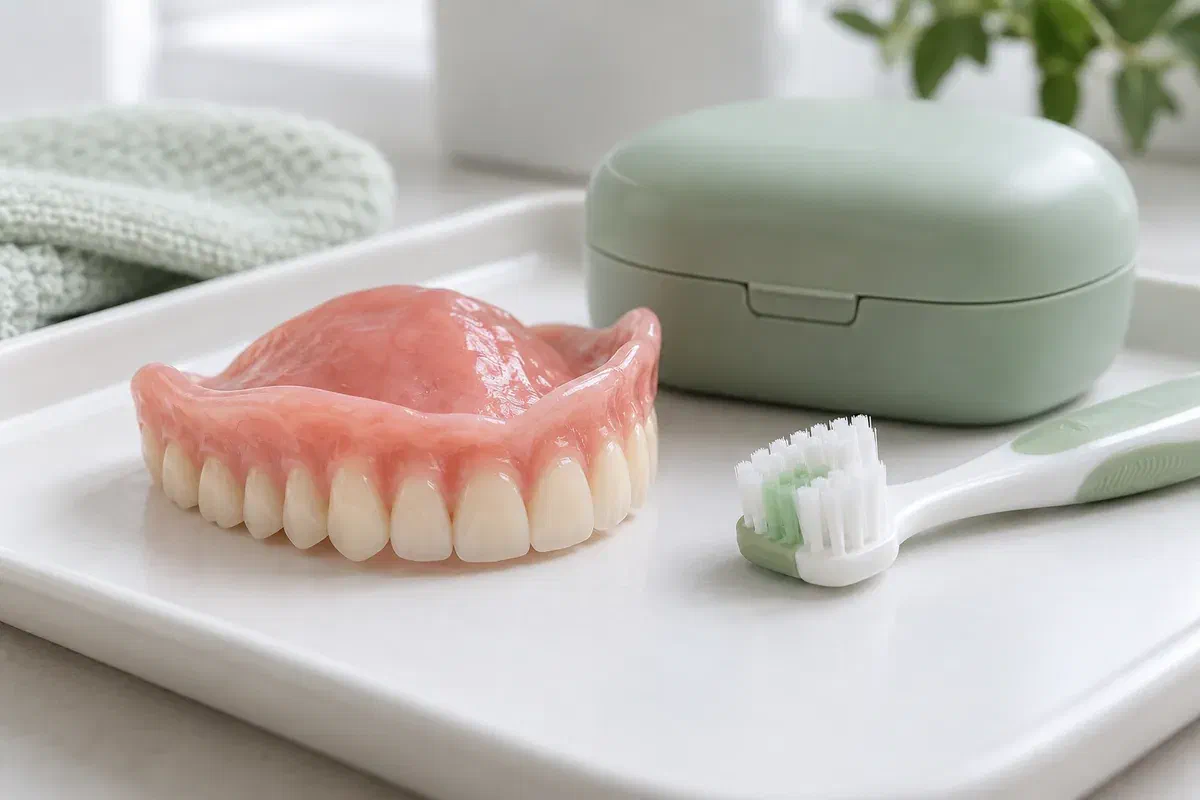
An immediate denture plan touches appearance, the health of the teeth you keep and your ability to manage a removable appliance. Each deserves a clear answer before a date is set.
Bring up any concern about appearance early. The appliance needs time to be made, and the dentist can explain whether the immediate approach suits you and what can be previewed before removal.
Ask for the reasoning behind each extraction and what saving a tooth would involve. Remaining teeth can support a partial denture, so the diagnosis shapes the whole design.
Partials have clasps and edges that need careful handling and cleaning around natural teeth. Mention grip, gagging or help-at-home concerns so instructions suit you while healing.
Because preparation comes before removal, please call before any extraction already booked elsewhere, so the denture timing and each office’s role can be agreed.
In a suitable case, an immediate denture fills the spaces left by extraction at the same appointment, rather than leaving them empty while you heal. When some natural teeth stay, a well-planned partial can work alongside them from the start.
Accept the uncertainties up front. With teeth still present during planning, fit and arrangement cannot be assessed fully, and the tissue will change as it heals. Ask how that will be managed, including the effect on the teeth you keep.
Patient information: Royal Devon University Healthcare — immediate denture information
Confirm which clinician makes the denture, who fits it and where the remaining teeth will be monitored. This matters if extractions are carried out at another office.
Go over brushing around clasps, meals, speech and wear time before the day. Learning both routines at once is easier with a plan made in advance.
Reviews check the denture and the teeth that support it as healing goes on. Ask how many visits are expected and whether relines or a later appliance are part of the estimate.
The path depends on which teeth come out and whether the appliance is partial or full. Seeing all the stages together helps you understand where decisions about retained teeth are made.
Your mouth is examined and the reasons for each proposed extraction are explained, along with alternatives and what keeping a tooth would mean. Health history may lead to extra tests.
Impressions or similar records let the denture be made beforehand. You discuss appearance, clasp placement on any remaining teeth and what cannot be judged until fitting.
The treating team checks at the visit that the appliance can be seated as planned. You go home with written care steps for the sockets, the denture and nearby teeth, plus a contact number.
Reviews look at comfort, gum recovery and how the denture rests on remaining teeth. The dentist explains whether to adjust, reline or later replace the appliance.
Early advice after extraction may differ from an established denture routine. Keep your printed instructions and ask about removal, cleaning around clasps, medication, food and follow-up.
Your clinician may give specific instructions for early wear. Follow those instead of an overnight routine meant for a settled denture until told otherwise.
Ask how to brush the teeth that remain, especially where clasps touch, and how to clean the appliance and extraction sites. Stick to the food advice given at first.
Sore gums, a clasp that digs in or a denture that will not seat should be checked promptly. Do not bend clasps, file the appliance or add home liners while healing, since small changes at home can strain the teeth the clasps rest on.
These answers focus on retained teeth, partial appliances and fit changes while healing. Specific instructions should come from the clinicians handling your extraction and denture.
Book a visit at our Bronte Street practice to review which teeth need removal and whether an immediate partial or full denture suits you. We will explain preparation, fitting, healing checks and care for remaining teeth.
If you already wear a partial, bring it along, and tell us about any extraction booked with another office.
