Being seen with missing teeth
Tell us about this as early as you can. Preparation and lab work take time, and we can explain whether an immediate approach suits your mouth and which aspects of the look can be judged beforehand.


Worried about facing work or family with a gap in your smile? From Oakville, you can plan an immediate denture that is made before your teeth are removed, placed at that visit when suitable, and refined as your mouth heals.
For many adults, the hardest part of losing front teeth is picturing the days afterward: a video call, a client meeting, a family photo. An immediate denture is designed around that concern. It is fabricated from records taken before removal and inserted at the extraction appointment when the mouth is suitable, covering several teeth or an entire arch.
Appearance on the first day is only part of the story, though. As sockets fill in and gums firm up, the surface beneath the denture changes shape. Fit that felt snug can start to loosen, so planned adjustments, relining or a later appliance are commonly built into the treatment from the outset.
If you are coming from Oakville, a planning visit at our Bronte Street practice lets you see the whole path before any teeth are removed. Share the commitments you need to keep during recovery, any earlier experience with partials and the help you have at home. We use that to shape a schedule that is practical for you.
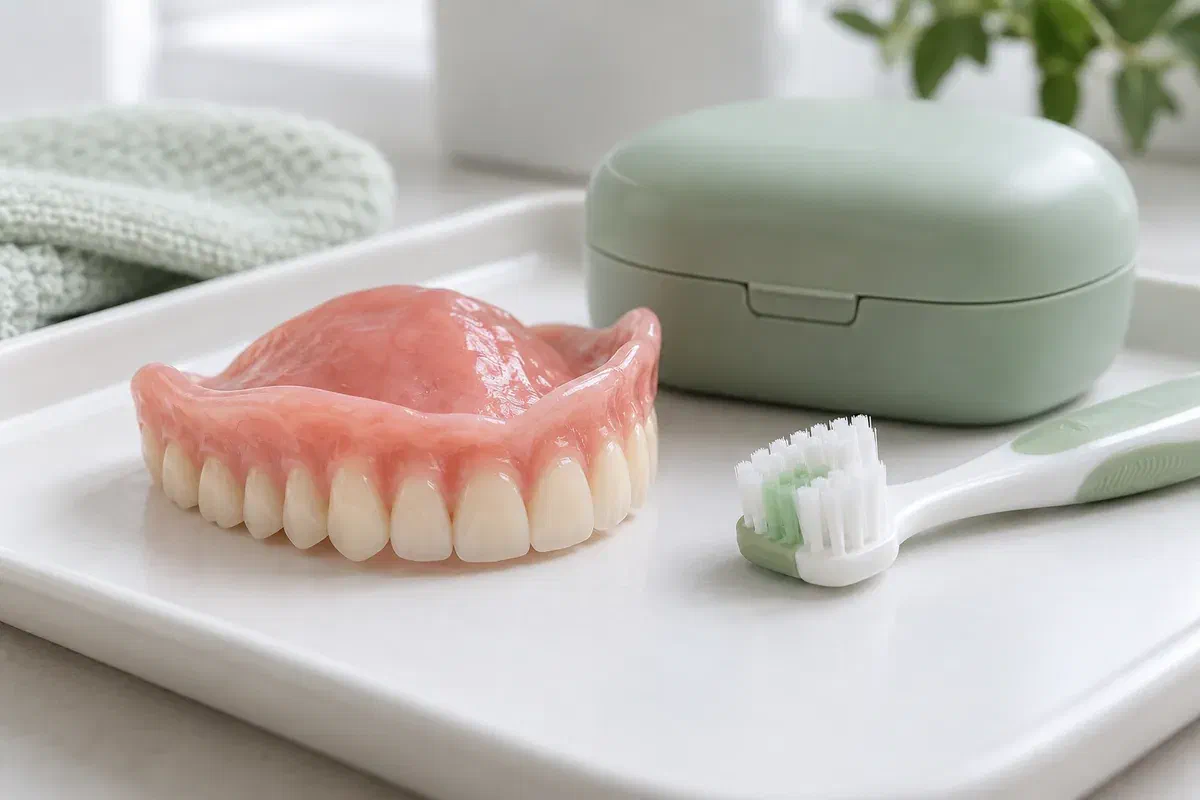
An immediate denture decision touches more than appearance. The state of your gums and remaining teeth, how the appliance is designed and the practical help you will need all deserve attention.
Tell us about this as early as you can. Preparation and lab work take time, and we can explain whether an immediate approach suits your mouth and which aspects of the look can be judged beforehand.
You should hear why each extraction is advised and whether some teeth could be saved. The denture should follow a diagnosis you understand, with alternatives laid out plainly.
Gagging, grip, cleaning and help at home are all fair topics. Your instructions should be realistic for you, since you will be learning them while your gums are still sore.
Immediate dentures are planned ahead. If an extraction has been booked at another office, contact us before that date so timing and roles can be worked out.
In a well-chosen case, you walk out of the extraction appointment wearing teeth, instead of waiting for healing before a denture is designed. For people with public-facing work or busy social calendars, that continuity can make the transition much easier to manage.
There are compromises to accept. While natural teeth are still present, the dentist cannot judge every detail of fit and tooth position in the usual way, and healing will alter the support. Ask how those limits will be handled and what further work is likely afterward.
Patient information: Royal Devon University Healthcare — immediate denture information
The plan should name who builds the appliance, who places it and where your checks happen. That matters most when extractions are done by one clinician and the denture by another.
Talk through eating, speaking, wear times and support at home ahead of time. You can raise questions calmly, instead of during the first sore days with an unfamiliar appliance.
Reviews show that adjustment is part of caring for a mouth that is healing. Ask which visits, relines or later replacement steps are included in the treatment estimate.
The path varies with the teeth being removed and the denture planned. Asking to see preparation, extraction, the first review and later reassessment as one sequence makes it easier to plan work and home life.
The dentist examines your teeth and gums, explains the reasons for removal and reviews alternatives against what you want. Your health history and practical needs may call for further assessment.
Impressions or other records allow fabrication before the extraction. You can discuss tooth shape and shade, which parts cannot be tested in advance and how clinicians will coordinate.
On the day, the team confirms whether the denture can be inserted as planned. You go home with written care steps for the sockets and appliance, a wearing schedule and someone to call.
Short-term and later checks look at comfort, gum recovery and shifting support. You will hear whether an adjustment, a new lining or eventually a new denture is the better next move.
Post-extraction instructions often differ from the routine used with an established denture. Keep the written guidance and ask about removing it, cleaning, medication, food and the review dates.
Your clinician may want the denture worn a particular way at first. Follow that advice instead of copying the overnight habits of a friend or relative who has worn dentures for years.
Find out how to care for the appliance, your remaining teeth and the extraction sites as healing moves along. Follow the meal guidance first; having teeth in place does not mean chewing is unrestricted yet.
Pressure spots, difficulty seating the denture or rising looseness should be reported. Avoid sanding it, forcing it into position or adding home reline products to tender tissue.
These answers cover preparation, appearance and the fit as you recover. Your own instructions should come from the clinicians carrying out the extraction and making the appliance.
Arrange a consultation at our Bronte Street practice to discuss an immediate denture alongside planned extractions. We will explain preparation, the fitting visit, healing reviews and the choices that may come next.
An extraction date already on the calendar, or another dental office in the picture, is worth mentioning when you book.
