

Illustrative patient and dentist planning dentures before tooth removal
Restorative Dentistry

Immediate Dentures in Puslinch

An immediate denture is often a bridge to something more settled, not the final word. For households in Puslinch, we explain the interim role, the likely later stages and how fees and timing are confirmed as healing goes on.

Interim, then long-term

This denture may not be your last one.

A useful question to ask early is what happens after the immediate denture has done its job. The appliance is designed from records taken before removal and fitted at the extraction appointment where suitable, replacing some or all of the teeth in an arch. Its first task is to carry you through healing with teeth in place.

Healing is exactly why it may be interim. As sockets close and the ridges reduce, support changes, and the fit drifts. Some people are well served by adjustments and a reline; others are advised to have a new denture once things settle. Knowing which is likely helps you plan both time and budget.

From Puslinch, a first conversation at our Bronte Street practice can set out the whole arc, not only the extraction day. Tell us what matters most to you during recovery, whether you have managed a partial before and who can help at home, and we will explain which later stages are probable in your case.

Understand the full denture timeline
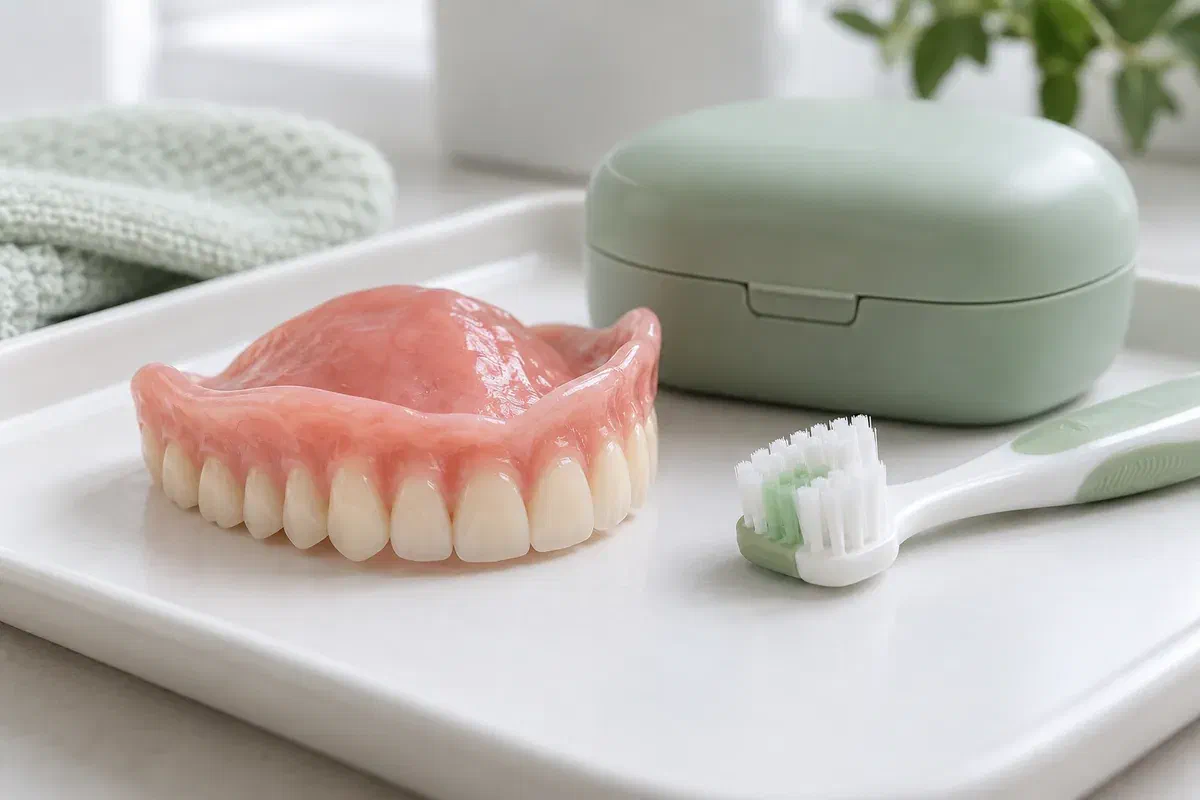
Complete removable denture beside a protective case and denture brush
Questions about the bigger picture

What people want settled before saying yes

A decision about immediate dentures covers looks, the reasons for extraction and day-to-day handling. Each also influences what the longer-term plan is likely to involve.

No period with visible gaps

If that matters to you, say so before an extraction is arranged. Records and fabrication take time, and the dentist can tell you whether the approach suits your mouth and which aspects of appearance can be assessed in advance.

A recommendation for multiple extractions

Ask what the dentist found for each tooth and whether any might be kept. Retained teeth can affect the type of denture and what comes later, so the diagnosis deserves a full explanation.

Confidence in handling a removable appliance

Mention trouble with grip, a strong gag reflex or cleaning, and whether help is available at home. Instructions need to suit you during the early days of healing.

Since the appliance is made ahead, please contact us before any extraction already set with another office so timing and responsibilities can be discussed.

Why start with an immediate denture

Teeth through healing, with room to decide what comes next

For a suitable patient, an immediate denture means you are not without replacement teeth while the mouth recovers. Instead of waiting months for a conventional denture to be started, you leave the extraction visit with teeth, which helps many people with appearance and routine.

It also has limits that shape the later plan. Some features of fit and arrangement cannot be checked fully while natural teeth are present, and healing changes the foundation. Ask how those limits will be dealt with and which follow-up stages to anticipate.

Patient information: Royal Devon University Healthcare — immediate denture information

A clear division of work

Agree at the outset which office fabricates the appliance, which one seats it, and where reviews and any later denture will be handled. This matters if extractions and denture care happen in different places.

Preparation for early recovery

Discuss eating, speech, wearing schedules and help at home well before the day. Planning ahead keeps the first week focused on healing rather than questions.

An outline of later stages and costs

Ask for an estimate that separates the immediate denture from possible relines, adjustments or a replacement appliance, and how each later step would be confirmed.

The full arc of treatment

From records to a settled, longer-term fit

Your path depends on the teeth involved and the appliance planned. Laying the stages out in order, from the first records to the final reassessment, makes the interim and long-term parts easier to tell apart.

  1. Diagnosis and planning

    After a full examination, the dentist sets out why removal is being suggested and weighs the alternatives against your goals. Health history and practical concerns may call for further assessment.

  2. Records and the interim appliance

    Impressions or other records allow the immediate denture to be made before removal. You discuss appearance, the limits of previewing it and coordination with any other clinician.

  3. Fitting at the extraction visit

    The treating team decides at the appointment whether the denture can be inserted as planned. Before leaving, you are given written care steps for the extraction sites and the new teeth, when to wear them, and a number for questions.

  4. Reassessment and the next appliance

    Reviews follow comfort, healing and changing support. Once the tissues settle, the dentist explains whether a reline is enough or a new denture is the better long-term option.

While the interim denture does its job

Care for it as instructed during healing.

Early guidance after extraction often differs from how a long-term denture is worn. Keep your written instructions and check anything unclear about removal, cleaning, medication, food and reviews.

Respect the early wearing plan

Your clinician may give particular instructions for the first period. Follow those rather than adopting the overnight routine meant for a settled denture until you are told to switch.

Build up cleaning and chewing

Learn how care for the appliance, any remaining teeth and the healing sites changes over the weeks. Begin with the suggested soft foods and progress only when advised.

Report changes rather than fixing them

Sore spots, difficulty seating the denture or rising looseness should be reviewed. Do not file it, force it into place or use home liners on healing tissue.

Different starting points

Begin with the end in mind.

Placing a denture at extraction is one approach. The assessment should compare it with others and explain how any interim appliance leads to the longer-term replacement.

Where preparing before removal is suitable

Interim immediate denture

Fabricated ahead and placed at the visit when appropriate. Ask what it is meant to do through healing and whether a reline or replacement is expected later.

Where a later, single appliance is preferred

Conventional denture after healing

Waiting lets the dentist design one denture for a settled mouth. Ask what you would do for teeth in the meantime and which clinical or practical reasons support it.

Where remaining support permits it

Another restorative approach

The condition of the teeth you keep, your gums and your own priorities may point toward a different option worth discussing. The immediate stage does not have to decide the long-term plan for you.

Puslinch questions

Interim care, later stages and planning ahead

These answers explain how immediate dentures fit into a longer plan and how the fit changes while you heal. Personal advice should come from the clinicians handling your extraction and appliance.

(905) 876-4488
What makes an immediate denture interim rather than final?
It is designed before healing, so it cannot account for how the ridges will change. Some people continue with it after a reline, while others are advised to have a new denture once the mouth has settled.
When would a long-term denture usually be made?
Once the tissues have stabilized, which varies from person to person. The dentist will assess your healing at review and recommend when it is reasonable to start the next appliance.
Can I keep my immediate denture as a spare later?
Some people keep an older appliance for emergencies, but its fit may no longer suit the healed mouth. Ask the dentist whether it could be adapted or is best retired.
How are the fees for later stages worked out?
Later steps depend on how you heal, so they are usually confirmed as the plan unfolds. Ask for an estimate that shows the immediate stage separately and how relines or a new denture would be priced.
Will my bite change between the immediate and the long-term denture?
It can, because the appliance is refined as healing progresses. Mention any uneven contact or soreness at review so the dentist can check and adjust how your teeth meet.
How should I plan the later stages if I am coming from Puslinch?
Ask for a rough timeline of reviews and the likely point for a reline or new denture. Booking those visits ahead helps you organize trips and work around them.
Planning from Puslinch

See the whole plan, not only the first step.

Book a consultation at our Bronte Street office to discuss immediate dentures as part of planned extractions. We will explain preparation, fitting day, healing reviews and the longer-term choices that may follow.

If an extraction is already arranged elsewhere, mention the date so we can plan around it.

Visit Milton Dental Clinic
Unit 1, 342 Bronte St. S, Milton, ON L9T 5B7
Get directions Clinic hours
Monday–Thursday
11am–7pm
Friday–Sunday
By appointment only

Areas we serve

  • Milton
  • Oakville
  • Mississauga
  • Georgetown
  • Halton Hills
  • Acton
  • Campbellville
  • Brampton
  • Burlington
  • Puslinch
  • Rockwood
  • Erin
  • Caledon
  • Etobicoke
  • Old Milton
  • Bronte Meadows
  • Timberlea
  • Dorset Park
  • Dempsey
  • Clarke
  • Beaty
  • Coates
  • Harrison
  • Scott
  • Willmott
  • Ford
  • Bowes
  • Cobden
  • Walker
  • Mountain View
  • Milton Heights
  • Hawthorne Village
  • Valley View
  • Fallingbrook
  • Nassagaweya
  • Trafalgar
  • Esquesing
  • Nelson
  • Brookville
  • Moffat
  • Glen Williams
  • Norval
  • Limehouse
  • Stewarttown
  • Ashgrove
  • Hornby
  • Silver Creek
  • Speyside
  • Scotch Block
  • North Oakville
  • River Oaks
  • Glen Abbey
  • West Oak Trails
  • Palermo
  • Bronte Creek
  • College Park
  • Joshua Creek
  • Uptown Core
  • Preserve
  • Iroquois Ridge
  • Lisgar
  • Meadowvale
  • Meadowvale Village
  • Churchill Meadows
  • Erin Mills
  • Central Erin Mills
  • Streetsville
  • East Credit
  • Creditview
  • Heartland
  • Sheridan
  • Mount Pleasant
  • Credit Valley
  • Huttonville
  • Churchville
  • Springbrook
  • Northwest Brampton
  • Bram West
  • Fletcher's Meadow
  • Fletcher's Creek South
  • Alton Village
  • Orchard
  • Millcroft
  • Headon Forest
  • Tansley
  • Brant Hills
  • Tyandaga
  • Kilbride
  • Lowville
  • Aberfoyle
  • Morriston
  • Arkell
  • Hillsburgh
  • Freelton
  • Carlisle
  • Waterdown
  • Flamborough
  • Mountsberg

How can we help?

Milton Dental Clinic

Have a question about your smile? Choose the option that works best for you.

For urgent dental concerns, please call.
Messages are reviewed during clinic hours.