

Illustrative consultation reviewing an existing implant-supported bridge
Restorative Dentistry

Implant Bridge Replacement

A worn or damaged implant bridge needs assessment before a new restoration is planned. Explore implant bridge replacement in Milton with a review of the bridge, its connections, supporting implants, bite, and access for daily cleaning.

A closer look at implant bridge replacement

Renew the bridge with its support and history in view.

An implant bridge joins replacement teeth into a restoration supported by dental implants. Replacing that bridge means reconsidering the visible restoration and its relationship with the supporting components. It does not automatically mean removing or replacing the implants within the jaw.

The reason for replacement matters. Worn or fractured tooth material, a damaged framework, recurring connection problems, or a design that is difficult to maintain may lead to different recommendations. A moving bridge can also have several possible causes, so it should not be assumed to need a complete remake before assessment.

At Milton Dental Clinic, we can begin by reviewing the bridge, the surrounding mouth, and available treatment records. Tell us how long the restoration has been in place and what has changed. The plan should explain which parts remain suitable, whether specialist input is needed, and how the space will be managed while work is carried out.

Arrange an implant bridge assessment
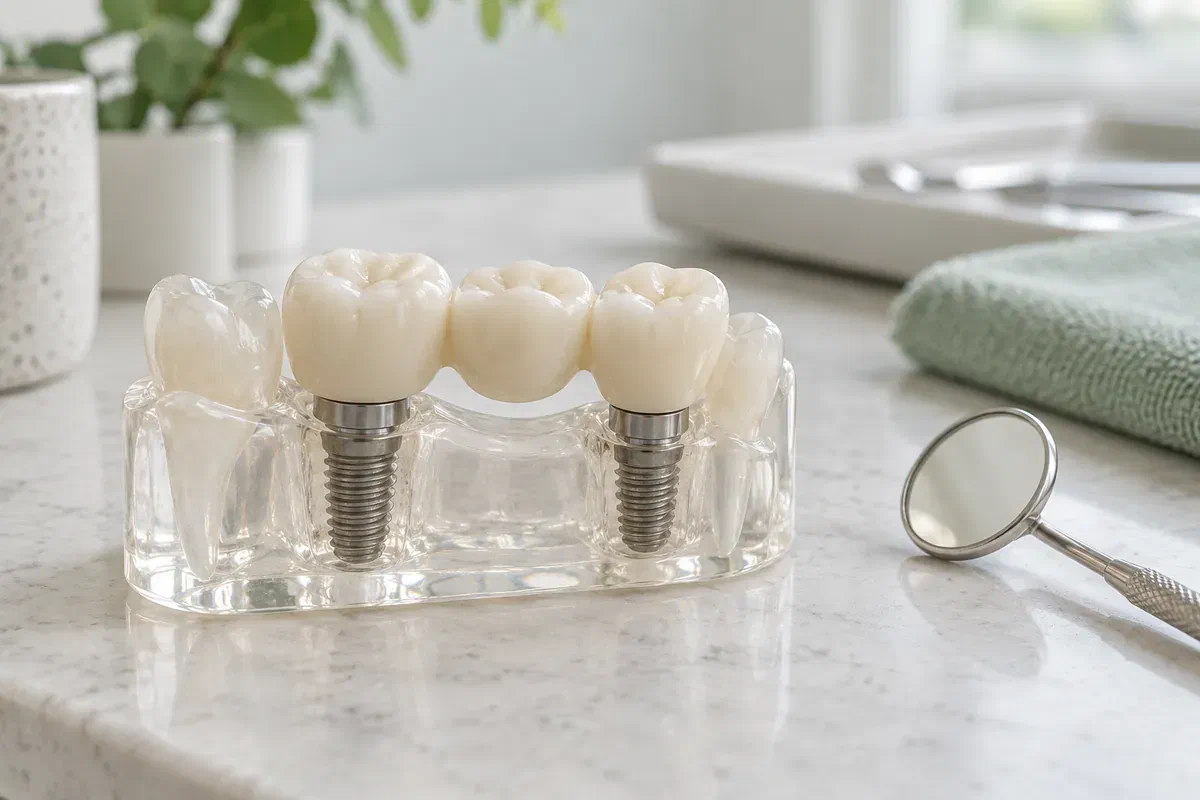
Teaching model of a short dental bridge supported by two implants
Changes in an existing implant bridge

Look beyond the damaged surface.

The visible concern is one part of the assessment. The condition of the support, the way the teeth meet, and the ability to clean the restoration all influence whether replacement is appropriate.

Tooth material is worn, chipped, or fractured

Describe whether this is a first event or a recurring problem. The extent of damage and the condition of the remaining bridge help determine whether a localized repair or a new restoration should be considered.

The bridge feels loose or contacts differently

Movement needs assessment of the restoration, connections, and supporting implants. Avoid repeatedly testing it with your tongue or biting pressure, and contact the team for advice about use while awaiting review.

Cleaning or tissue comfort has become difficult

Food trapping, difficult access, or persistent gum changes should be discussed. A new bridge may require design considerations, but tissue concerns also need their own diagnosis and care.

Sudden movement, pain, or a detached component should be mentioned when booking. Do not attempt to tighten, cement, or remove an implant bridge yourself.

The purpose of reviewing the whole restoration

Replace what needs changing and understand what remains.

A suitable replacement plan can address a bridge that no longer meets the requirements identified during assessment. It also provides an opportunity to reconsider features such as tooth arrangement, material, contacts, and cleaning access within the limits of the existing support.

Those limits need to be clear. A new bridge cannot by itself resolve every implant or tissue problem, and the position of retained implants may constrain the design. Ask which concerns the replacement is expected to address and which require additional treatment or ongoing management.

Patient information: Cambridge University Hospitals — implant restorations and long-term care

Identify the component responsible for the problem

The bridge, retaining components, and implants are related but distinct. Understanding where the issue lies helps explain why replacement, repair, connection work, or another form of care is recommended.

Use previous experience to inform the new design

Explain which features worked well and which caused difficulty. Your experience with cleaning, meals, speech, and appearance can inform the discussion without assuming that every preferred change is clinically possible.

Plan future maintenance before the remake

Ask how the new bridge would be cleaned, reviewed, and repaired if needed. The practical maintenance plan is part of choosing a design, especially when the earlier restoration was difficult to access.

Planning replacement of an implant bridge

Start with records, assessment, and a clear temporary plan.

The sequence depends on the existing system, attachment method, and condition of the restoration. Ask whether removal, additional records, laboratory work, or referral will be needed before a replacement can be made.

  1. Review the restoration's history

    Bring implant details, previous treatment information, and any safely recovered component if available. Explain the onset of symptoms and earlier repairs so the team can understand the existing system and pattern of problems.

  2. Assess the bridge and supporting mouth

    The clinician examines the restoration, relevant connections, tissues, and bite. Imaging or other investigations may be appropriate. The findings help distinguish a bridge-level problem from a concern affecting the retained support.

  3. Compare repair and replacement arrangements

    Discuss what can be retained, what needs to change, and how the restoration would be managed during work. Clarify material, design, cost, expected appointments, temporary teeth, and any uncertainty about removing the old bridge.

  4. Fit the replacement and establish review

    The new restoration is assessed for its connection, contacts, function, and relevant cleaning access. You receive care instructions and a follow-up plan that includes the implants and tissues as well as the bridge itself.

After an implant bridge is replaced

Learn the routine for the new shape and connections.

A replacement may differ from the previous bridge even when it occupies the same space. Ask for instructions specific to its design and report concerns that arise during everyday use.

Practise cleaning beneath and around the bridge

Have the team demonstrate appropriate access and tools. Explain if an area is difficult to reach or food collects in a new place so the technique and design can be reviewed.

Notice changes in contacts or movement

Report an uneven bite, a click, or a sensation that the restoration moves. Do not assume these are normal because the bridge is new, and avoid repeatedly loading an area that feels unstable.

Keep restoration and implant reviews together

The visible bridge and the supporting tissues need ongoing assessment. Attend the recommended checks and ask which clinician will manage maintenance if the original implants or replacement work involved another practice.

Choosing the extent of replacement

A new bridge is one possible response to a problem.

The appropriate scope depends on the damaged part and the condition of the support. Ask the clinician to connect each proposed step to the examination findings.

When the existing bridge remains suitable

Repair or address a specific connection

Some problems may be managed without replacing the whole restoration. A localized defect or connection issue needs its own assessment, including whether the rest of the bridge remains appropriate.

When the restoration itself needs renewal

Replace the bridge on suitable retained support

A remake may be considered when the existing bridge is unsuitable but the supporting implants and relevant components can remain. Discuss the design limits and the features the new restoration is intended to improve.

When the support or tissues need attention

Reassess the broader implant plan

Problems affecting implant health, position, or components may require additional treatment or specialist assessment. Making another bridge should not bypass those findings or preserve an unsuitable arrangement without discussion.

Questions about implant bridge replacement

Separate the bridge decision from the implant decision.

These questions can help you prepare for an assessment of an older or damaged restoration. The answers for your bridge depend on its design, components, and supporting mouth.

(905) 876-4488
Does replacing an implant bridge require new implants?
Not automatically. The bridge and the implants are different parts of the restoration. Existing implants may be retained if they and the planned connections remain suitable. The assessment should explain whether the problem is limited to the bridge or involves its support.
Can one chipped tooth in an implant bridge be repaired instead of replacing everything?
Sometimes a localized repair may be considered, depending on the material, extent of damage, and overall bridge condition. Ask what the repair would achieve and whether recurring damage or other limitations make a replacement more appropriate.
Why are records from the original implant clinic useful for a replacement bridge?
They may help identify the implant system, components, attachment method, and previous treatment. Bring any available details and let the team know where the work was done. Missing records do not establish the outcome, but further identification may be needed.
Will I have teeth while the implant bridge is being remade?
Temporary arrangements depend on the existing restoration, removal method, and proposed work. Ask what can be provided and whether there will be any period without the bridge. Do not assume the old restoration can always be removed intact and reused.
Can a replacement implant bridge be easier to clean than my current one?
Cleaning access can be discussed during design, but the available space and implant positions may impose limits. Explain which areas are difficult and ask what changes are feasible. The new maintenance routine should be demonstrated before you rely on it at home.
Should a moving implant bridge be left until my routine checkup?
Contact the clinic when you notice movement so the team can advise on timing and use. The source needs assessment, even if there is no pain. Avoid trying to tighten or glue it, and describe any associated damage or tissue symptoms.
Implant bridge replacement in Milton

Let’s review the restoration and the support beneath it.

Arrange a visit at our Bronte Street clinic to discuss a worn, damaged, or troublesome implant bridge. We can assess the starting point and explain whether repair, replacement, or further investigation is appropriate.

Bring implant records and information about previous repairs if available, along with any safely recovered component.

Visit Milton Dental Clinic
Unit 1, 342 Bronte St. S, Milton, ON L9T 5B7
Get directions Clinic hours
Monday–Thursday
11am–7pm
Friday–Sunday
By appointment only

How can we help?

Milton Dental Clinic

Have a question about your smile? Choose the option that works best for you.

For urgent dental concerns, please call.
Messages are reviewed during clinic hours.