Teeth look worn, stained or chipped
Let us know if this has changed gradually or suddenly. The type of wear and the condition of the bridge as a whole help us judge whether a repair or a new restoration is worth discussing.


An implant bridge that looks dated, has dulled or no longer matches the teeth beside it may prompt thoughts of replacement. From Brampton, you can have the bridge, its connections, the implants and cleaning access reviewed so appearance and function are weighed together.
A family picture shows a bridge that looks greyer than you remember, or teeth that seem longer at the gumline. Changes in appearance are a common reason people start asking about a new implant bridge. That bridge is the visible part; the implants carrying it sit below and may well be able to stay.
Looks are rarely the only story. Wear, chipping, a cracked framework, a connection that loosens or a shape that is hard to clean may be present at the same time. Each points toward different care, and a bridge that moves has several possible causes, so it is best not to assume a full remake.
At your first visit, tell us what bothers you about how it looks and what you would like to change. We will examine the bridge and the tissues around it, then explain which parts are still sound, whether a specialist would help and how the space will be handled while new work is made.
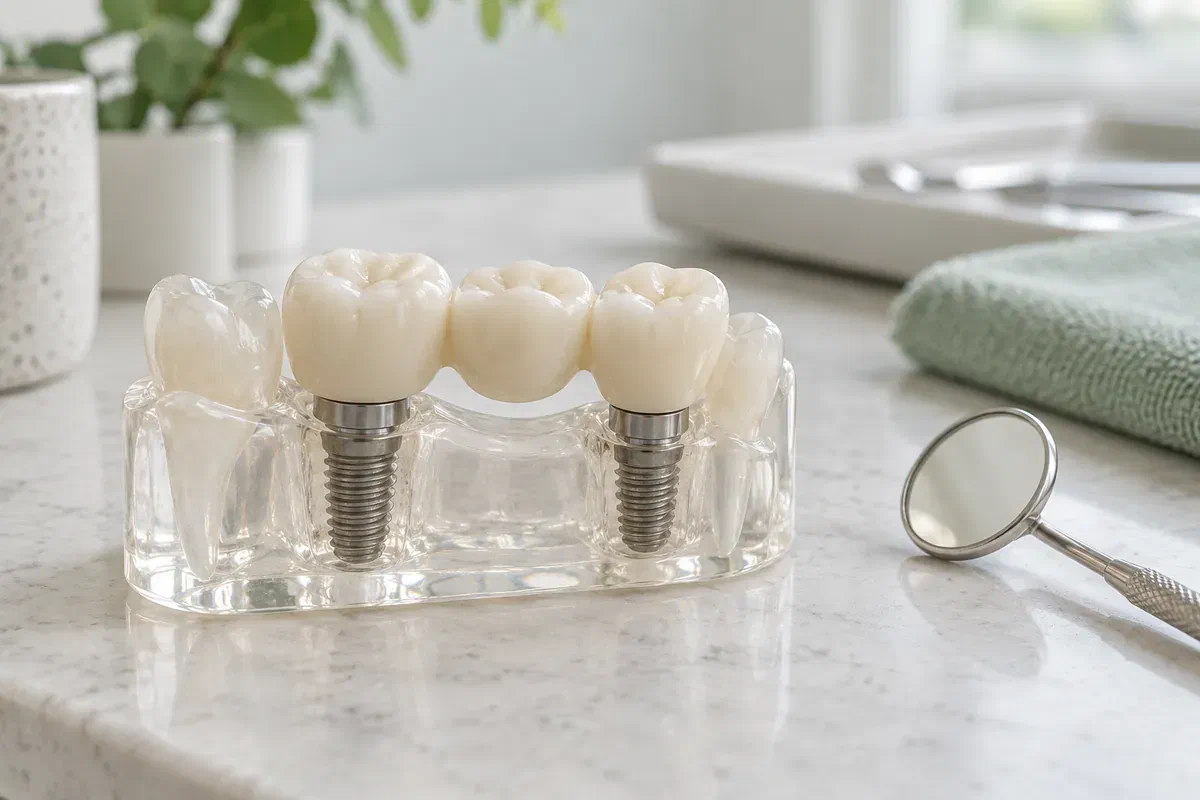
Appearance starts the conversation, but the implants, your bite and your ability to clean every surface also guide whether a new bridge is the right step.
Let us know if this has changed gradually or suddenly. The type of wear and the condition of the bridge as a whole help us judge whether a repair or a new restoration is worth discussing.
Even if your main concern is appearance, any movement needs the bridge, connections and implants checked. Avoid pressing on it, and call for advice on chewing until you are seen.
Receding or swollen gums can change how a bridge looks and how food collects. A new design may help, but gum changes need their own assessment and treatment.
Sudden looseness, pain or a broken-off piece should be mentioned when you book. Do not try to fix, cement or remove an implant bridge at home.
When the exam confirms a bridge no longer suits you, a replacement can address those findings and give you a chance to revisit colour, tooth shape, proportions and how the teeth meet. Cleaning access and material are part of the same conversation, all within what the current implants allow.
It is important to be realistic. Where implants sit, and how the gums have changed, can limit what any new bridge looks like. A remake will not by itself solve gum or implant concerns. Ask which aesthetic goals are achievable and which issues need separate care.
Patient information: Cambridge University Hospitals — implant restorations and long-term care
Sometimes the teeth are the issue; sometimes the gums or implant position are. Understanding the source explains why a repair, a remake, connection work or other care is suggested.
Photos, preferences and what you dislike about the current bridge are helpful. We will discuss them openly, including any changes that may not be clinically possible.
Ask how a proposed design will be cleaned, checked and repaired. A shape that looks best in a photo still has to be maintainable at home.
Implant systems and attachment types vary, so the sequence differs. Ask whether removal, new records, lab work, shade matching or a referral will be needed.
Share implant details, earlier treatment records and any piece you saved. Tell us what you would like to change about the look and feel of the bridge.
Dr. Anjum checks the restoration, connections, gums and bite, and may recommend X-rays. This shows whether the concern is in the bridge itself or reaches the implants.
We discuss what can remain, what should change and how you will manage meanwhile, including shade, shape, materials, fees, number of visits, temporary teeth and removal uncertainties.
The new bridge is checked for appearance, seat, contacts, comfort and cleaning access. You leave with care instructions and follow-up that includes the implants and gums.
A replacement bridge may look and feel different, even in the same space. Ask for care steps that match its design, and tell us if anything seems off.
Have us demonstrate the tools that reach under and between the teeth. If a spot is awkward or food gathers somewhere new, let us know so we can review.
A high point, clicking or a sense of movement should be reported. A new bridge should not feel unstable, and that area should not be loaded heavily until it is checked.
The bridge and the tissues around the implants both need ongoing care. Keep recommended appointments and ask who will handle maintenance if other offices were involved.
A few points to think about before a cosmetic change. What is realistic for you will depend on the bridge, the implant positions and how your gums have changed.
Book an assessment at our Bronte Street practice for an implant bridge that is worn, damaged or no longer looks right to you. After looking at the teeth, the connections and the gums, we will tell you whether a repair, a new bridge or a closer look at the implants is the sensible next move.
Bring implant records, notes about earlier repairs and any photos showing how the bridge has changed.
