Certain foods have become a worry
If a chip, crack or worn edge makes you avoid particular foods, tell us. The extent of the damage and the rest of the bridge help decide whether repair or a new restoration should be discussed.


A replacement implant bridge changes more than its look; it can change how you eat, speak and clean each day. From Erin or Hillsburgh, you can have the old bridge, its connections and the implants reviewed, and see what life with a new one would involve.
Supper, a conversation, then a few minutes at the bathroom sink. Those are the moments a replacement bridge has to work in, so it helps to think about them before deciding. An implant bridge is a set of replacement teeth fixed onto implants through connecting parts. Renewing the bridge usually leaves the implants where they are, if they remain healthy.
The reason you are considering a change shapes everything else. Worn or chipped teeth, a strained framework, a fastening that keeps loosening, or contours that have always been hard to clean lead to different advice. A bridge that moves may have several causes, so a full replacement waits until the exam has found the right one.
Rural households often juggle chores, work and long days, so describe your real routine: what tools you use, when you clean and what gets skipped. We will review the bridge and the tissues around it, explain which parts can stay, whether a specialist is needed and how the space will be covered while new work is made.
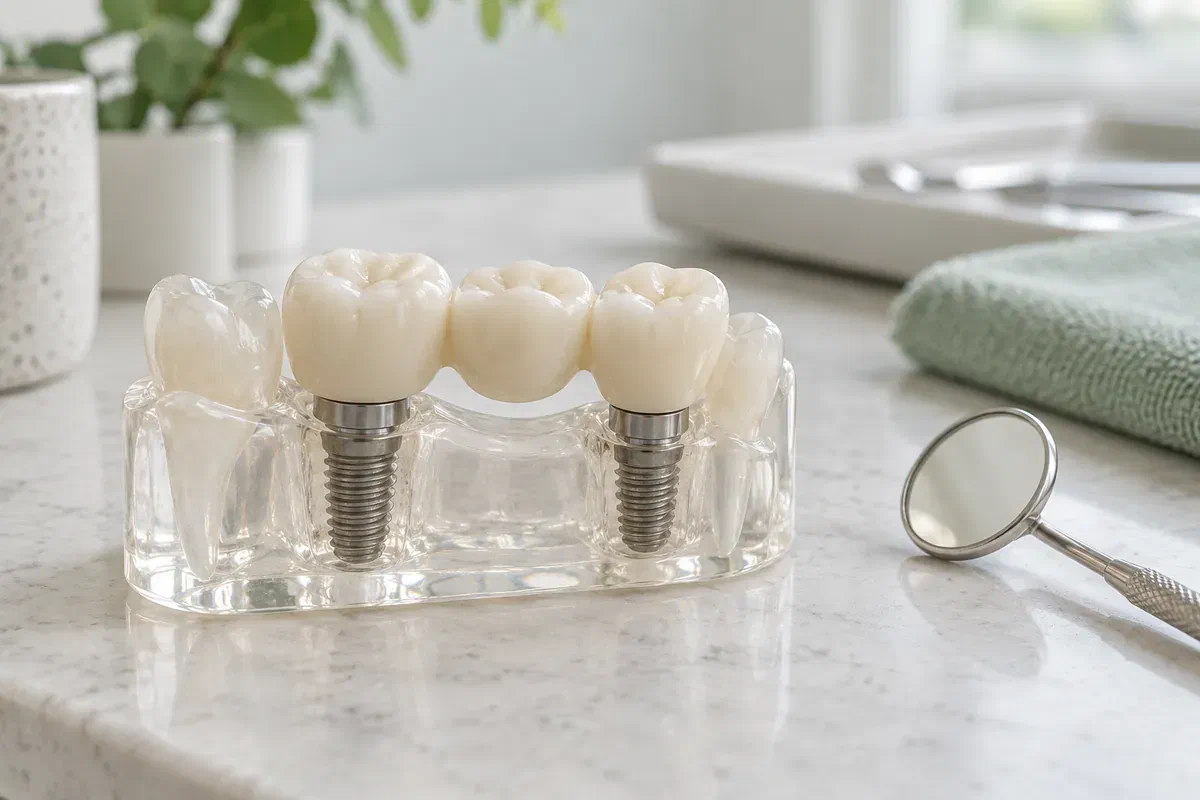
Meals, speech and cleaning each point to something. Together with the health of the implants, the bite and the state of the bridge, they guide our recommendation.
If a chip, crack or worn edge makes you avoid particular foods, tell us. The extent of the damage and the rest of the bridge help decide whether repair or a new restoration should be discussed.
A change in how the bridge feels can mean movement or altered contacts. The bridge, connectors and implants need checking together. Avoid pressing on it and call for advice until your visit.
More time at the sink, sore gums or food that will not clear are worth raising. A new design may help, but the gum concern needs its own diagnosis and care.
Sudden looseness, pain or a broken piece should be mentioned when you call. Do not try to secure, glue or take off an implant bridge yourself.
When the exam shows the bridge is no longer adequate, a replacement can address those findings. Because it is a new design, it is also a chance to think about tooth arrangement, material, how the teeth meet and how easily your hands and tools can reach underneath, within what the existing implants allow.
Practical limits deserve attention. A new bridge does not resolve every implant or tissue concern on its own, and the implants you keep may restrict the shape. Ask what the replacement is expected to improve in your daily life and what will still need separate care.
Patient information: Cambridge University Hospitals — implant restorations and long-term care
The teeth, the fastening parts and the implants work as one system but fail separately. Identifying the source explains whether repair, connection work, a remake or something else is advised.
Describe what you eat, how you clean and what has been awkward. That information is valuable, even though some preferred changes may not be clinically possible.
Before any work begins, ask exactly how you would clean the proposed bridge, how often it would be checked and how a repair would be handled.
The order depends on your implant system, how the bridge is attached and its condition. We will tell you early on if removal, new records, lab work or referral is likely.
Bring any implant records or treatment notes, a loose part if you saved one, and a short description of your cleaning habits and when problems began.
Dr. Anjum examines the teeth on the bridge, the way it is fastened, your gums and how you bite, with X-rays if appropriate. This tells us whether the issue is in the bridge or reaches the implants.
We discuss what can stay, what would change and how you will manage in between, including materials, cleaning access, fees, visit numbers, interim teeth and any uncertainty in removal.
The new bridge is checked for fit, contacts, comfort and cleaning access. You practise your routine before leaving and receive a review plan for the implants and gums.
Even in the same place, a new bridge can change how food, your tongue and your floss behave. Ask for advice that fits its design, and tell us about anything that feels odd.
Ask which tools suit the bridge and practise them with us. If a spot is still hard to reach after a week or two at home, call so we can review the technique or design.
Most people adapt to small differences, but a high spot, a click or a sense of movement should be reported. Avoid heavy chewing on any area that feels unsteady.
The bridge and the supporting gums and bone need regular checks. Booking ahead helps fit them around busy times, and ask who handles maintenance if other offices are involved.
These answers can help you picture the adjustment. Your experience depends on the bridge’s design, its components and the health of the mouth around it.
Schedule a visit at our Bronte Street clinic to talk about an implant bridge that is worn, damaged or hard to live with. We will examine it, describe what daily care would look like afterward and tell you whether a repair, a remake or further checks fit best.
Bring implant records if you have them, and the cleaning tools you use every day.
