A chip or worn area on a tooth
If it is small and not sharp, it may fit into a planned visit. Tell us whether it has happened before, since repeated damage and the state of the remaining bridge influence whether repair or remake is discussed.


Replacing an implant bridge can take several steps, so a longer trip calls for a clear plan. For Etobicoke visitors, we review the bridge, its connections, the implants and cleaning access, then map out appointments so each one counts.
When the drive is a long one, you want to know at the outset how many visits a new implant bridge will take and what each will achieve. That depends on what is wrong. The bridge is the row of teeth on top; the implants hold it from below through small connectors, and a new bridge can often go onto the implants you already have.
Different problems lead to different plans. Chipped or worn porcelain, a cracked frame, a screw that loosens repeatedly or a bridge that is hard to clean each have their own answer. A bridge that moves may have several causes, so a complete remake is not something to commit to before the exam.
Send what you have before the first appointment if you can: implant cards, the name of the original office, any X-rays. That helps us use the first visit well. Afterward, we will explain which parts can stay, whether a specialist is needed, how the gap will be covered and how many trips to expect.
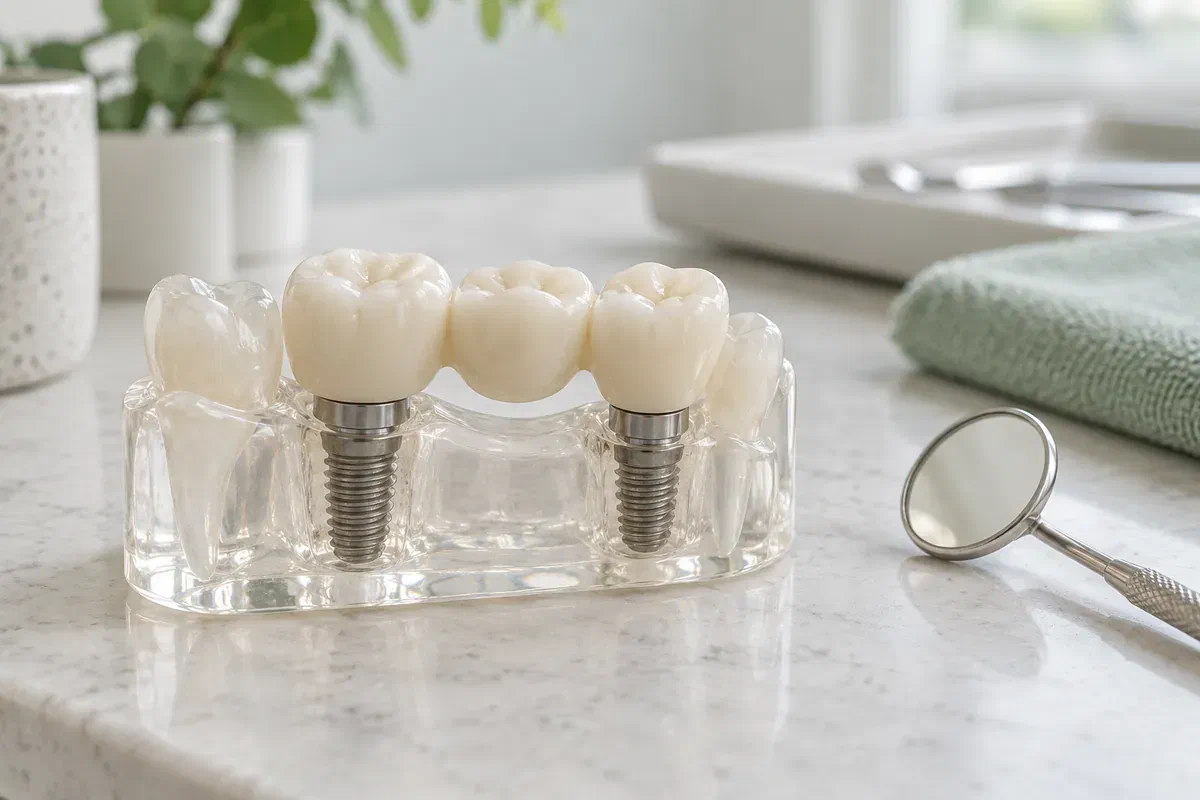
Knowing what each sign might mean helps you judge timing. The implants, your bite and how well you can clean the area all affect the eventual recommendation.
If it is small and not sharp, it may fit into a planned visit. Tell us whether it has happened before, since repeated damage and the state of the remaining bridge influence whether repair or remake is discussed.
Call us when you notice movement, so we can advise on eating and how soon to come. Avoid pushing on the bridge or chewing hard on it, as that can strain parts that might be reusable.
Ongoing soreness or trapped food is worth reporting. A new design may help access, but inflamed tissue needs its own diagnosis and may need attention before any remake.
For severe pain, swelling or bleeding that will not stop, seek prompt care close to home. Otherwise, call us. Please do not glue, tighten or remove an implant bridge yourself.
When the exam confirms the bridge is no longer adequate, a replacement can address what was found and let you reconsider tooth arrangement, material, contacts and space for cleaning. The design still has to work within the position of the implants you keep.
Being clear about limits avoids surprises. A new bridge does not treat every implant or tissue issue, and the support that stays may restrict the design. Ask which concerns the remake should settle and which need separate care, so later visits are not spent on something overlooked.
Patient information: Cambridge University Hospitals — implant restorations and long-term care
Teeth, connecting screws or abutments and implants can each be the weak point. Identifying the right one explains why repair, connection work, a new bridge or a different route is being proposed.
Your experience at meals, while talking and during cleaning tells us a lot. We will use it to shape the design, while being honest about any changes that are not clinically realistic.
Ask how the next bridge will be cleaned, reviewed and repaired, and how often you would need to come in. Upkeep affects design, particularly if the old bridge was hard to keep clean.
The exact sequence depends on the implant system, attachment type and bridge condition. We will tell you early whether removal, extra records, lab time or a referral is likely, so you can plan.
Send or bring implant information, treatment notes and any safely stored loose part. A description of when the problem began and what has been tried lets us prepare.
Dr. Anjum examines the bridge, connections, gums and bite, and X-rays may be taken at the same visit. The findings separate a bridge problem from one that involves the implants.
We go through what stays, what changes and how you will manage meanwhile: materials, design, fees, the number of trips, temporary teeth and any uncertainty in removing the current bridge.
The new bridge is checked for seat, contacts, chewing and cleaning access. Follow-ups covering the implants and gums are scheduled with travel in mind.
A new bridge may feel unlike the old one even in the same gap. Ask for care steps suited to it, and phone us with questions rather than waiting for the next visit.
Ask for a demonstration before you go home. If a spot is hard to reach or food collects somewhere new, call so we can advise or review the design.
A high spot, a click or a sense of movement should be reported, even if you are not due for a visit. Avoid heavy chewing on a section that feels unsteady.
The bridge and implant tissues both need regular review. Keep recommended appointments and confirm whether a dentist nearer home will share maintenance.
These answers can help you plan. What applies to you depends on the design of your bridge, its parts and the health of the mouth around it.
Set up a first visit at our Bronte Street practice for a bridge that has chipped, loosened or started causing trouble. We will examine it and set out a plan, with realistic visit numbers, for repair, replacement or further investigation.
Let us know when booking that you are travelling, and bring implant records, past repair notes and any saved component.
