A broken or worn biting surface
Note whether this has happened before. The size of the damage and the soundness of the remaining bridge help decide between a focused repair and a new restoration.


A faint rocking, a new click or a bite that suddenly lands differently can be unsettling with an implant bridge. For Mississauga households, we check the bridge, its connections, the implants and how you clean it, and then explain what should come next.
Feeling an implant bridge move is unnerving, and the natural fear is that the implants are failing. Often the cause is higher up: a screw that has backed out, a worn connector or cement that has let go. A bridge rests on implants through several parts, and a remake of the bridge does not automatically mean new implants.
Movement is just one possible trigger. Worn porcelain, a fracture in the frame, connections that keep loosening and shapes that are hard to clean also bring people in. Each calls for different advice, which is why a full replacement should wait until the actual cause is known.
Coming from Mississauga, call before you travel so we can advise on eating and timing. At the visit, we review the bridge, its fittings and the mouth around it, then explain what can stay, whether outside expertise would help and how the space will be managed during treatment.
A symptom is only the starting clue. The implants, the way your teeth come together and how cleanable the bridge is all shape the recommendation.
Note whether this has happened before. The size of the damage and the soundness of the remaining bridge help decide between a focused repair and a new restoration.
Any looseness means examining the bridge, the connecting parts and the implants. Avoid testing it with your tongue or chewing on it, and phone the clinic for guidance before your appointment.
Persistent tenderness, swelling or trapped food should be mentioned. A loose bridge can make cleaning harder, yet gum problems also need their own diagnosis and treatment.
If the bridge moves suddenly, hurts or a part comes off, say so when booking. Please do not try to fix, glue or remove an implant bridge yourself.
If the exam shows a bridge no longer meets your needs, a replacement can address those findings. It also opens a discussion about tooth arrangement, material, how the teeth meet and how you clean underneath, all within the constraints of your current implants.
Those constraints should be spelled out. A new bridge cannot fix every implant or gum concern, and the implants that remain may limit the design. Ask which problems the replacement is meant to solve and which need separate treatment or regular monitoring.
Patient information: Cambridge University Hospitals — implant restorations and long-term care
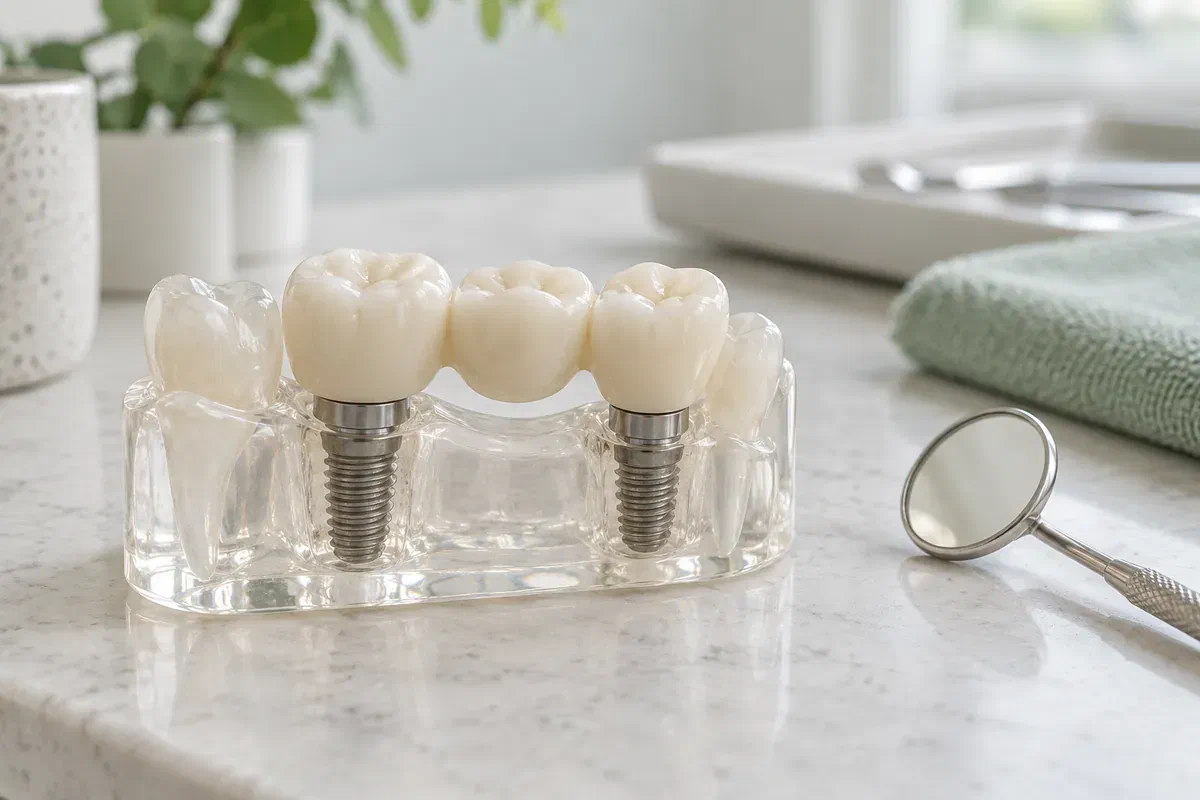
Bridge, screws or abutments, and implants are linked yet distinct. Identifying the source explains whether repair, connection work, a new bridge or other care is being recommended.
Mention when it first felt loose, what you were eating and whether it has happened before. Your experience with meals, speech and cleaning helps the plan, even if some changes are not clinically possible.
Ask how the next bridge will be secured, cleaned, checked and repaired. Maintenance belongs in the design choice, especially after repeated loosening.
Every system fastens a little differently, and a loose bridge may or may not come off easily. Ask whether removal, further records, lab time or referral will be needed.
Tell us when the movement started and share implant details or earlier treatment notes. If a screw or piece came out, keep it safe in a small container and bring it along.
Dr. Anjum examines the bridge, connections, gums and bite. X-rays may be advised. The findings show whether the looseness lies in the bridge or involves the implants.
We review what can be kept and what should change, along with materials, design, fees, number of visits, temporary teeth and any uncertainty about removing the existing bridge.
The finished bridge is checked for seat, contacts, function and cleaning access. You receive care instructions and a review plan covering the implants and gums.
Even in the same position, a new bridge can feel different. Ask for care guidance specific to its design, and report anything unusual you notice during the day.
Ask the team to show you the right tools and angles. If an area is awkward or food collects in a new place, tell us so the technique or design can be reviewed.
A click, a shift or an uneven bite should not be ignored because the bridge is new. Avoid loading a section that feels unsteady and contact us for advice.
Screws, gums and bone all deserve a look at each recall, not only the teeth. Attend recommended visits and confirm who manages maintenance if another office was involved.
Read these before you call or come in. Your own answers will depend on how the bridge is built and fastened, and on the state of the gums and implants.
Book an assessment at our Bronte Street clinic for an implant bridge that feels loose, has broken or is difficult to live with. We will check its condition and explain whether repair, replacement or further investigation is sensible.
Please bring implant records, notes on earlier repairs and any part that came loose, stored safely.
