Broken or worn tooth surfaces
Say whether the damage is a one-off or keeps recurring. Its size and the overall condition of the bridge help decide between a targeted repair and a new restoration.


Told your implant bridge needs replacing and wondering if the implants go too? Coming from Oakville, you can have the bridge, its attachments, the implants and your cleaning access reviewed before deciding how much really needs to change.
It is usually the first thing people ask. An implant bridge has layers: the teeth you see, a framework, small connecting parts and the implants fixed in the bone. When the top layer fails, the implants underneath can often stay. Whether yours can is something an examination, not an assumption, should decide.
So the starting point is the reason for trouble. Chipped or worn porcelain, a fractured frame, a screw that will not stay tight, or a design that traps food each suggest a different response. Even a loose bridge has several possible explanations, and a complete remake is not the automatic outcome.
Before your first appointment, jot down how old the bridge is, where it was made and anything that has changed lately. We will look at the whole restoration and explain which parts still suit you, whether a specialist should weigh in and what happens to the space while new work is prepared.
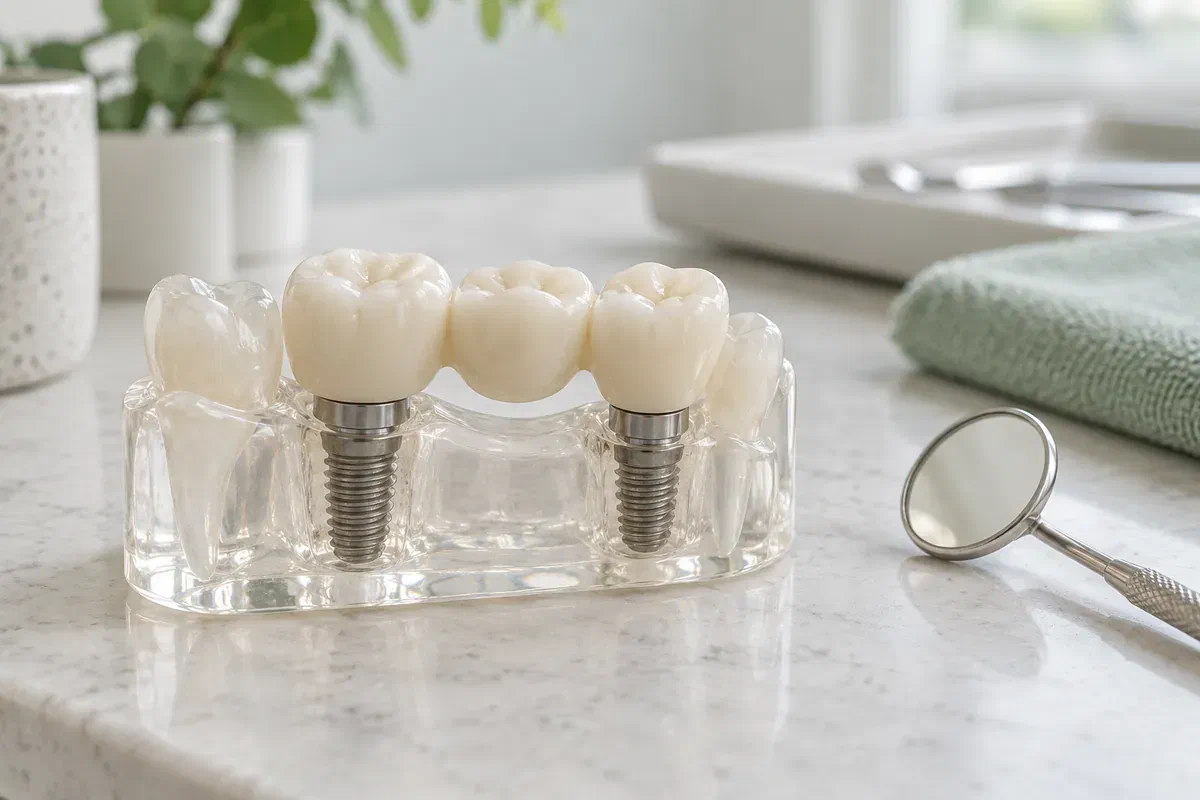
The surface problem starts the conversation. How the implants are doing, how your bite lines up and whether you can keep every part clean shape the eventual recommendation.
Say whether the damage is a one-off or keeps recurring. Its size and the overall condition of the bridge help decide between a targeted repair and a new restoration.
Movement means checking the bridge, its connectors and the implants together. Avoid wiggling it or biting hard on it, and get in touch for advice on eating before your visit.
If food packs in or the gums stay puffy or tender, raise it. Bridge design may play a part, yet the tissue itself needs to be diagnosed and treated as its own concern.
Tell us about sudden looseness, pain or a detached piece when you call. Do not try to reattach, tighten or take out an implant bridge on your own.
Replacing a bridge that no longer suits you can resolve the problems the exam uncovers. It is also an opportunity to reconsider how the teeth are arranged, what they are made of, how they meet the opposite teeth and how easily you can clean beneath them, all within the limits of the implants you already have.
Those limits deserve plain language. A new bridge does not cure every implant or tissue issue on its own, and implants that stay may restrict the design. Ask which of your concerns the replacement should solve and which will need further treatment or watchful follow-up.
Patient information: Cambridge University Hospitals — implant restorations and long-term care
Bridge, connecting components and implants work together but can fail independently. Knowing which layer is involved explains why a repair, a connection fix, a new bridge or another approach is being proposed.
Share what has been easy and what has been frustrating, from eating to speaking to smiling in photos. That input helps, though some preferred changes may not be clinically achievable.
Ask how the next bridge will be cleaned, reviewed and repaired. Building maintenance into the design choice matters most when the current bridge has been hard to keep clean.
The order depends on the implant system, how the bridge attaches and its condition. Ask early whether removal, new records, lab fabrication or a referral will be part of the plan.
Bring any implant details, earlier treatment notes or a safely stored loose part. Explain when symptoms began and what repairs have been tried so far.
Dr. Anjum examines the restoration, connections, gums and bite, and may suggest X-rays. The results show whether the issue sits in the bridge or reaches the supporting implants.
Together we review what can stay and what should change, plus how you will manage during treatment: materials, design, fees, appointment count, temporary teeth and any uncertainty about removing the current bridge.
The new bridge is checked for its seat, contacts, chewing comfort and cleaning access. You leave with home-care steps and a follow-up plan that includes the implants and gums.
A new bridge can feel and clean differently even in the same position. Ask for instructions tailored to its design and let us know about anything that seems off.
Have us show you the brushes, floss or other tools that reach the hidden surfaces. Report any area that is tough to reach or where food now collects.
A high spot, a clicking sound or a sense of movement should be checked. These are not part of normal settling, and an unsteady area should not be loaded heavily.
Both the visible bridge and the tissues around the implants need regular checks. Attend recommended visits and confirm who handles maintenance if another office was involved.
These answers can help you prepare. What applies to your bridge depends on its design, the parts used and the health of the supporting mouth.
Arrange an appointment at our Bronte Street practice and bring the question of whether your implants can stay. We will review the bridge and its support, then explain whether repair, replacement or further investigation fits what we find.
Implant records, notes on earlier repairs and any component that came loose are all worth bringing, if you have them.
