New wear or chipping on the bridge
A tooth that now takes more pressure may chip or flatten. Tell us when you noticed it and whether it has happened before; the pattern and the rest of the bridge guide a repair-or-replace discussion.


Natural teeth shift, opposing teeth get crowned, and gums change, yet an implant bridge stays fixed. For Puslinch households, we look at how the bridge, its connections and implants now fit the mouth around them, including your bite and cleaning access.
Implants do not drift the way natural teeth can. Over years, a neighbouring tooth may tip, an opposing tooth may be crowned, or the gums may recede, and the bridge that once fit neatly starts to meet things differently. That can show up as a new contact point, a food trap or extra wear. Often only the bridge on top needs rethinking, and the implants can remain.
A changed bite is one possibility among several. The porcelain may be chipping, the framework may be strained, a screw may be loosening, or the original shape may simply be hard to clean. Each of these leads to a different response, and a bridge that moves needs its cause found before a full remake is considered.
Tell us what has changed elsewhere in your mouth since the bridge was placed: new fillings, crowns, extractions or orthodontic work. Then we will examine the whole picture and explain which parts still work, whether a specialist opinion would help and how the space would be handled during treatment.
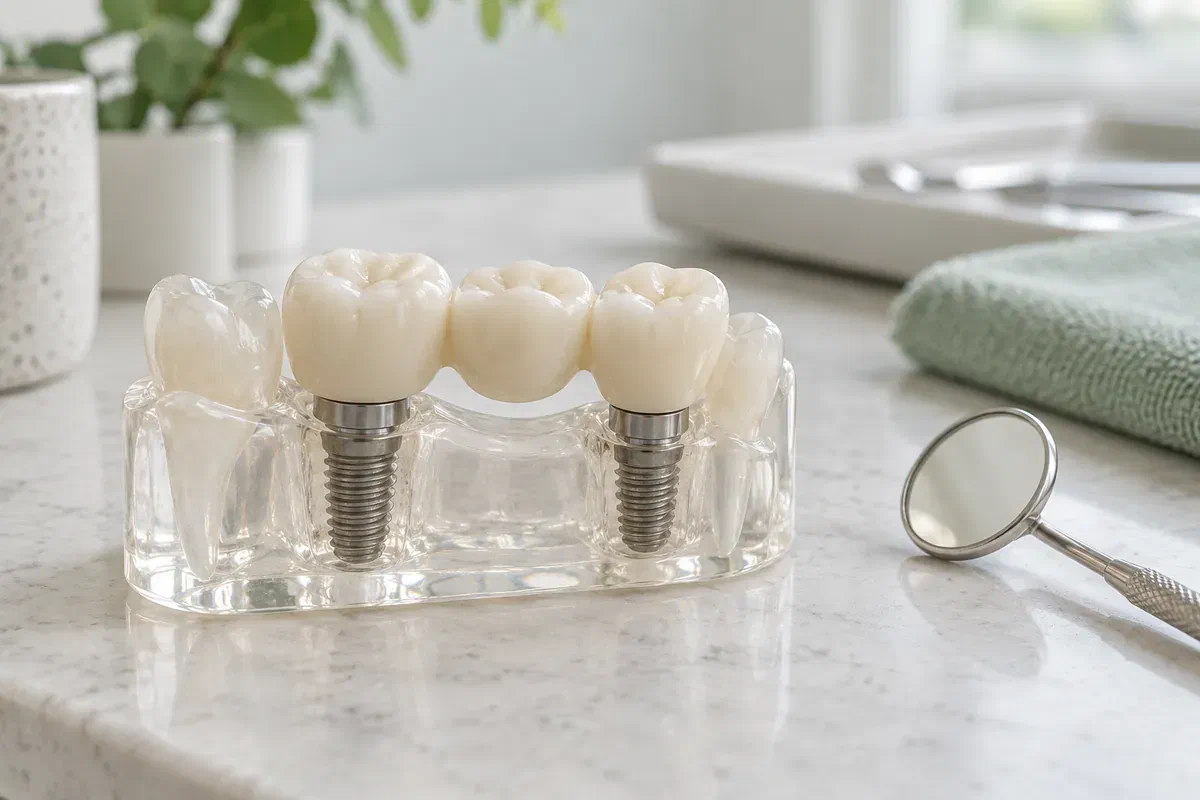
A bite that feels different is a clue worth following. It sits alongside the condition of the implants, the restoration and how cleanable the area is when we decide what to suggest.
A tooth that now takes more pressure may chip or flatten. Tell us when you noticed it and whether it has happened before; the pattern and the rest of the bridge guide a repair-or-replace discussion.
When the bridge hits before your other teeth, or seems to shift under pressure, have it checked. Chew gently, avoid testing it, and call for advice on eating until we can see you.
A neighbouring tooth that has moved can open a space where food collects. Mention any sore or bleeding gums. Design changes may help, but the tissue needs its own assessment.
If the bridge moves suddenly, hurts or loses a piece, say so when booking. Do not try to adjust, glue or remove an implant bridge yourself.
When the exam shows the bridge no longer suits your current bite or gums, replacing it can respond to those changes. A remake also lets us reconsider tooth arrangement, material, contacts with the teeth around it and access for cleaning, within the limits of the retained implants.
Some things a new bridge cannot do. It will not by itself correct shifted natural teeth, treat gum disease or fix an implant concern, and the implant positions may restrict the design. Ask which problems the replacement is aimed at and which may need other treatment or monitoring.
Patient information: Cambridge University Hospitals — implant restorations and long-term care
Sometimes the bridge has worn; sometimes the surrounding teeth have moved. Knowing which explains whether adjustment, repair, connection work, a new bridge or other care is suggested.
Work done on other teeth since the bridge was placed can matter. Share it, along with how chewing, speech and cleaning feel now, recognizing that some changes may not be clinically possible.
Ask how the new bridge would be checked and adjusted as your mouth continues to change, and how cleaning and repairs would be handled. That foresight is part of a sound design.
Bite problems are worked out with records of how your jaws close, so the sequence differs from a simple repair. We will tell you early whether removal, bite records, lab work or a referral is likely.
Bring implant information, notes on the bridge and details of other dental work since it was placed. A loose part, if you kept one, is useful too.
Dr. Anjum studies how the bridge closes against the opposite teeth, then looks at its fittings, the gums and the teeth beside it, with X-rays if appropriate. This separates a bridge problem from changes around it or in the implants.
We talk through which parts can stay, what the bite needs and how you will manage during treatment, covering materials, fees, the number of visits, interim teeth and any risk in removing the existing bridge.
The new bridge is checked against your bite, its seat, comfort and cleaning access. Reviews are planned for the implants, the gums and the surrounding teeth.
A replacement fitted to your current bite may still need fine-tuning. Ask for care advice specific to it, and let us know if anything feels uneven.
New contact points with neighbouring teeth can mean a new cleaning method. Ask for a demonstration, and report any spot where food now gathers.
One tooth hitting first, a click or any sense of movement should be checked. Adjustments are easier early, and an unstable area should not take heavy chewing.
Implants, gums and natural teeth all need regular review as the mouth continues to change. Attend recommended checks and ask who manages maintenance if other offices were involved.
Bite changes can be subtle, so these points may help you describe yours. What applies depends on the bridge and the condition of the teeth and implants around it.
Make an appointment at our Bronte Street clinic about an implant bridge whose fit, bite or comfort has changed. We will look at it alongside your other teeth and tell you whether adjustment, repair, a new bridge or more tests make sense.
Bring implant records and a list of dental work done on other teeth since the bridge was placed.
