Worn or broken teeth on the bridge
Explain whether this is new or recurring. The amount of damage and the state of the remaining bridge guide whether repair is possible, which can depend partly on knowing the original materials.


Implant bridges placed in another province or overseas can come with little paperwork when they later need work. From Rockwood, you can have the bridge, its components, the implants and your cleaning access examined, including steps to identify an unfamiliar system.
People move, travel for treatment or simply lose track of old receipts. Then a bridge chips or loosens and nobody seems to know what it was built on. An implant bridge links replacement teeth to implants through specific components, and knowing the system makes repair or replacement more straightforward. It rarely makes it impossible.
Why the bridge needs attention still comes first. Fractured or worn material, a damaged framework, a connection that will not stay tight or a design that is hard to keep clean each lead to different care. A moving bridge has more than one possible cause, so a full remake is not assumed before the facts are in.
Bring whatever you have: a clinic name, a city, an email, an X-ray on your phone. We will examine the bridge and may use imaging and the parts themselves to narrow down the system. Then we will explain what can stay, whether a specialist should be involved and how the gap would be managed.
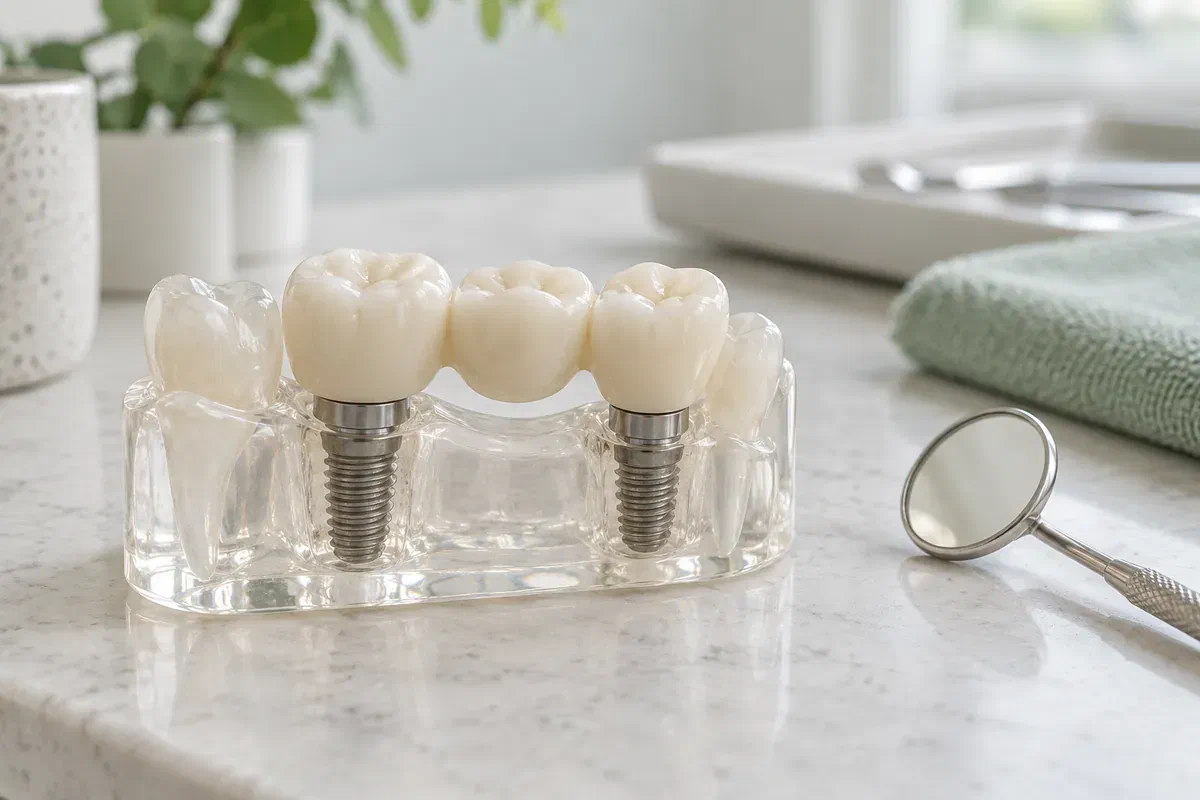
Your symptom gets the assessment started. The health of the implants, your bite and how easily you can clean the bridge all influence what we recommend, records or not.
Explain whether this is new or recurring. The amount of damage and the state of the remaining bridge guide whether repair is possible, which can depend partly on knowing the original materials.
Looseness needs the bridge, its components and the implants examined together. Avoid testing it, chew softly and call for guidance until you are seen.
Food trapping, bleeding or lingering tenderness are worth mentioning. A new design may improve access, but gum problems need their own diagnosis and treatment.
Mention sudden movement, pain or a detached piece when you book. Please do not try to tighten, cement or remove an implant bridge yourself.
If the exam shows the bridge no longer meets your needs, a replacement can address those findings. It is also a chance to reconsider tooth arrangement, material, contacts and the room left for cleaning, within the limits of the implants you are keeping.
Unknown systems can add constraints. Compatible parts may need sourcing, and the position of the existing implants may limit the design. A new bridge also cannot resolve every implant or gum concern on its own. Ask which issues the plan should address and which need further care.
Patient information: Cambridge University Hospitals — implant restorations and long-term care
Knowing the implant type, and which component has actually failed, explains whether repair, connection work, a remake or another approach is being recommended, and why one route may be simpler than another.
Your experience with chewing, speech, appearance and cleaning helps shape the plan, even if the original records are missing and some changes are not clinically possible.
Ask how a new bridge would be cleaned, checked and repaired, and how well its parts can be sourced later. That makes future care simpler wherever you are.
The order depends on the implant system, how the bridge is fastened and its condition. An unfamiliar system may add a step, and we will tell you early if removal, imaging, lab work or referral is likely.
Bring anything that might help: names, dates, photos, X-rays or a part that came out. Describe when problems began and any repairs attempted since.
Dr. Anjum examines the restoration, its connections, the gums and your bite. X-rays can show implant shape and connection features that help with identification.
We explain what can stay, what would change and how you will manage meanwhile: material, design, fees, visits, interim teeth and any uncertainty in removing a bridge whose fastening is unknown.
The new bridge is checked for seat, contacts, function and cleaning access. You leave with care instructions, a review plan and a clear record of the system used.
A replacement may feel different from the bridge you are used to. Ask for care steps suited to its design and let us know about anything that seems off.
Ask the team to demonstrate the tools that reach under and around the new bridge. Report any area that is hard to reach or where food collects.
An uneven bite, a click or a sense of shifting should be reported promptly. These are not normal, and an area that feels unstable should not be loaded heavily.
The gums and bone supporting the implants need checks along with the visible bridge. Attend recommended visits and ask who coordinates care if you move or travel.
Missing records raise particular questions. The answers below are general; what applies to you depends on the system, its parts and the health of the implants and gums.
Book an appointment at our Bronte Street clinic for an implant bridge made elsewhere that is worn, broken or causing problems. We will examine it, work to identify the system and explain whether repair, a new bridge or further investigation is the way forward.
Bring any names, dates, X-rays, photos or loose parts that might help us identify your system.
