You have completed an implant healing stage
Ask what findings are needed before the restorative work proceeds. The elapsed time alone does not determine readiness, and the team may need information from the clinician who placed the implant.


The crown stage turns suitable implant support into a replacement tooth you can see and use. Plan implant crown placement in Milton with attention to readiness, tooth shape and shade, the connection, bite contacts, and daily care.
An implant crown is the tooth-shaped restoration attached to the implant system. The implant within the jaw provides support, while the crown restores the visible part of the tooth. Connecting those parts appropriately requires planning around the implant, the surrounding tissues, neighbouring teeth, and the bite.
Crown placement is a restorative stage, distinct from the surgery that placed the implant. Before proceeding, the treating team needs to establish that the site is ready for the proposed restoration. The timing and sequence can vary, and a temporary crown may have a role before the final one is fitted.
At Milton Dental Clinic, we can review the crown stage and explain the records and decisions involved. Tell us whether the implant was placed elsewhere and bring available system details. You should understand the proposed appearance and attachment method, what will be checked at fitting, and how to care for the completed tooth.
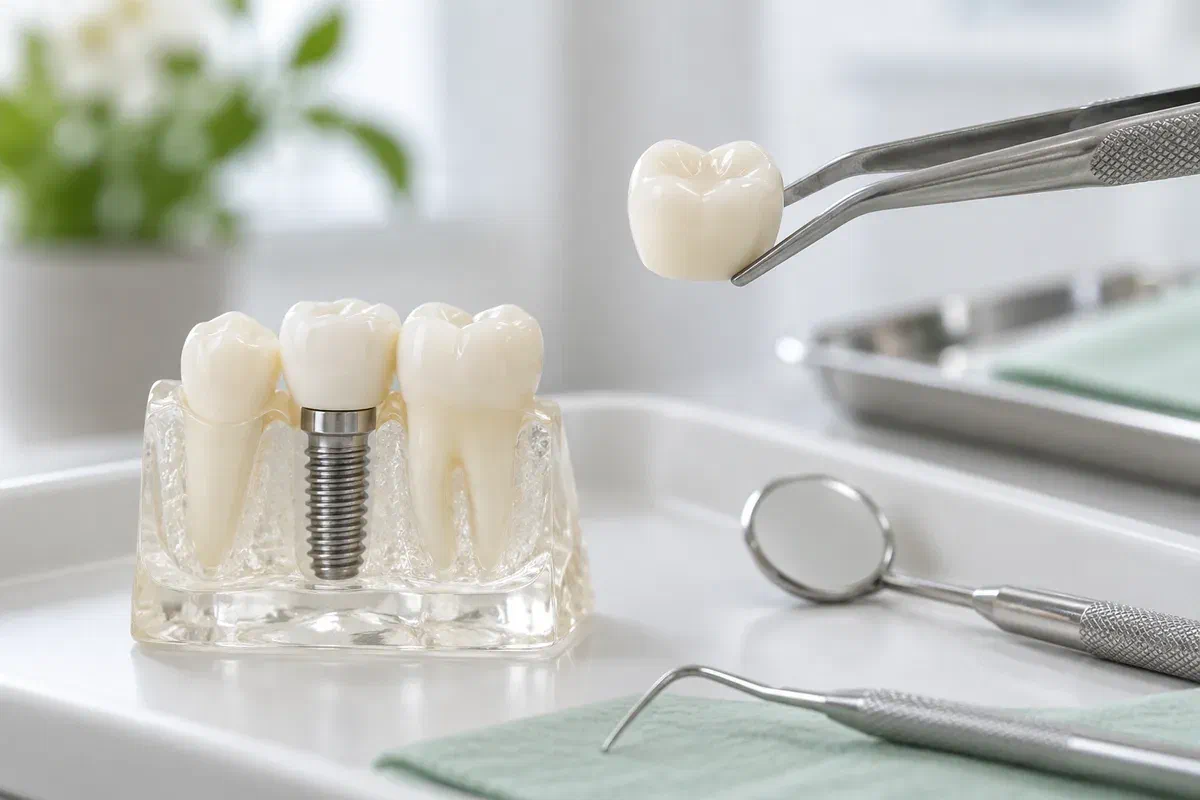
The final tooth should be planned as part of the mouth, not treated as a generic cap for an implant. Bring questions about appearance and function as well as the treatment timetable.
Ask what findings are needed before the restorative work proceeds. The elapsed time alone does not determine readiness, and the team may need information from the clinician who placed the implant.
Discuss shape, shade, position, and the way the gum area will appear. The surrounding mouth and implant position can affect the available choices, so expectations should be reviewed before fabrication.
Implant system details and treatment records help the restorative clinician understand the existing support. Clarify who is coordinating the next steps and which team remains responsible for particular reviews.
If a healing cap or temporary restoration feels loose before the crown appointment, contact the treating team. Do not try to tighten it or wait silently for the scheduled fitting.
A suitable crown provides the tooth form that the implant was intended to support. Its design needs to account for appearance, contacts, the relationship with the gum, and access for cleaning. Those features are considered alongside the appropriate connection to the implant system.
The result has limits and maintenance needs. An implant crown is an artificial restoration, and its material or components can require attention over time. Ask how the proposed design will be assessed and what care will help you identify problems early.
Patient information: Canadian Dental Association — implant restoration stages
Explain what matters to you about the visible tooth, particularly in the front of the mouth. Ask which features can be chosen and which are influenced by the site and retained implant position.
The crown needs to be considered against the opposing teeth and beside its neighbours. Tell the clinician if the fitted tooth feels like an unexpected first contact or if ordinary closure feels different.
The finished contour affects how you clean around the implant crown. Having the technique demonstrated helps you understand the daily care and the changes that should prompt professional review.
The sequence depends on the implant system, tissues, and restorative plan. Ask about the records, temporary components, fitting appointments, and communication needed between clinicians.
The clinician reviews the site, relevant records, and the proposed treatment. Available implant system details help identify compatible components, and any concerns about healing or support need assessment before the crown stage proceeds.
Impressions or digital records capture the information needed for fabrication. Shade, shape, contacts, and the proposed attachment approach are discussed in relation to the surrounding mouth and the intended result.
At fitting, the team checks the restoration's relationship with the implant system, nearby teeth, tissues, and bite. The attachment process follows the selected design, with any necessary adjustments or further work explained.
Confirm when to resume ordinary eating and how to clean the completed crown. A review plan allows the team to assess function and tissue health, including concerns that become apparent during daily use.
The crown and implant need ongoing care even though the replacement tooth is not a natural tooth. Ask for instructions that match the contour, access, and stage of your treatment.
Learn how to clean around the gum margin and between the crown and neighbouring teeth using suitable tools. If access is difficult, ask for another demonstration instead of forcing an unsuitable instrument into the area.
Contact the team about a click, looseness, chipped material, or an unexpected contact during chewing. Do not test a moving crown repeatedly or attempt to adjust the surface or connection at home.
Professional checks consider tissue health, cleaning, contacts, and the restoration. Ask how often you should return and whether the surgical or restorative clinician will manage particular aspects of ongoing care.
These questions address the difference between implant surgery and crown placement, along with practical choices about the finished restoration.
Arrange a visit at our Bronte Street clinic to discuss the crown stage of implant care. We can review the available information and explain the records, appearance choices, fitting checks, and maintenance involved.
Bring implant system details and information from the placing clinician if available, especially when care is transferring between clinics.
