Healing is behind you
The calendar alone doesn’t decide that the site is ready. Ask what the team needs to see, and whether the clinician who placed the implant should share findings first.


When the missing tooth shows every time you smile, its replacement deserves a careful design conversation. From Burlington, you can work with our team on the shade, outline and gum appearance of your implant crown, as well as its bite and upkeep.
Holiday photos, video calls, a laugh with friends: those are the moments people mention when a front implant is waiting for its tooth. The crown is what will appear in them. It is a custom-made tooth fixed to the implant, which supports it from inside the jaw, and in the front of the mouth its colour and outline get extra scrutiny.
Designing it is its own stage of care, distinct from the surgery. First the site must be shown to be ready. In visible areas, a temporary crown is sometimes used for a period, partly to help guide the gum before the definitive tooth. Your own order of steps depends on the case.
We are happy to explain this stage in detail for anyone coming from Burlington. If your implant was placed by another office, let us know and bring the system details. You will hear what choices you have over appearance, how the crown attaches, what we check when it is fitted and how to keep it clean.
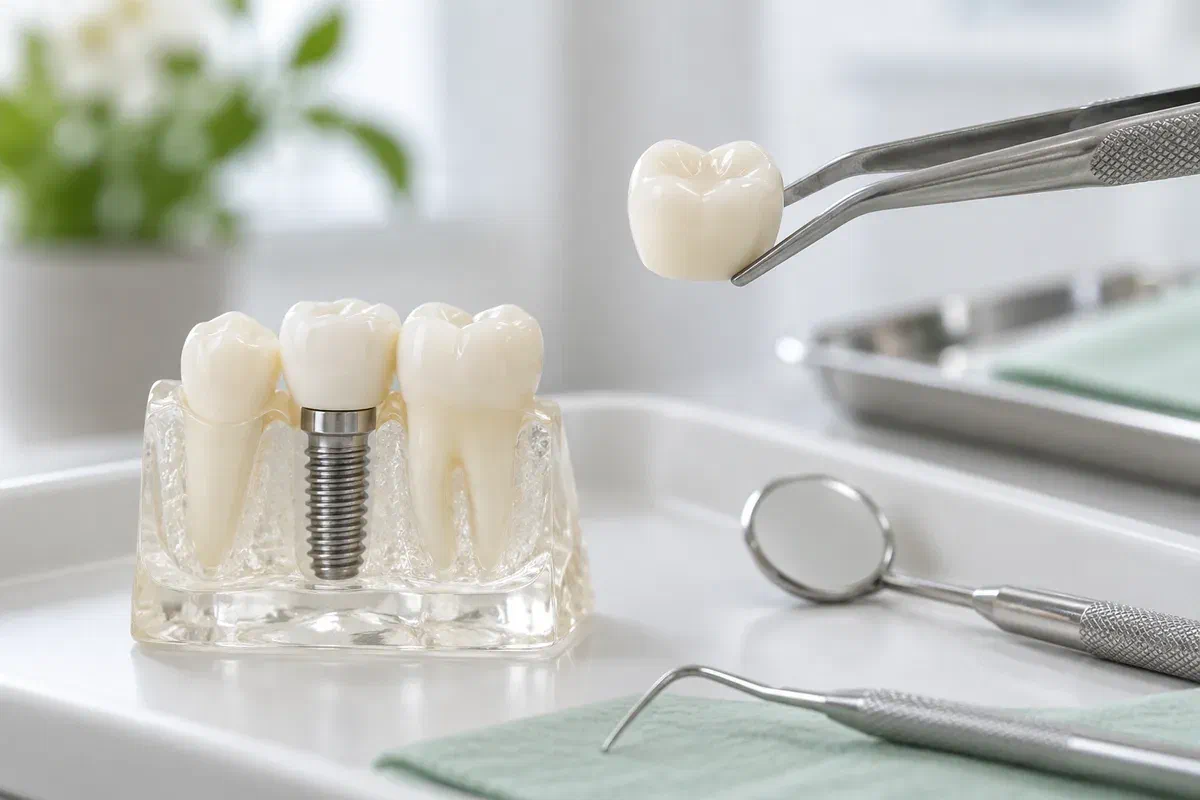
A front crown is judged by eye every day, so expectations matter. Raising these points before the lab begins gives everyone a clearer target.
The calendar alone doesn’t decide that the site is ready. Ask what the team needs to see, and whether the clinician who placed the implant should share findings first.
Talk through colour, translucency, edge shape and how the gum around it should look. The implant’s angle and the surrounding teeth set limits on what can be achieved, so discuss them openly.
Records and component details show what support is in place. Clarify who coordinates from here and which office looks after particular checks.
Is the temporary tooth or healing cap working loose? Phone the treating office. Leave it untightened, and don’t wait in silence for your booked visit.
A well-designed implant crown completes what the implant was placed to do. Beyond looks, the design has to handle how the tooth touches its neighbours, how it emerges from the gum and whether a brush and floss can reach it. Each of those decisions sits alongside the right connection to the implant hardware.
Keep in mind that this is an artificial tooth. Its porcelain or other material, and the small components beneath, may need care or repair over the years. You are entitled to ask how the result will be judged and what you should watch for between visits.
Patient information: Canadian Dental Association — implant restoration stages
Maybe it is the colour, maybe the length, maybe the gum line. Tell the team. You will learn which features can be chosen and which are dictated by the site and the implant’s position.
Front teeth guide your jaw as you bite into food. The crown has to cooperate with the opposing teeth and line up with its neighbours, so say if it seems to catch first.
The outline where crown meets gum affects how you clean. Being shown on your own mouth makes daily care clear and helps you spot changes worth reporting.
Timing varies with the implant system, the gum and the planned restoration. Expect clear information about records, any provisional tooth, the fitting appointment and how clinicians will communicate.
We examine the implant area and go through any available notes. Identifying the system lets us choose compatible parts, and questions about healing are resolved before design work begins.
A scan or impressions capture the position. Shade is often assessed in natural light and discussed with you, along with shape, contacts and how the crown will be held.
We check colour, outline, gum relationship and bite before securing the crown by its planned method. If something needs refining, we explain the options at that point.
You will be told when normal biting can resume and how to clean the area. A follow-up visit lets us see how the crown and gum look after some everyday use.
An implant crown cannot get a cavity the way a natural tooth can, yet the surrounding gum still needs daily attention. Ask for instructions that fit its contour, access and your stage of treatment.
The margin where crown meets gum, and the spaces either side, need regular cleaning with suitable tools. If something doesn’t reach, ask for another demonstration instead of forcing it.
A chip, a click, a feeling of movement or a new high spot should be reported. Avoid wiggling it to check, and never try to adjust the surface or connection at home.
Reviews assess the gum, contacts, your cleaning and the crown itself. Confirm how often you should come in, and which clinic will handle particular parts of ongoing care.
What people ask most when the implant crown will be on display.
Come and talk about the crown stage at our Bronte Street clinic. Using what is known about your implant, we will go through the appearance choices, what is checked when the crown is fitted, and how to maintain it.
A recent photo of your smile from before the tooth was lost, if you have one, can help the appearance discussion.
