Healing appears to be complete
The site’s readiness is confirmed by examination and records, not just elapsed time. Findings from the surgical clinician may be requested before the restorative stage begins.


An implant crown is meant to be part of your mouth for many years, so it pays to think past fitting day. From Erin or Hillsburgh, you can plan the crown stage with our team with an eye on wear, reviews, repairs and the records that make later care simpler.
Ten years from now, how will this tooth be doing? It is a sensible question to ask before the crown is even designed. The implant sits in the jaw as an anchor, and the crown is the manufactured tooth attached on top. Each has its own long-term needs, and choices made now about shape, material and attachment shape the upkeep later.
Crown placement is a restorative phase that follows implant surgery and begins only when the site is shown to be ready. Your plan may include a provisional tooth first, or move to the final crown more directly. Either way, the aim is a restoration that can be cleaned, checked and maintained over time.
For households in Erin, where a dental trip is usually planned around other errands, it makes sense to talk about long-term care from the start. Tell us if your implant was placed elsewhere and bring the system details. We will cover the crown’s look and attachment, what is checked at fitting, and how to care for it year after year.
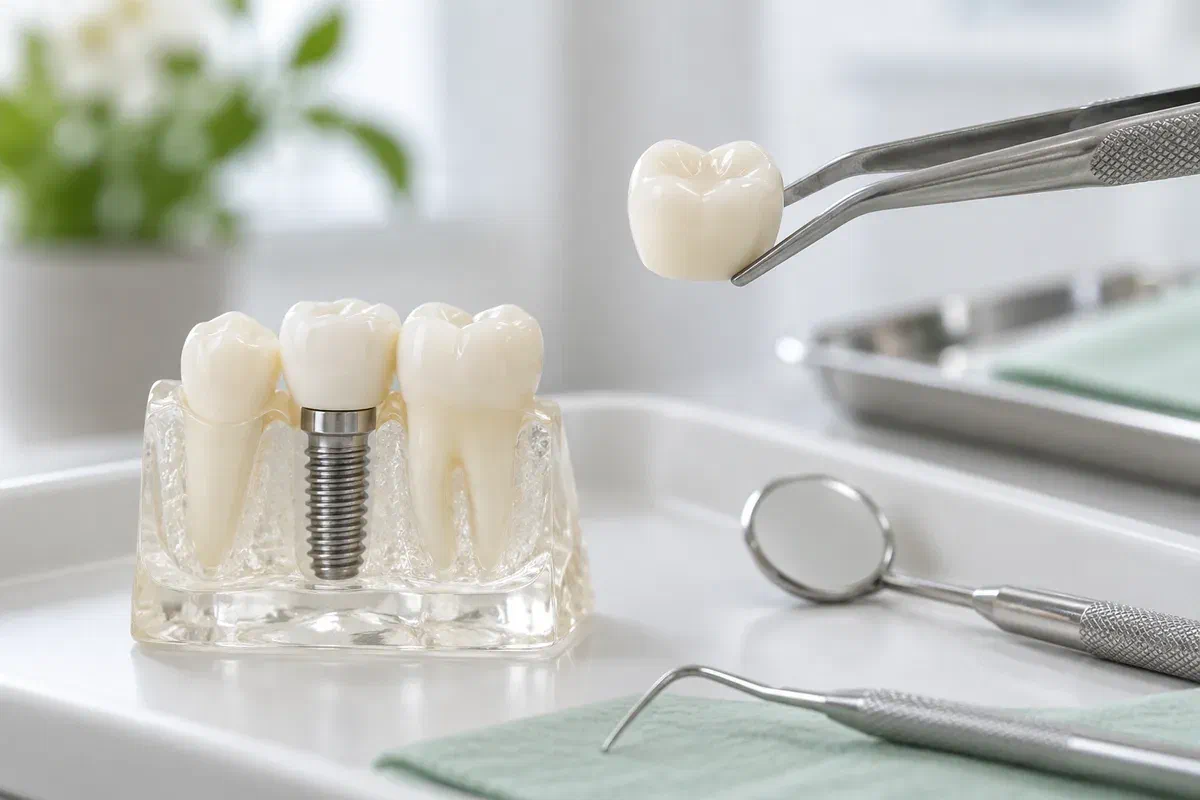
A crown made for your particular mouth tends to age better than a generic one. These three topics are worth raising before anything is fabricated.
The site’s readiness is confirmed by examination and records, not just elapsed time. Findings from the surgical clinician may be requested before the restorative stage begins.
Appearance, shape, position and gum contour can all be discussed, along with how material choice may affect wear. The implant’s position and nearby teeth narrow some options.
System details and treatment notes help any restoring dentist understand the support in place, now and later. Settle who coordinates the current steps and which clinic keeps track of reviews.
Loosening of the healing cap or a provisional tooth before the crown visit is worth a phone call to whoever is treating you. Don’t tighten it yourself or wait quietly for the scheduled appointment.
The crown restores the tooth the implant was placed to support. A durable design considers appearance, how it contacts neighbouring teeth, its fit at the gum and whether you and your hygienist can clean it well, matched to an appropriate connection for your implant.
Long-lasting doesn’t mean maintenance-free. Over time, porcelain may chip, a screw may need re-tightening, or the gum may change. Ask how the crown will be checked across the years, and what you should watch for at home between visits.
Patient information: Canadian Dental Association — implant restoration stages
Talk about what matters to you in the visible tooth. Natural teeth can change colour over the years while a crown doesn’t, so it is worth discussing how that may affect the match.
The crown should share chewing forces with its neighbours and meet the opposing teeth comfortably. Mention clenching or grinding habits, and tell us if it ever feels like the first tooth to touch.
The finished shape decides which cleaning tools work. A demonstration helps you settle into a routine that lasts, and teaches you which changes deserve a check.
How long it takes is set by the system you have, how the tissue has healed and the crown planned. We will explain the records, any temporary parts, fitting visits and communication between clinicians, and talk about the long-term schedule.
We examine the implant site and review records. Knowing the system matters now, for compatible parts, and later, for any repairs. Concerns about healing or support are addressed before proceeding.
Impressions or a scan capture the implant position. Shade, form, contacts and attachment are agreed, with an eye on how each choice affects future cleaning and access.
We check the crown’s seat on the implant components, its relationship to the gum and neighbouring teeth, and your bite. It is attached according to its design, with any adjustment explained.
Before you leave, we go over eating on the new tooth and cleaning it properly. We arrange a first review and discuss how often implant checks should continue.
The crown won’t decay, but the gum and bone around the implant still need daily attention and periodic professional checks. Ask for instructions that suit this crown’s design.
Clean the margin and both sides of the crown with tools that suit its contour. If something doesn’t reach, bring it up at your next visit; a different tool often helps more than extra force.
A rough edge, a slight click, a sense of movement or a contact that feels different are easier to deal with early. Call rather than testing it, and never attempt a repair yourself.
Check-ups look at gum health, contacts, the crown and your cleaning. Confirm the interval that suits you and which office handles particular parts of long-term care.
Questions about wear, repairs and long-term care for an implant crown.
At our Bronte Street clinic, we will review what is known about your implant and talk you through the design, fitting checks and the long-term care plan that will keep it healthy.
Bring your implant system details and any past records; they help with today’s planning and with care in the years to come.
