Your healing period seems complete
Elapsed time is not proof of readiness. Ask which findings the team needs, and request a summary from the surgical clinician if that would help confirm healing.


The crown stage can involve several appointments, so a longer trip calls for a well-organised plan. If you’re coming from Etobicoke, we help you prepare records in advance, group steps sensibly and know what to do if a problem comes up between visits.
Nobody wants to make a long trip only to learn a record is missing. With implant crowns, preparation does a lot of the work. The crown is the custom tooth that attaches to your implant, the post already set in the jaw, and designing it well depends on knowing exactly what lies underneath.
This restorative stage happens after the implant surgery and is planned separately. Before anything is made, the site must be confirmed as ready. Sometimes a provisional tooth is worn first, which can add a visit. Sometimes the final crown follows more directly. We will tell you which applies once we have seen the site.
For people travelling from Etobicoke, the first appointment goes further when you bring the implant system details, the name of the placing clinic and any notes or images. From there, we explain how the tooth will look, how it attaches, what is checked at fitting and how to clean it, and we can talk through how visits might be grouped.
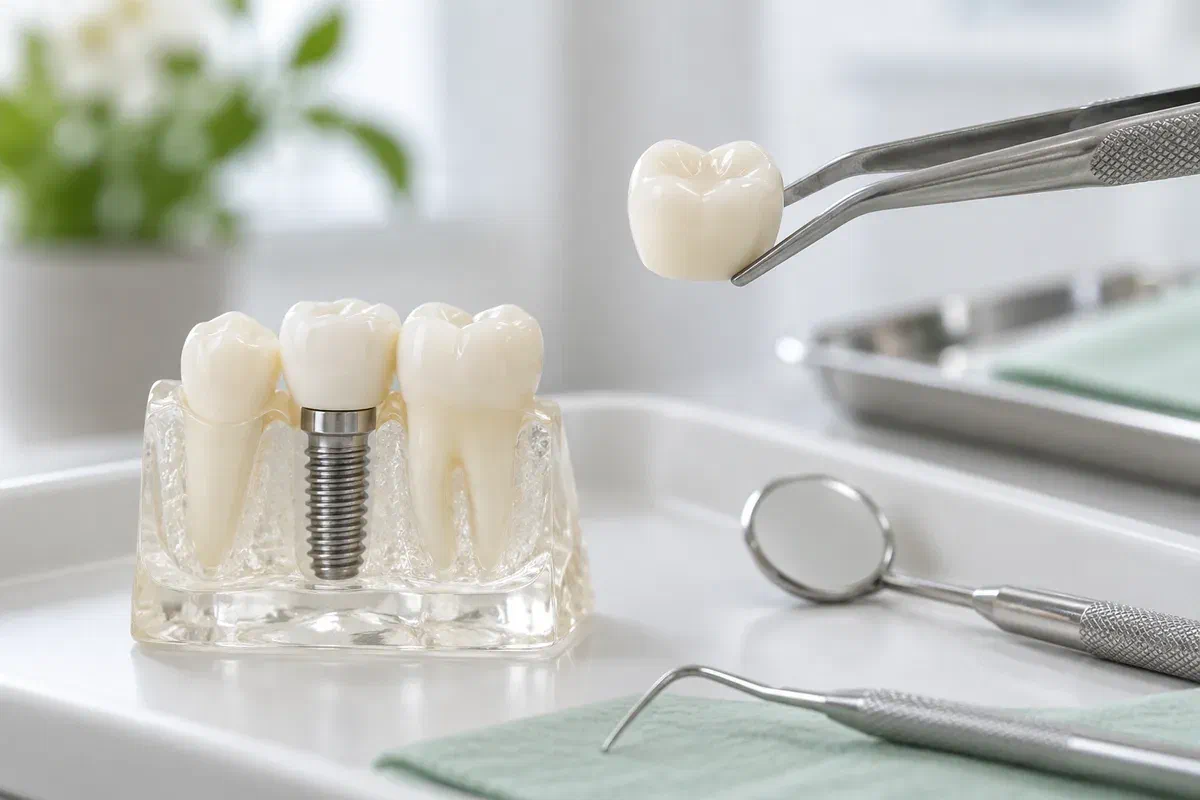
Each of these affects how many trips you make. Clarifying them at the start keeps the crown stage efficient and the result suited to your mouth.
Elapsed time is not proof of readiness. Ask which findings the team needs, and request a summary from the surgical clinician if that would help confirm healing.
Shade, form, position and the gum around the crown all deserve discussion up front. The implant’s location and neighbouring teeth narrow some options, so set realistic expectations before the lab starts.
Having system information in hand before your first visit can spare you a return trip. Confirm who is coordinating and which clinic manages each later review.
Loose healing cap or temporary tooth before the crown appointment? Call the treating team first; they can advise whether a closer clinic should see you. Don’t tighten it yourself or wait it out.
When the crown is planned with complete information, its design can account for appearance, contacts with nearby teeth, how it meets the gum and whether you can clean it, all built on the correct connection for your implant. Good planning tends to reduce the number of unexpected extra visits.
Limits still apply. The crown is a manufactured tooth, and its material or small components may need maintenance in years to come. Ask how the result will be checked, and which signs at home warrant a call before you set out.
Patient information: Canadian Dental Association — implant restoration stages
Come with clear priorities for the visible tooth, especially at the front. The team will explain which features are yours to choose and which follow from the site and implant position.
Make sure the crown sits evenly with its neighbours and meets the opposing teeth comfortably. Mention right away if it lands first or if closing feels unusual.
Its finished shape decides how you clean it. Having the technique shown on your own crown means you leave confident, and you will know which changes justify a professional look.
Timing depends on the implant system, tissue health and the crown design. We aim to explain records, temporary parts, fitting visits and clinician communication early, so you can plan travel.
We assess the site and review what you have from the placing office. Identifying the system lets us source parts before the next visit. Any doubt about healing or support is resolved before going ahead.
A digital scan or impressions record the position for the lab. Shade, form, contacts and the attachment approach are agreed while you are in the chair.
We look at how it meets the implant parts, the gum, the teeth beside it and your bite before securing it by its planned method. Any adjustment is explained on the spot.
You will know when to resume ordinary chewing and how to clean the area. We schedule a review to assess function and the gum, and discuss what to do if something comes up sooner.
Implant crowns still require steady care at home. Your instructions should suit the crown’s shape and attachment, and include what to do if a concern arises far from our office.
Clean the gum margin and the spaces beside the crown with tools suited to its contour. If one won’t reach comfortably, ask for another demonstration before you leave rather than improvising later.
Movement, clicking, a chip or a contact that suddenly feels high are reasons to call. Describe what you notice; we can advise whether to come in or be seen closer to home. Don’t test or adjust it yourself.
Implant check-ups assess gum health, contacts, cleaning and the crown. Confirm the interval, and which clinic will handle which parts of ongoing care, so visits can be planned in advance.
Questions about preparation, timing and what to do between appointments when you live farther away.
We will review your implant information at our Bronte Street clinic and explain the records, appearance options, fitting checks and care, with an appointment plan that keeps travel in mind.
Call ahead to ask what to send before your visit, especially if another clinic holds your implant records.
