You believe healing is complete
Readiness is confirmed by examination and, often, by notes from the surgical clinician. Weeks on the calendar are only part of the evidence.


Every implant comes from a particular system, and the crown has to match it. From Puslinch, you can bring your implant card and treatment notes to our team, and we will use them to plan a crown that fits the hardware, your bite and the teeth beside it.
Tucked in a drawer, many people have a small card or printout from their implant surgery and no idea what it is for. It often names the system and size of the implant, and that information matters now. The crown, which is the tooth you will see and chew with, connects to the implant through parts that need to be compatible.
Crown placement is the restorative phase, carried out after surgery and only once the site is confirmed ready for the planned tooth. In some cases a temporary crown is worn first. In others, the permanent crown follows more directly. The approach depends on your implant and mouth.
Households in Puslinch often have records spread between offices. That is fine; bring what you can find, including the placing clinic’s name. With it, we can explain the crown’s appearance and attachment, what is checked on fitting day and how to keep the area clean.
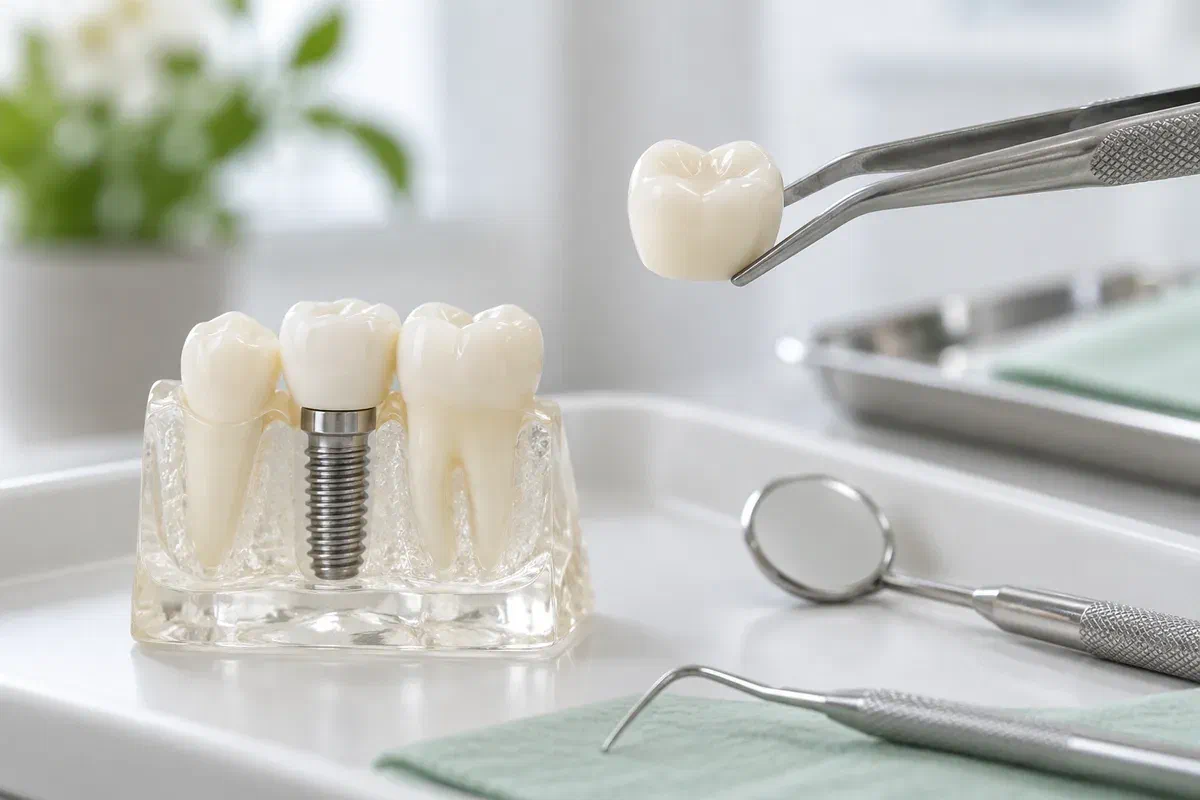
Good records make each of these conversations easier. A crown designed with full information suits your mouth instead of being a generic fit.
Readiness is confirmed by examination and, often, by notes from the surgical clinician. Weeks on the calendar are only part of the evidence.
Shade, shape, position and gum appearance can all be discussed. The implant’s placement and nearby teeth narrow some choices, so it helps to agree on them before fabrication.
System details and surgical notes tell the restoring dentist what support is in place. If you are unsure what to request, we can help you work out who to ask and which clinic coordinates next.
Should a healing cap or temporary tooth come loose before the crown appointment, phone the treating team. Leave it untightened, and don’t wait silently for the booked date.
With the right details, the crown can be designed around the implant it attaches to. Appearance, contacts, the junction with the gum and space for cleaning are all considered, and the connecting components are matched to the system you have.
The crown is still an artificial tooth with limits. Its surface or the parts beneath may need maintenance in time, and good records make that maintenance simpler. Ask how the result will be reviewed and which early signs should prompt a visit.
Patient information: Canadian Dental Association — implant restoration stages
Bring up what matters to you about the visible tooth. The team will explain which features can be chosen and which depend on the site and where the implant sits.
The new tooth has to meet its opposing teeth comfortably and sit evenly with its neighbours. If it touches first, or your bite feels changed, tell the clinician.
The crown’s contour shapes your cleaning. A demonstration in your own mouth makes daily care clearer and helps you spot changes worth a professional look.
Timing depends on your implant system, the tissue and the crown planned. We will explain which records are needed, any temporary parts, the fitting visits and how we will share information with the placing clinic.
We examine the implant area and review your card, notes or images. Knowing the system lets us source compatible parts. If details are missing, we discuss how to obtain them before going further.
Impressions or a scan record the implant’s actual position along with the gum and bite. Shade, shape, contacts and the attachment method are planned with you.
We assess the crown on the implant components, against the tissue, beside its neighbours and in your bite, then secure it by its planned method and explain any adjustment.
You will learn when to resume normal chewing and how to clean the tooth. We note the crown and component details in your file and arrange a review of function and gum health.
Implant crowns are not natural teeth, but they still need daily attention. Instructions should suit this crown’s contour, attachment and your stage of treatment.
Use suitable tools along the gum edge and in the tight spaces on either side. If something won’t reach, ask for the technique to be shown again rather than forcing a tool, and keep a note of which tools work for you.
Clicks, movement, chips or an unexpected contact during chewing should be reported. Avoid testing a moving crown, and don’t try to adjust anything yourself.
Implant check-ups assess gum health, contacts, cleaning and the crown. Confirm the interval, and which office looks after particular parts of ongoing care.
Questions about the information behind an implant crown, and why it matters.
Come to our Bronte Street clinic with whatever implant information you have. We will review it, check the site and go through the records, design choices, fitting and care that the crown stage involves.
If you can’t find your implant card, bring the name of the placing clinic so the system details can be requested.
