You’ve finished the healing phase
Readiness comes from what the examination and records show, rather than the date. The team may want findings from the surgical clinician before taking restorative records.


There is a visit in the crown stage where no tooth appears: the scan or impression appointment. It shapes everything that follows. For anyone coming from Rockwood, we explain what gets recorded, why it matters, and how it leads to a well-fitting implant crown.
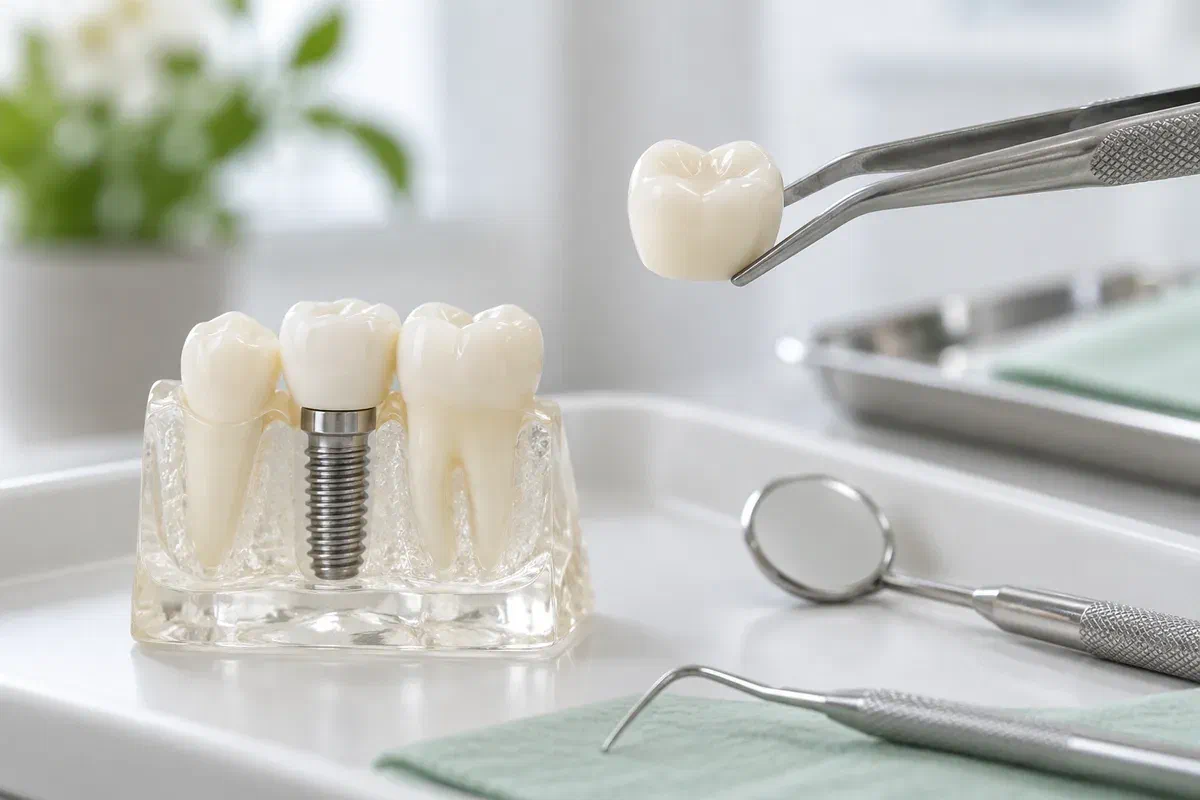
People are sometimes surprised to leave an implant appointment with nothing new in their mouth. That visit is often the records stage. The crown, meaning the tooth that will attach to the implant in your jaw, is built by a lab, and the lab can only work from what is captured about the implant’s position, the gum, the neighbouring teeth and your bite.
Records belong to the restorative stage, which follows surgery and starts once the site is confirmed ready. Depending on the plan, a temporary crown may be fitted for a time before the final one, or the definitive crown may follow the records visit more directly.
If you’re coming from Rockwood, mention whether your implant was placed at another office and bring any system details you have. We will walk you through what is recorded and why, then cover the crown’s appearance and attachment, the checks at fitting and the cleaning routine it needs.
Records are only useful if the site is ready and the goals are agreed. These are the points to settle before impressions or a scan are taken.
Readiness comes from what the examination and records show, rather than the date. The team may want findings from the surgical clinician before taking restorative records.
Shade, outline, position and gum appearance can be talked through before records go to the lab. The implant’s angle and nearby teeth limit some choices, so discuss expectations early.
System details let us use the right recording components and order compatible parts. Agree on who is coordinating and which office handles each later review.
Phone the treating team if a healing cap or temporary tooth becomes loose before your records or fitting visit. Don’t try to tighten it, and don’t leave it until the appointment.
Careful records let the crown be designed for your mouth: its look, its contacts with the teeth beside it, the way it meets the gum and the space left for cleaning. They also confirm the implant’s exact position so the connecting parts line up correctly.
Good records don’t make a crown permanent. It remains an artificial restoration, and porcelain can chip or a connecting part can loosen in later years. Ask how the result will be assessed once it is in, and what changes at home should bring you back.
Patient information: Canadian Dental Association — implant restoration stages
The lab works from instructions as well as models. Tell the team what matters most about the visible tooth, and learn which features depend on the site and the implant’s position.
Bite records show how the opposing teeth meet. At fitting, mention if the crown seems to touch first or if closing feels different from what you are used to.
The finished contour shapes your routine. A demonstration on the fitted crown makes daily care clearer and helps you recognise when to ask for a review.
The detail depends on your implant system, the gum and the crown planned. Beyond the records themselves, we will tell you whether interim components are used, how many fitting appointments are likely and what information passes between your clinicians.
We examine the implant and review available notes. The system type determines which recording and connecting parts we use, and any concern about healing is addressed first.
A digital scan or impressions record the implant position, the tissue shape and how your teeth meet. Shade is assessed, and shape, contacts and attachment are agreed for the lab.
We check how the crown seats on the implant components, its relationship to the tissue and neighbouring teeth, and your bite, then secure it by its planned method and explain any adjustment.
You will learn when to resume normal chewing and how to clean the area. A follow-up visit lets us assess comfort, function and gum health.
Implant crowns are not natural teeth, but they still need daily care. Your instructions should suit the crown’s contour, attachment and your stage of treatment.
Work around the edge of the crown and the spaces beside it with tools that suit its shape. If access is tricky, ask to be shown a different approach rather than forcing something that doesn’t fit.
Looseness, clicking, a chip or a bite that suddenly feels different should be reported. Avoid checking a moving crown repeatedly, and leave any adjustment to the team.
Reviews assess the gum, contacts, cleaning and the crown. Confirm how often to come in and which office manages particular aspects of ongoing care.
Questions about the records stage and how it leads to the finished crown.
At our Bronte Street clinic, we begin by reviewing what is known about your implant. Then we explain each part of the path to a finished crown: the records we take and why, the design choices open to you, what is checked when the crown is fitted, and the care it asks of you afterwards.
Bring implant system details or the placing clinic’s name so the correct recording components can be prepared.
