The crown is chipped, worn, or fractured
The size and location of damage help determine whether a repair is reasonable. Mention earlier chips and any change in the bite so the assessment considers why the material may be failing.


Wear, damage, or a persistent problem can make an existing implant crown worth reassessing. Discuss implant crown replacement in Milton with a review of the visible tooth, connection, implant support, surrounding tissues, and the options for renewal.
Implant crown replacement involves remaking the tooth-shaped restoration attached to an implant system. The crown can wear or become damaged independently of the implant within the jaw. An assessment is needed to establish which component is responsible for the concern and whether the existing support remains suitable.
A chipped surface, repeated loosening, an appearance concern, and difficult cleaning access do not necessarily call for the same treatment. Some situations may be addressed through a limited repair or connection work, while others may justify a new crown. The reason behind the problem matters as much as the visible result.
At Milton Dental Clinic, we can review your existing crown and discuss what replacement would involve. Tell us about earlier repairs and whether anything changed before the current concern appeared. A useful recommendation identifies what would be replaced, what could remain, and what limitations or additional care need to be considered.
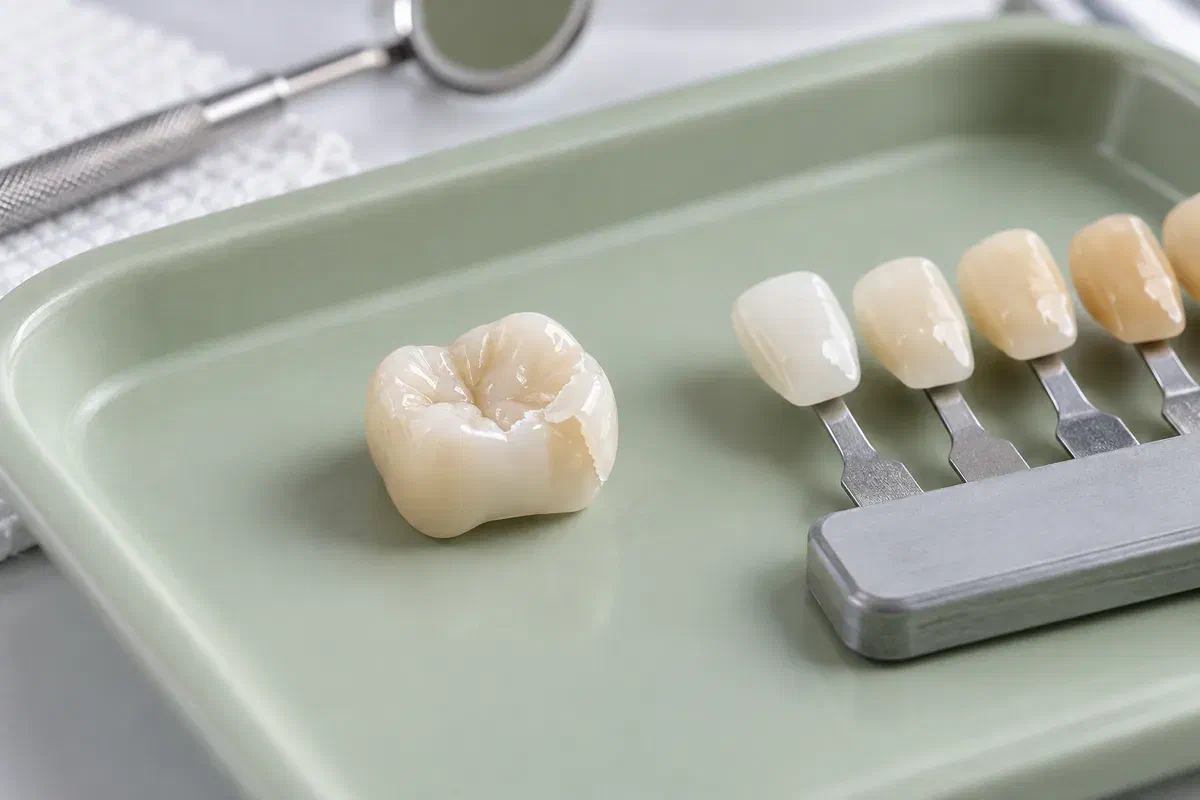
The clinician needs to understand how the crown has functioned and how the concern developed. Previous treatment information can be especially helpful when the implant or crown was provided elsewhere.
The size and location of damage help determine whether a repair is reasonable. Mention earlier chips and any change in the bite so the assessment considers why the material may be failing.
Repeated movement requires review of the connection and other relevant components. A new visible crown is not automatically the solution, and the supporting implant may need assessment as part of the investigation.
Explain the particular feature you want changed, such as shape, visible metal, or food trapping. The implant position and surrounding tissues can limit what a remake alone can achieve.
Contact the clinic about movement or a detached crown before continuing normal use. Keep any safely recovered part in a container and do not glue it back into place.
When replacement is appropriate, a new crown can address features that cannot reasonably be managed within the existing restoration. The discussion may include material, contour, contacts, appearance, and how the crown is retained.
A remake should not hide an unresolved problem beneath a new surface. The implant, connection, and tissues need to be suitable for the proposed work, and recurring causes should be considered. Ask which concerns the new crown is expected to improve and which may require separate care.
Patient information: Cambridge University Hospitals — maintenance of implant restorations
Understanding the source of the concern helps establish the scope of treatment. Ask whether the crown itself is unsuitable or whether a retained component needs attention before a replacement is considered.
Your account of food trapping, contact, appearance, and cleaning can inform the discussion. Explain what was satisfactory about the old crown as well as what you would like improved.
A new material or attachment design may have different implications for access and repair. Ask how future checks and possible component work would be managed rather than considering appearance alone.
The existing attachment method and component information influence the process. Ask about removal of the old crown, temporary arrangements, records, and any investigations needed before fabrication.
Bring available implant records and explain when the crown was fitted, repaired, or tightened. The team reviews your symptoms and priorities, including any recent changes in health, habits, or adjacent dental work.
The clinician checks relevant crown features, contacts, connections, and tissues. Imaging or further assessment may be needed to distinguish a restoration problem from concerns affecting the implant or surrounding support.
Discuss what would change and what would remain, including the connection components. Clarify material and appearance choices, costs, expected visits, the removal process, and how the tooth space would be managed during work.
The replacement is assessed in relation to the implant system, neighbouring teeth, tissues, and bite. You receive care instructions and a review plan, with guidance on what to report if the original concern returns.
A new crown may feel different even when the implant is unchanged. Follow the fitting instructions and pay attention to contacts and cleaning access as you return to ordinary use.
If the crown feels high, catches during chewing, or creates an unfamiliar contact, arrange review. Do not assume the surface needs to wear down or try to reshape the restoration yourself.
The replacement's shape may change how you reach the gum margin and adjacent spaces. Ask the team to demonstrate suitable tools and explain any area where food trapping or access remains difficult.
The retained implant and its surroundings still need maintenance. Tell the team promptly about movement, chipped material, persistent bleeding, or other changes, especially if they resemble the concern that led to replacement.
These questions address common uncertainties about an existing implant tooth. The appropriate treatment depends on identifying the problem rather than assuming every concern requires a new crown.
Arrange a visit at our Bronte Street clinic to review a worn, damaged, or troublesome implant crown. We can explain whether a limited repair, a replacement, or further assessment is the appropriate next step.
Bring available implant details and a history of earlier repairs, along with any safely recovered crown or component.
