Crown layer: chips, cracks or wear
Surface damage usually belongs to the crown. How big it is and where it sits help decide between repair and remake, and earlier chips or a changing bite may explain the cause.


An implant tooth is made of layers, and knowing which layer has a problem changes everything about the fix. If you are coming from Acton, we examine the visible crown, the connecting parts, the implant and the gum, then explain in plain language what would be renewed and what stays.
Picture your implant tooth in three parts. Deep in the jawbone sits the implant, a post that acts like a root. On top of it is a connection, often a small piece called an abutment held by a screw. Above that is the crown, the part you see and chew with. Each layer can have its own problems, and trouble in one does not automatically mean trouble in the others.
That is why a worn or cracked crown can often be replaced while the implant stays where it is. It is also why a crown that keeps loosening may need work on the connection rather than a brand-new crown. Gum concerns, appearance complaints and cleaning difficulties can each trace back to a different layer.
During your visit, mention any earlier repairs, tightening or changes you noticed before the problem started. The aim is a plan that names exactly which layer would be renewed, which could stay as it is and what limits come with your particular implant.
Your description of the symptoms helps the dentist decide which layer to examine first. Records from another office, such as the implant brand, are helpful if the work was done elsewhere.
Surface damage usually belongs to the crown. How big it is and where it sits help decide between repair and remake, and earlier chips or a changing bite may explain the cause.
A crown that shifts often points to the connection. Replacing the crown alone may not help, and the dentist may also need to check the implant beneath.
Food trapping, a dark area near the gum or an awkward outline may involve the crown, the tissue or the implant’s position. Some of these a remake can improve; others it cannot.
If the crown or a part comes off, call before eating on that side. Keep every piece in a container, and never glue an implant crown back in.
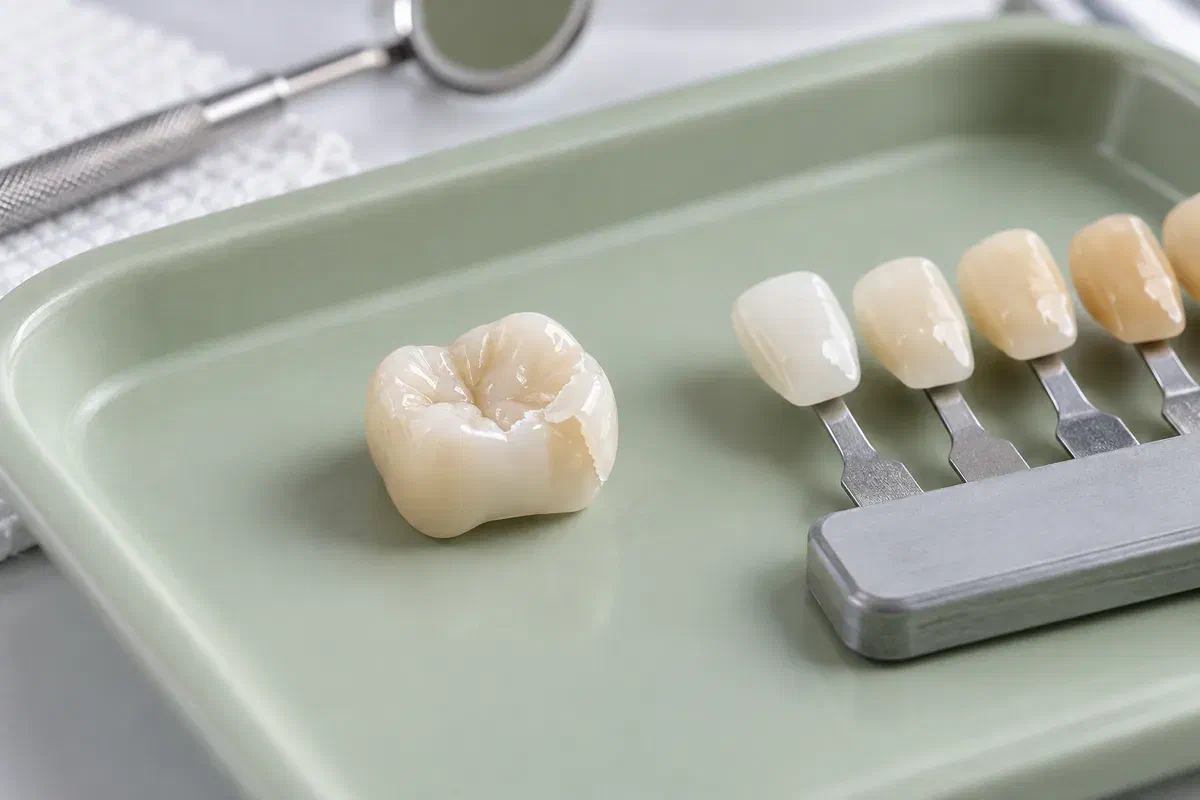
When the crown layer is genuinely the issue, a remake can change its material, shape, contacts with neighbouring teeth, shade and how it is retained on the connection.
If the connection or the implant and gum underneath are involved, a new crown alone will not fix things and may just hide them. Those layers need to be suitable before new work goes on top. Ask which of your concerns the new crown will address and which belong to another layer.
Patient information: Cambridge University Hospitals — maintenance of implant restorations
A clear answer here sets the scope of treatment. The dentist should explain whether the crown is unsuitable or a component underneath needs attention first.
Your sense of whether the tooth wiggles, catches food or looks wrong points to different layers. Mention what you liked about the old crown, too.
Some attachment designs make it easier to reach the connection for checks or repairs later. Ask about that before choosing on appearance alone.
The type of connection and the implant system you have influence each step. You can ask how the old crown comes off, what covers the space meanwhile and which records or tests are required.
Share any implant card or records and tell us about fitting, repairs and retightening. We also ask about health, habits such as clenching and recent work on nearby teeth.
The dentist checks the crown surfaces and contacts, the connection and the gum. X-rays or other tests may be needed to see the implant and bone layer clearly.
You hear what would be replaced and what would be reused, including any components. Material and shade, fees, visits, removal and temporary arrangements are all discussed.
The finished crown is checked on its connection and against neighbouring teeth, gum and bite. You receive care instructions and a review date, plus signs to report early.
A remade crown may feel unfamiliar even though the implant has not changed. Follow the instructions from your fitting visit and pay attention to contacts and cleaning in the following weeks.
A high spot or catch can strain the connection. Book a quick adjustment rather than waiting for it to settle or filing it yourself.
The junction between crown and gum is where cleaning matters most. Ask us to show you suitable tools for the new contour and point out any trouble spots.
Regular checks help catch changes in the connection, implant or gum. Tell us promptly about movement, chips, ongoing bleeding or a familiar symptom.
These answers explain the layers of an implant tooth and how they affect replacement. The right treatment depends on which part has the problem.
Come in to our Bronte Street practice with an implant crown that is worn, damaged or loose. You will hear which part is responsible and whether repair, a new crown or deeper care makes sense.
Bring any implant card or records, notes on past repairs and any part that has come loose.
