Chipping alongside the movement
Damage to the crown can hint at heavy forces on the tooth. Its size and location help decide whether repair is enough, and earlier chips or bite changes are worth mentioning.


A faint click when you bite, a crown that shifts under your tongue, or looseness that keeps returning after it was fixed are all worth investigating. For people travelling from Brampton, we examine the crown, its connection, the implant and the gum before deciding what to renew.
It starts small: a slight give when you chew, a click you can hear in a quiet room, a sense that the tooth is not quite as solid as it was. An implant tooth is built in layers, with the crown attached to the implant through a connection, and movement can come from any of those layers. The implant itself is not necessarily the culprit.
A crown that has loosened once may just need its connection attended to. One that keeps loosening after being fixed raises different questions about the parts, the bite or the design. Chips, cleaning difficulties and appearance concerns sometimes come along too, and they may or may not share a cause.
Try to recall how often the crown has moved, what was done each time and whether anything changed beforehand, such as new dental work or a habit of clenching. We will explain what replacing the crown would involve, what could remain and what else may need attention.
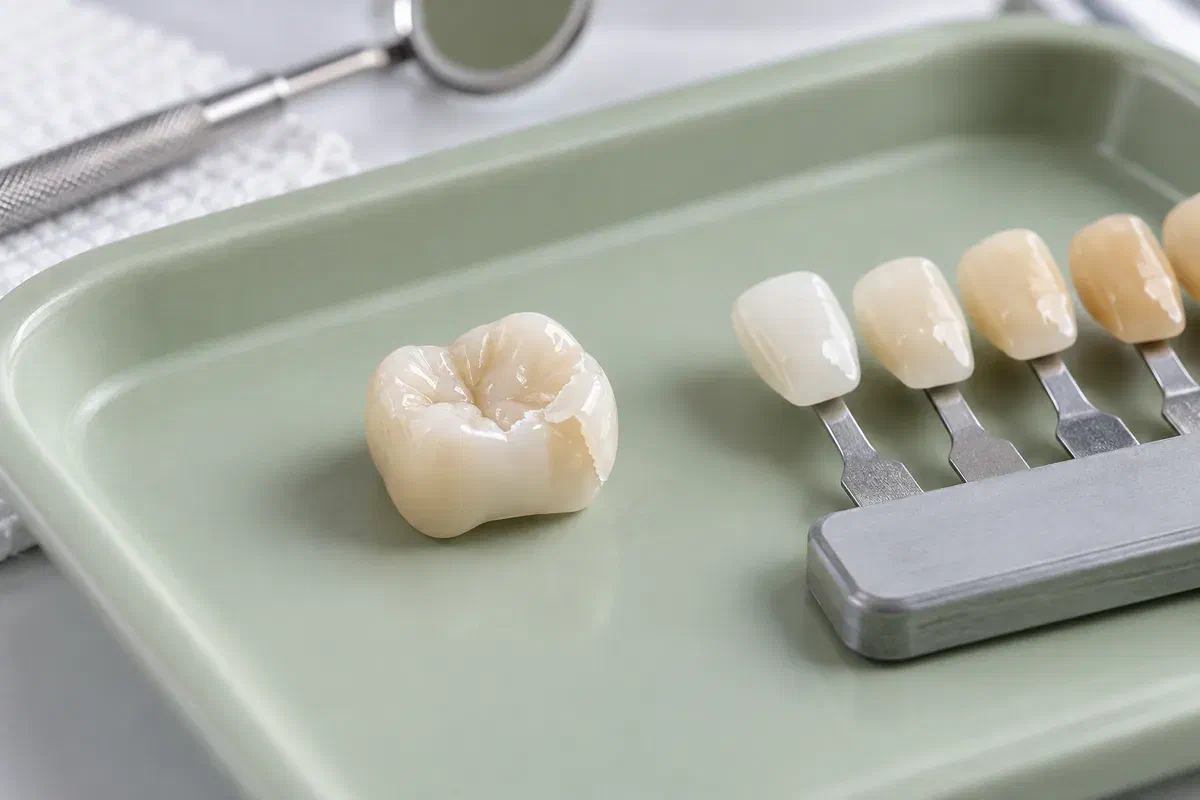
The timeline of a recurring problem tells the dentist a lot. If another office placed the implant or made earlier repairs, any notes from them help.
Damage to the crown can hint at heavy forces on the tooth. Its size and location help decide whether repair is enough, and earlier chips or bite changes are worth mentioning.
Repeated looseness calls for a careful look at the connection and related components. A new crown is not automatically the answer, and the implant may need to be assessed as well.
Movement can open small gaps where food collects, and some people also notice the tooth looks slightly out of line. Describe what you notice, since implant position and gum shape affect what a remake could change.
When a crown moves, call the clinic before continuing to chew on it. Do not tighten it with tools or glue it, and keep any piece that comes off in a safe container.
If a remake is warranted, it can bring changes the existing crown cannot: a different material, a revised shape, better contacts with nearby teeth or a different method of retention.
A new crown on top of a faulty connection will likely loosen again. The implant, its components and the gum need to be in suitable condition, and anything that keeps working the crown loose should be identified. Ask which concerns a remake will address and which require separate steps.
Patient information: Cambridge University Hospitals — maintenance of implant restorations
The source of the movement sets the size of the job. Ask whether the crown is truly unsuitable or a component should be dealt with before a replacement is discussed.
When it moves, how it feels and whether food gets trapped all inform the plan. Mention what was fine about the old crown as well.
Attachment methods differ in how easily the crown can be accessed later. Ask how future component checks would work before settling on the look.
The way the crown is attached and the components in your system shape each visit. Ask about removal, temporary cover, records and whether additional tests are needed first.
Bring implant records if you have them. Walk us through every time the crown has loosened, who tightened or repaired it and how long each fix lasted. We also review your priorities and any changes in health or nearby teeth.
The dentist examines the crown and its fit, the contacts, the connection and the tissue. Imaging may be needed to rule out a concern with the implant or bone.
We explain which parts would be replaced and which would stay. You can ask about material, appearance, fees, visits, the removal process and how the space is managed.
The finished crown is assessed with the implant system, adjacent teeth, gum and bite. You get aftercare advice and a review plan, with guidance on what to watch for.
Even with the implant unchanged, a fresh crown may feel different at first. Follow the instructions given at fitting and notice how contacts and cleaning feel during ordinary meals.
Should the tooth feel high or catch on certain foods, arrange a visit. Uneven contact can strain the connection, so do not wait for it to settle or adjust it yourself.
A new contour may change how floss and brushes reach the gumline. Ask for a demonstration and mention any spot where food still lingers.
The implant and its surroundings still need regular checks. Tell us promptly about looseness, chips, bleeding that persists or anything familiar from before.
These questions cover what people commonly ask when an implant tooth starts to move. The right treatment depends on identifying the cause, and many loose crowns do not need replacing.
Our Bronte Street practice can see you for a crown that clicks, shifts or keeps loosening. Once we know where the movement starts, you will hear whether servicing the connection, a new crown or a wider assessment makes most sense.
Note how often the crown has loosened and bring any implant records, repair history and any part that came off.
