Wear, chips or a cracked surface
A crown that now meets the opposite teeth differently can wear or chip. The damage’s size and location shape whether repair works, and the dentist will look at how your bite has changed.


Natural teeth drift and change over the years, but an implant stays exactly where it was placed. When a gap opens beside your implant tooth or your bite starts to feel uneven, people from Georgetown can have the crown, the parts beneath it and the surrounding gum reviewed before anything is remade.
An implant is fixed in the bone, so it does not drift the way natural teeth can. Over time the teeth around it may shift slightly, wear down or be restored with new fillings and crowns. The result can be a small space where food now collects, an implant tooth that suddenly feels high, or a contact that has gone from snug to loose.
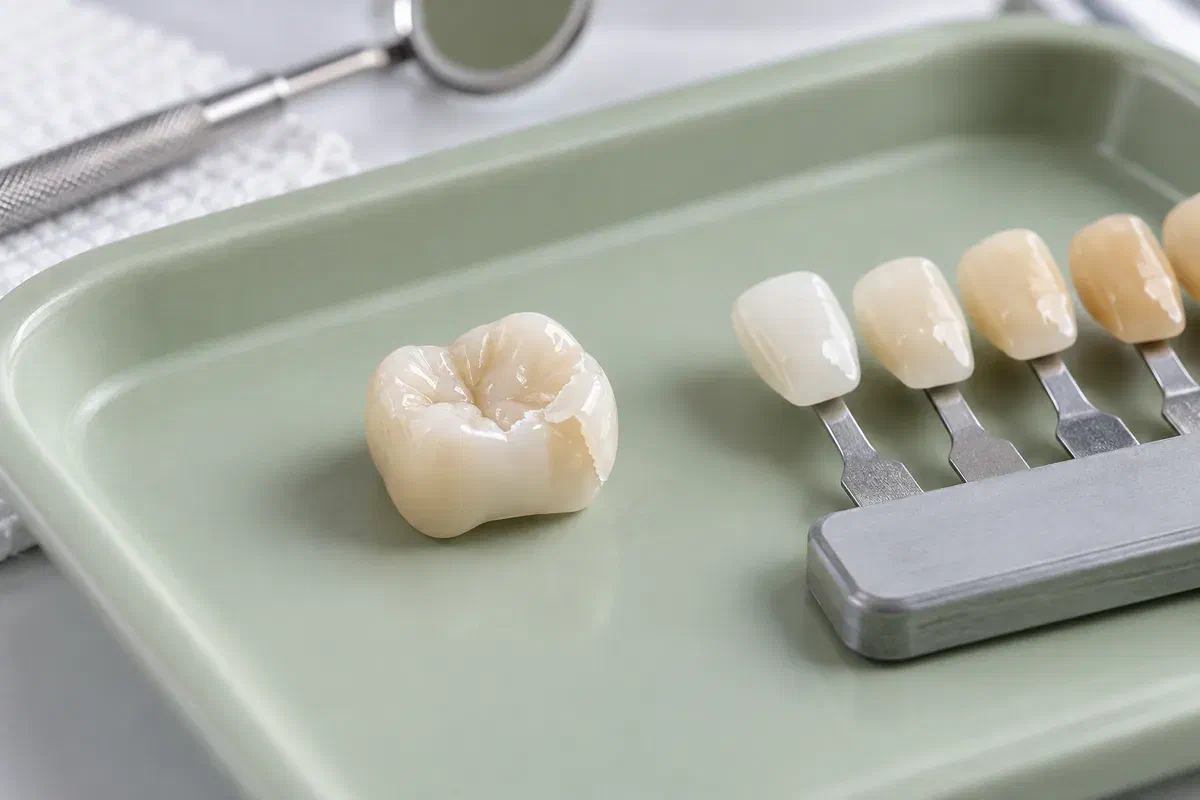
The crown on an implant is a separate, replaceable piece. Sometimes a changed relationship with the neighbours can be handled by adjusting a contact or the bite. In other situations a remade crown with a new shape is the better option. Movement of the crown itself, chips or gum changes can complicate the picture, and each needs its own look.
Let us know what dental work has been done nearby since the implant went in, whether you wear a retainer or guard, and when you first noticed the change. The plan we offer should be clear about which parts would be replaced, which would stay and what limits apply.
Describe what you notice and roughly when it began. If the implant was placed at another office, records of the system and parts make the assessment smoother.
A crown that now meets the opposite teeth differently can wear or chip. The damage’s size and location shape whether repair works, and the dentist will look at how your bite has changed.
Uneven forces from a changed bite can work on the connection. Recurring looseness needs a careful look at the components, and the implant may need assessing as well.
An opened contact can catch food every meal. Explain what bothers you, because the implant’s fixed position and the gum around it affect what a new crown can achieve.
If the crown shifts or detaches, call before chewing on it again. Keep any part in a small container, and do not try to glue it in place.
A remake, where appropriate, can restore contact with teeth that have moved, rebalance the bite, update the shape for easier cleaning or bring the colour closer to restored neighbours. Material and retention method can be reconsidered at the same time.
Still, a new crown should not hide an ongoing issue. If teeth are continuing to move, or the connection or gum is not in suitable condition, that needs attention. Ask what the remake is expected to improve and what might require other steps, such as monitoring bite changes.
Patient information: Cambridge University Hospitals — maintenance of implant restorations
Changes in neighbouring teeth, a worn crown and a connection fault can all feel similar. The source determines whether an adjustment, a component fix or a new crown is needed.
Tell us where food now catches, how chewing feels and whether flossing has become harder. Describe what worked well about the crown before these changes appeared.
Because neighbouring teeth may keep changing, maintenance access matters. Ask how a given material or attachment would be reviewed and serviced in future.
Your implant system and how the current crown is attached shape each step. You can ask how the crown would be removed, how the space is managed and which tests are needed before anything new is made.
We ask about dental work nearby, orthodontic treatment, grinding, health changes and any repairs to the implant tooth. Bring whatever records you have.
The dentist examines how the crown meets its neighbours and the opposing teeth, plus the connection and gum. Imaging may help separate a crown issue from one affecting the implant.
You hear what would change and what would stay. We cover material and shade, fees, appointments, removal of the existing crown and how the space is handled in between.
Your finished crown is tested for how it meets both neighbours and the opposing teeth, as well as its fit on the components and at the gum. You get instructions, a review appointment and advice on changes worth reporting.
The replacement may feel unfamiliar even though the implant is unchanged. Follow your fitting instructions and pay attention to contacts and cleaning as you eat normally again.
If one side touches first or the tooth catches, let us check it. It is not designed to wear into position, and reshaping it at home is unsafe.
Tighter or reshaped contacts may feel different. Ask us to show you suitable aids and tell us if food still lodges in the same spot.
Regular checks of the implant, gum and surrounding teeth help spot further shifts early. Report movement, chips, bleeding that continues or a return of the gap.
These questions cover what happens when the teeth around an implant change over time. The right response depends on the cause, and a new crown is only one possibility.
Visit our Bronte Street practice if a gap, uneven bite or loose contact has developed around an implant crown. After examining it, we will talk through whether adjusting, remaking or further assessment is the best route.
Bring a list of dental work done near the implant, any records you have and any part that has come off.
