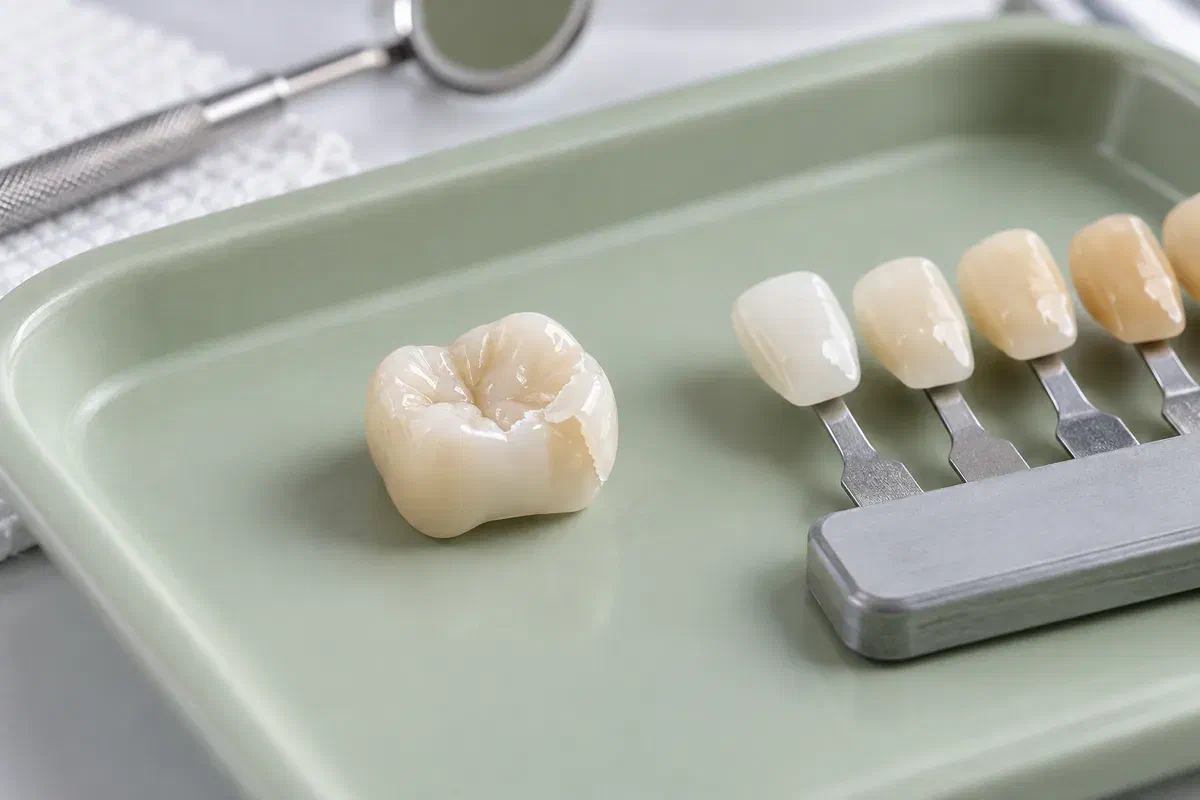
Worn biting surfaces or small fractures
Long use can flatten or chip the material. The location and depth of the damage help decide whether polishing or repair is enough, and a change in your bite over the years may explain why it happened.


An implant crown that has served you for many years may still be fine, or it may be ready for renewal. Close to Old Milton, our team reviews the tooth itself, its connection, the implant and the gum before recommending repair, monitoring or a new crown.
Plenty of people living around Milton’s historic downtown have had an implant tooth for a decade or more. Over that time the crown on top can dull, wear flat or pick up small chips, even while the implant in the jaw carries on without trouble. The two are separate pieces, so a tired-looking crown does not mean the foundation is failing.
Years alone are not a reason to remake it. What matters is how the crown is behaving now: whether it still fits snugly against its neighbours, whether you can clean around it, whether it has loosened, and whether its appearance still matches the teeth beside it. Each of those points leads to a different answer, from simple monitoring to a full replacement.
Bring what you remember about when the implant was placed and who did the work, along with any repairs since. Our recommendation should make clear which parts would be renewed, which can stay, and what the existing implant position allows.
Your memory of how the crown felt in its early years is useful information. If the original records are with another office, we can talk about how to request them.
Long use can flatten or chip the material. The location and depth of the damage help decide whether polishing or repair is enough, and a change in your bite over the years may explain why it happened.
A crown that has started to move points to the connection and the components holding it. Replacing the visible tooth alone may not fix that, and the implant itself may need checking.
Neighbouring natural teeth change colour and position over time, while the crown does not. Tell us whether it is the colour, the outline or a gap at the gum that bothers you, because the implant position can limit what a remake changes.
If an older crown suddenly moves or comes away, call before chewing on that side. Keep the piece in a small container and resist the urge to fix it with household glue.
When a new crown is the right choice, it can bring the tooth up to date with the mouth around it: a closer shade, a better contact with the neighbours, a contour that is easier to clean or a sturdier material.
It should not paper over an issue underneath. The implant, the connection and the gum need to be healthy enough for the new work, and anything that has been wearing the old crown down should be understood. Ask which of your concerns the remake is meant to solve and which need separate attention.
Patient information: Cambridge University Hospitals — maintenance of implant restorations
The scope of treatment depends on the source. Ask whether the crown has simply reached the end of its life or whether a component underneath needs attention first.
After years with the same tooth, you know its quirks. Share what felt right as well as what you would change, so the new design keeps the good parts.
Materials and attachment methods differ in how easy they are to clean, check and repair later. Ask how future maintenance would work before settling on a look.
Older implant systems can vary, so identifying the parts in your mouth is an early task. You can ask how the old crown would come off, what covers the space in the meantime and whether extra tests are needed.
Share any implant card, letter or invoice that names the system, and tell us when the crown was fitted or repaired. We also ask about health changes, grinding and work on the teeth nearby.
The dentist examines the surfaces, contacts, connection and gum. X-rays may help show whether the concern is in the crown or in the implant and bone supporting it.
We set out what would change and what would remain, including components. Material, shade, fees, the number of appointments, removal and the temporary plan for the space are all open for discussion.
The finished crown is checked against the implant system, adjacent teeth, gum and how you close. You get care advice, a follow-up date and a list of changes worth reporting.
The replacement may feel different from the crown you knew for years, even though the implant has not moved. Follow your fitting instructions and pay attention to contacts and cleaning as you return to normal meals.
A high spot, a catch while chewing or a new contact should be adjusted at the clinic. Waiting for it to wear in, or trying to file it, can cause more trouble.
A new contour can shift where floss and small brushes need to go. Ask for a quick demonstration, and mention any corner where food still lodges.
The implant and gum still benefit from regular review. Let us know about movement, chipping, bleeding that lingers or anything that resembles the old problem.
These questions come up most often with implant teeth that have been in place for many years. The treatment depends on what the examination finds, not on the crown’s age.
Our Bronte Street practice sits close to Milton’s historic downtown. Book a visit and we will examine your older implant crown and tell you whether it needs monitoring, a repair or replacement.
Bring any implant card or treatment letter you have, notes on past repairs and any piece that has come loose.
