A chipped, cracked or worn crown
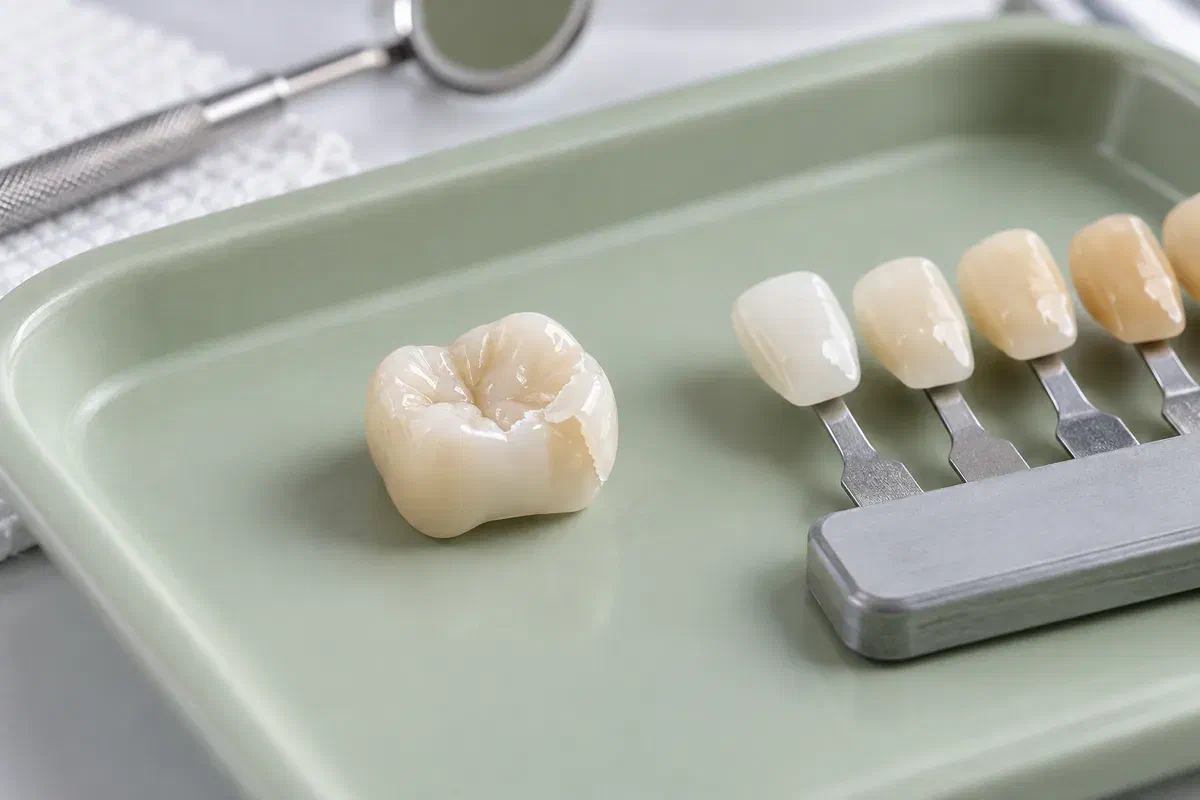
This kind of damage usually involves the crown material rather than the implant. Its size and position help decide whether repair is possible, and previous chips or a changed bite may explain why it happened.


When something goes wrong with an implant tooth, the first fear is usually that the whole implant has failed. Often the trouble is in the crown or the parts that hold it. If you are travelling from Rockwood, we can examine every piece and explain calmly what is happening and what can be done.
You invested time and money in your implant, so any wobble, crack or odd sensation can feel alarming. It helps to know that the crown, the tooth you see, is a separate piece attached to the implant through connecting parts. Plenty of problems stay at that upper level, and the implant anchored in the jaw can remain perfectly healthy.
That said, some signs do deserve a closer look below the surface. Ongoing bleeding, swelling, discomfort around the gum or movement that seems to come from deeper down are worth prompt attention. A careful examination, often with an X-ray, is how the dentist tells a crown issue from one involving the implant or bone.
Tell us when the implant was placed, what repairs it has had and what you noticed first. Rather than guessing, we will explain where the problem sits, what could be kept, what might need renewing and what limits your situation carries.
How a symptom developed helps the dentist place it. Records from the office that did the implant can make the assessment quicker if you have them.
This kind of damage usually involves the crown material rather than the implant. Its size and position help decide whether repair is possible, and previous chips or a changed bite may explain why it happened.
Movement can come from the crown, the connection or, less often, the implant. Recurring looseness needs a thorough look at the parts, and a new crown is not automatically the solution.
These may relate to the crown’s shape, the tissue or the implant’s position. Describe what you notice, and expect the dentist to examine the gum as carefully as the crown.
If the crown moves or detaches, call before using that tooth. Keep any piece safely in a container and do not glue it. Swelling, significant pain or persistent bleeding warrant a prompt call.
When the crown alone is at fault, a replacement can fix things the current one cannot: its material, outline, how it meets neighbouring teeth, its colour or the way it is held on.
If the connection or the tissue around the implant is involved, those need addressing before or alongside any crown work. A shiny new crown over an unresolved problem would only delay the answer. Ask what the new crown is expected to improve and what else may need care.
Patient information: Cambridge University Hospitals — maintenance of implant restorations
Knowing whether the crown or a deeper part is responsible shapes everything else. The dentist should explain whether a component needs attention before any remake is considered.
When the symptom started, whether it comes and goes and how the tooth feels when you chew all help locate it. Mention what was fine about the crown as well.
Whatever is done, the implant and gum benefit from ongoing checks. Find out how maintenance and future component work would be handled.
The implant system and how the crown is attached affect what follows. You can ask about removal, temporary cover, the records needed and any tests before a decision is made.
Bring any records and describe the implant’s history, from placement through repairs and retightening. We also ask about general health, habits like clenching and recent work on nearby teeth.
The dentist examines the crown, contacts, connection and gum. An X-ray or other assessment helps show whether the implant and bone are involved.
You will hear which parts would be replaced and which kept, plus material and shade options, fees, the number of visits, removal and how the space is handled.
When a new crown is made, we confirm it sits securely, meets the neighbouring teeth comfortably and leaves the gum healthy and the bite even. You receive care advice, a review date and a list of signs that should prompt a call.
A new crown can feel different while the implant stays the same. Follow your fitting instructions and notice how the bite and your cleaning routine feel during everyday life.
If the tooth hits early or catches, it simply needs adjusting at the clinic. It will not reliably settle by itself, so avoid filing or grinding it at home.
Ask us to demonstrate tools that suit the new shape. Gentle, thorough cleaning at the gumline helps protect the tissue that supports the implant.
Movement, chipping, bleeding that does not stop or a sensation like the original problem should be mentioned soon. Regular checks of the implant and gum continue.
These answers address the most common fears about an implant tooth that has developed a problem. Often the crown is the issue, but only an examination can confirm it.
See us at our Bronte Street practice if your implant tooth is chipped, moving or uncomfortable. We will examine it thoroughly and tell you whether repair, a new crown or further care for the implant is the next step.
Bring implant records, a note of when symptoms began and any piece that has come off.
