The denture lifts more easily than before
Gradual loss of hold can prompt a check of the retentive components. Mention whether the movement occurs during speech, meals, or removal, and whether it affects one side more than the other.


A removable implant denture that no longer holds as expected may need attention to its attachment components, its fit, or both. Discuss implant denture attachment replacement in Milton and find out what is causing the change before choosing a repair.
A removable implant denture connects to supports in the mouth through an attachment system. Depending on the design, parts such as inserts or clips help retain the appliance while allowing removal for cleaning. These components are separate from the implants themselves and may need maintenance or replacement during the life of the denture.
Reduced retention does not identify the cause on its own. A worn insert, a damaged housing, an altered denture fit, and a problem affecting the supporting tissues call for different responses. The assessment needs to consider how the complete appliance seats and functions, rather than assuming that a tighter connection will solve every concern.
At Milton Dental Clinic, we can review the change you have noticed and discuss the next step. Bring the denture, any detached pieces, and available implant or attachment records. Tell us whether the problem developed gradually, followed an accident, or started after recent treatment; those details help guide a useful examination.
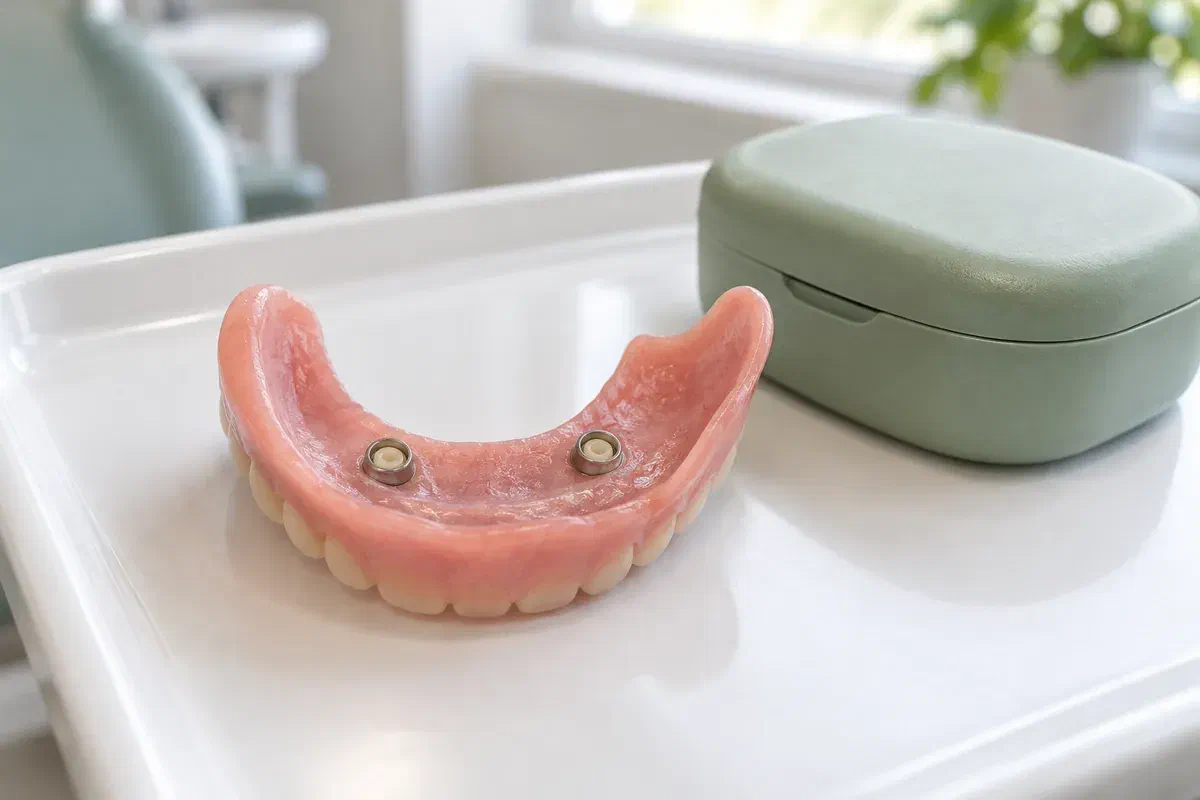
An appliance may feel less secure in several ways. Explaining when it lifts, whether both sides engage, and how it feels during removal helps the dentist distinguish retention concerns from broader fit or tissue problems.
Gradual loss of hold can prompt a check of the retentive components. Mention whether the movement occurs during speech, meals, or removal, and whether it affects one side more than the other.
An uneven connection needs an examination of the appliance and its supports. Avoid repeatedly biting the denture into place or adding force to overcome resistance; ask for advice if it will not seat normally.
Keep a detached component in a secure container and bring it to the visit. Do not glue it back or select a replacement by appearance alone, because the part and its compatibility need to be identified.
Pain, swelling, bleeding, or movement of a support in the mouth should be reported when arranging the appointment. These concerns need assessment beyond simply changing an insert.
If wear in a replaceable attachment component is the main problem and the rest of the system remains suitable, targeted maintenance may improve how the denture holds. The proposed work should be explained in terms of the finding, the part involved, and what change you can reasonably expect.
The strongest possible hold is not automatically the most helpful result. You also need to remove and reseat the appliance for daily care. Discuss hand strength, coordination, discomfort, and any help you rely on so the chosen approach fits how you actually use the denture.
Patient information: Health Research Authority — maintenance of implant overdentures
An isolated component problem does not necessarily require an entirely new denture. Ask whether the base, teeth, housings, and supports are suitable to retain, and what findings would change that recommendation.
A clear explanation distinguishes the insert or clip from its housing and the support in the mouth. This helps you understand the proposed repair, any parts that must be ordered, and the associated estimate.
Before leaving, ask to demonstrate insertion and removal yourself. If the new retention is difficult to manage, explain that during the visit so the team can reassess the fit and handling requirements.
The work required depends on the attachment design and the examination. Some concerns involve a replaceable part; others need additional records, laboratory work, or treatment of the denture or surrounding tissues.
The dentist asks about the age of the appliance, previous attachment changes, cleaning products, and the symptoms. Available records help identify the system and any earlier repairs that may affect the current assessment.
The denture, attachment areas, supporting tissues, and bite are assessed together. The aim is to establish whether worn parts explain the concern or whether another problem needs attention before a component is replaced.
Discuss the proposed part, compatibility, availability, and cost. If replacement is appropriate, the clinician carries it out using the relevant system requirements; additional appointments may be necessary when components or laboratory support are needed.
The denture is reassessed after the work. You should understand how to handle it, what to monitor at home, and when to return if the retention remains uneven or the appliance becomes difficult to remove.
Ask for instructions that match your attachment system and denture materials. A care routine used for another person's appliance may not be suitable for the inserts or other components in yours.
Practise locating it correctly before applying the recommended pressure. If it stops seating as expected, contact the team instead of forcing it, biting it down, or trying to reshape a component at home.
Clean the denture and its supports as instructed, using suitable brushes and products. Ask specifically about soaking solutions and duration, and avoid abrasive cleaners or household chemicals that have not been approved for the appliance.
Keep track of when the change returns and whether it accompanies rocking, soreness, or difficulty cleaning. Repeatedly replacing components without reassessing the cause may leave an underlying fit or support problem unresolved.
Your attachment records and examination guide the answer for your appliance. These questions can help you prepare for a discussion about component wear, compatibility, handling, and continuing care.
Book an assessment at our Bronte Street clinic to review your removable implant denture and its attachments. We can discuss the cause of the change, suitable maintenance, and the information needed to plan the next step.
Bring your denture, any detached components, and available implant or attachment records.
