Removal has become a struggle
If the denture became much harder to take out after a recent change, say so. The retention chosen, the angle of removal and your technique can all be reviewed, and adjustments may be possible.


New inserts are supposed to help, yet sometimes an implant denture ends up so firm that taking it out each night feels like a battle. Too much hold is a fit and handling problem worth raising. From Acton, book a visit to review retention, seating and technique, as well as any loose or worn parts.
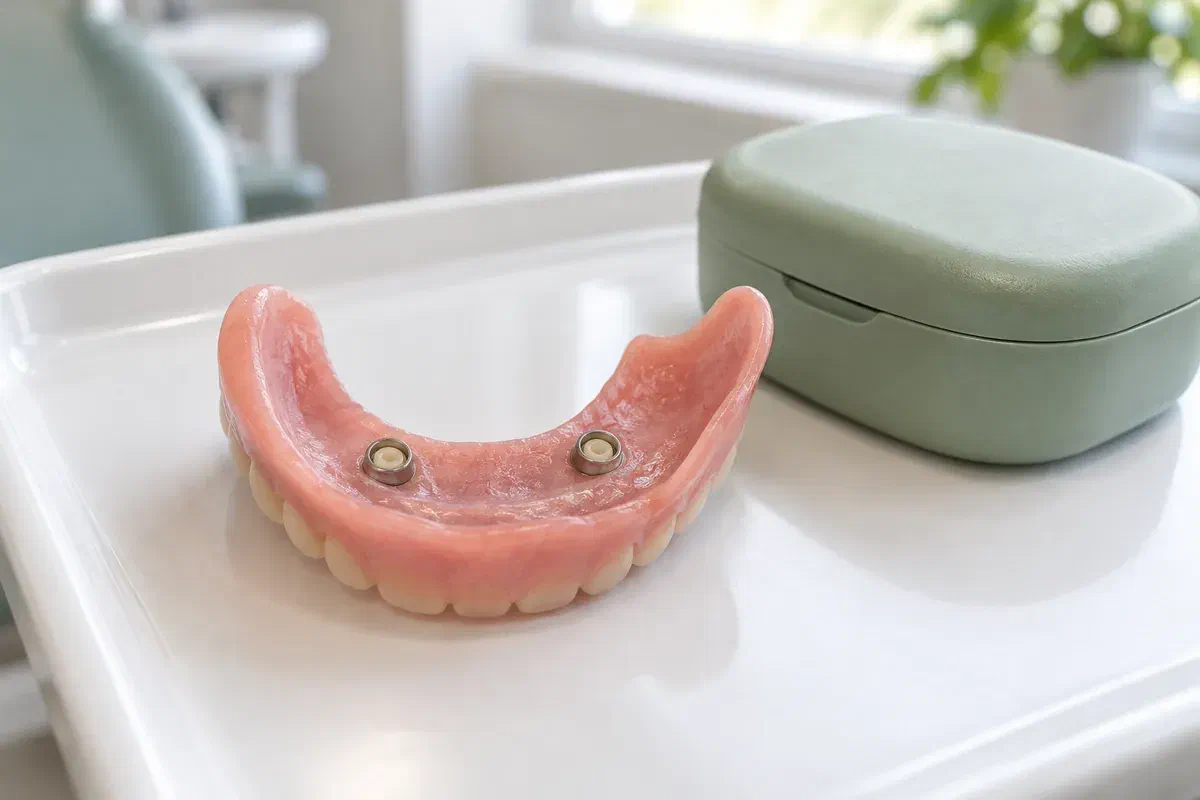
Most conversations about overdenture attachments start with looseness. A good number, though, start the other way round: the inserts were renewed, and now you need two hands and a lot of patience to get the appliance out. Both situations involve the same system of retentive parts, the inserts, clips or similar pieces that hold the denture to its implants. Those components can be chosen and changed; the implants themselves stay put.
Whichever way the hold has gone wrong, the cause deserves a proper look. A denture that is too tight may have retention set higher than you can manage, or it may be seating at an angle, or a sore spot may be making removal painful. A loose one could reflect wear, a damaged housing, an altered base fit or irritated tissue. The dentist looks at the whole appliance before changing anything.
Before you travel in from Acton, jot down what has been happening: when the problem started, whether it followed a recent repair, and how you currently remove the denture. Bring the appliance, any part that has worked free, and any implant or attachment records. If someone helps you with removal at home, it can be useful for them to come too.
Describe the trouble as precisely as you can. Whether the denture lifts at meals, refuses to release in the evening, or engages on one side only, those details help the dentist tell retention issues from fit or tissue problems.
If the denture became much harder to take out after a recent change, say so. The retention chosen, the angle of removal and your technique can all be reviewed, and adjustments may be possible.
An appliance that will not settle evenly on its implants needs examining. Please do not bite down hard or lean on it to make it lock; phone for advice if it no longer seats normally.
Keep any detached piece in a small closed container and bring it in. Avoid gluing it or ordering a look-alike, because the part and its system need to be identified first.
Pain, swelling, bleeding or a support that seems to move should be reported when you arrange the visit. Those need more than a retention adjustment.
When the examination shows that the base, housings and implants are suitable and the issue lies with the retentive parts, those parts can often be changed to give a more appropriate level of hold. The dentist should explain what was found, which component is involved, and what difference to expect.
Strength of hold is only useful if you can live with it. You need to remove the appliance every day so you can clean it and the implants. Tell us about arthritis, weak grip, tremor, sore areas or help you receive, so the retention is practical rather than as tight as possible.
Patient information: Health Research Authority — maintenance of implant overdentures
Retention that is too firm or too loose is usually a parts and fit question, not a reason for a whole new appliance. Ask which elements remain sound, and what would change that view.
Knowing whether the insert or clip, the housing or the implant is involved makes the proposed change, any parts on order, and the estimate easier to follow.
Remove and reseat the denture on your own before the visit ends. If it still feels like a battle, or it now seems too loose, mention it straight away so the team can reassess.
The approach depends on your attachment system and what the dentist finds. Sometimes a different retentive part is the answer; sometimes records, laboratory input, or treatment of the denture or gums is needed first.
The dentist asks when the hold changed, whether parts were renewed recently, how old the denture is, and what you clean it with. Records help confirm the system and the components already fitted.
You may be asked to take the denture out as you would at home. Along with an examination of the fit, attachment sites, gums and bite, this shows whether retention, angle or comfort is the real obstacle.
You discuss the proposed part or adjustment, compatibility, availability and cost. Work follows the system’s requirements; if parts or a laboratory are needed, another visit may be arranged.
After the change, seating, removal and comfort are checked with you doing the handling. You should leave knowing the technique, what to monitor and when to return if things shift again.
Ask for handling and cleaning instructions that suit your attachment system and denture materials. Advice given for another appliance may not apply to the parts in yours.
Removal usually works best with a particular grip and direction. If it becomes hard again, call rather than rocking it forcefully, biting it down, or trying to trim a component.
Clean the denture and implant supports with the brushes and products recommended for you. Ask about soaking solutions and timing, and skip scouring powders or household cleaners.
Note whether the denture becomes looser, tighter, rocky or sore, and when. Repeated part changes without a fresh assessment can leave a fit or implant concern untreated.
Your records and examination decide what suits your appliance. These questions can help you prepare to talk about retention, compatibility, handling and follow-up.
Arrange a visit to our Bronte Street practice in Milton. The dentist will examine your removable implant denture, its attachments and the implants, review how you remove it, and explain which maintenance or adjustment suits the problem.
Bring the appliance, any loose part, and details of recent attachment work if you have them.
