It slips out with very little effort
When removal suddenly takes almost no force, the gripping parts are worth checking. Mention whether the wearer also feels it lift during meals or speech, and whether one side releases first.


Sometimes the person who first notices a loose implant denture is a spouse or adult child who helps with daily care. For households in Brampton, we can assess the attachments, the fit and the handling together, so any repair suits both the wearer and whoever lends a hand.
A family member who cleans the appliance each evening may be the first to say, “This comes out much more easily than it used to.” That observation is worth acting on. An implant overdenture is held by an attachment system, small inserts, clips or similar parts that grip the implants yet release for cleaning. Those pieces wear over time and can be renewed; they are not the implants themselves.
Easier removal is a clue, not an answer. It may reflect worn retentive parts, but a loose housing, a base that has changed against the gums, or sore tissue around a support can feel much the same to the wearer and to the person helping. The dentist therefore looks at the complete appliance before deciding that a firmer part is right.
If you can, come to the appointment together. Bring the denture, any piece that has come off, and whatever implant or attachment records the family has kept. Be ready to describe how the hold has changed, whether it faded slowly or after a drop or hard bite, and who usually puts the denture in and takes it out.
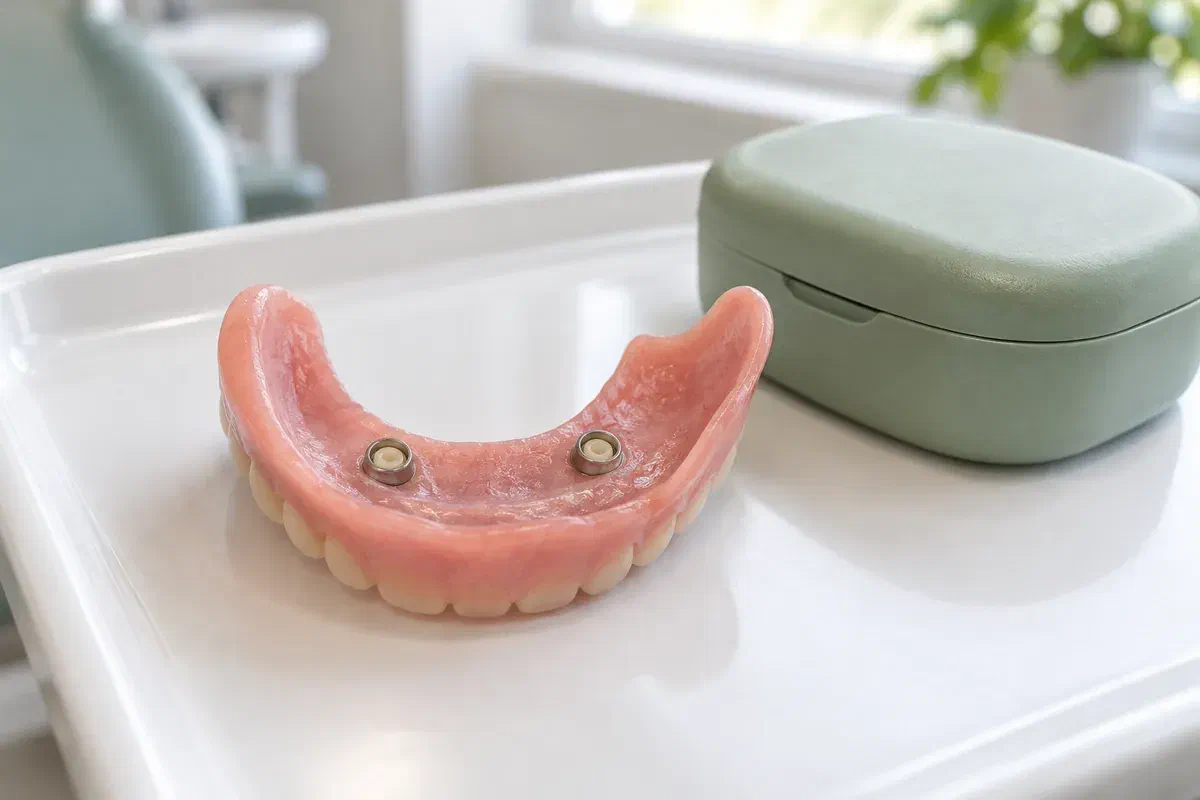
Both the wearer and a helper can offer useful detail. Explaining when the appliance lifts, whether both sides still engage, and how removal feels for each person helps the dentist tell retention problems from fit or tissue concerns.
When removal suddenly takes almost no force, the gripping parts are worth checking. Mention whether the wearer also feels it lift during meals or speech, and whether one side releases first.
Uneven seating needs both the denture and its implants examined. Whoever is helping should avoid pressing hard or having the wearer bite it into place; call for advice if it will not sit as usual.
Put it in a lidded container and bring it along. Please do not glue it back or order a replacement because it looks the same; the exact part and its system have to be identified.
Tell us about pain, swelling, bleeding or an implant that seems to move when you book. Those signs need more than a component change.
When the examination finds that a replaceable part has worn and the denture, housings and implants are otherwise suitable, renewing that part may bring back dependable hold. You should both hear what was found, which component is affected, and what change to expect.
Stronger is not always better here. Someone has to lift the appliance out and put it back every day, and if that becomes a struggle, cleaning can suffer. Tell the dentist about arthritis, weak grip, tremor, memory concerns or the fact that a helper does most of the handling, so the retention chosen is practical.
Patient information: Health Research Authority — maintenance of implant overdentures
A worn part on its own seldom means the appliance must be replaced. Ask which elements remain suitable, and what the dentist would need to find before recommending a new one.
The wearer and helper should both know whether the issue is in the insert or clip, its housing, or the implant. That shared picture makes the plan, any parts to order, and the estimate easier to discuss.
Before leaving, whoever usually handles the denture should try removing and reseating it. If it is hard to manage, say so during the visit so the fit and retention can be reconsidered.
What is needed depends on the attachment system and what the dentist finds. A replaceable part may be the whole answer, or records, laboratory work, or treatment of the denture or gums may come first.
Questions cover the denture’s age, previous attachment changes, cleaning products, symptoms, and who handles the appliance day to day. Any records help confirm the system and past repairs.
The dentist looks at the denture, each attachment site, the gums around the implants and the bite. The aim is to establish whether wear explains the change or another problem should be treated first.
The proposed part, its compatibility, availability and cost are discussed openly. If a change suits, it follows the system’s requirements. Where parts have to be ordered or a laboratory is involved, plan a return visit that works for both of you.
Once the work is finished, seating and comfort are checked and the helper or wearer practises taking it out. You should know what to monitor and when to return if handling becomes difficult.
Ask for instructions that suit your attachment system and denture materials, and make sure everyone who helps hears them. A routine borrowed from a friend’s appliance may not be right for yours.
Guide the denture into its correct position before using the pressure you practised. If it stops seating properly, call rather than forcing it, biting it down, or trying to adjust a part.
Clean the appliance and the implant supports with the brushes and products recommended. Confirm which soak to use and for how long, and keep abrasive cleaners and household chemicals away from it.
Whoever notices looser hold, rocking, sore spots or cleaning trouble should mention it. Swapping parts repeatedly without reviewing the cause can leave a fit or implant problem in place.
The answers for your appliance come from its records and an examination. These questions can help a wearer and helper prepare to talk about wear, compatibility, handling, and ongoing care.
Arrange an assessment at our Bronte Street practice in Milton so the dentist can look over the overdenture, its connections and the implants. We will explain why the hold has changed, discuss suitable maintenance, and make sure the handling works for everyone involved.
Bring the denture, any loose part, implant records, and the person who helps at home if possible.
