Loose for weeks, then a part fell out
A gradual decline before a piece came free suggests wear, though it still needs checking. Tell us whether the movement shows up with meals, speech or removal, and which side seemed to go first.


A small nylon or metal piece in the bottom of the cleaning cup can be the first clue that an implant denture attachment has worn or come loose. For people in Burlington, we offer an assessment that identifies the part, checks the fit, and explains what repair, if any, makes sense.
It usually happens during cleaning. You rinse the denture, glance into the basin, and spot something tiny that was not there before. On an implant-retained denture, that could be an insert, a clip, or part of a housing. These are the pieces that let the appliance snap onto its implants and still come out for cleaning, and they wear in a way the implants themselves are not meant to.
That little piece tells only part of the story. A part can work free because it has simply aged, but it can also loosen when the denture base no longer rests evenly, when a housing has cracked in the acrylic, or when the gum around a support has become inflamed. Each possibility leads somewhere different, which is why the dentist examines how the complete appliance sits before any new part goes in.
When you book from Burlington, describe what you found and when. Bring the denture, the detached piece in a closed container, and any implant or attachment records from the clinic that placed them. It also helps to know whether the hold had been fading for a while, changed suddenly after a hard bite or a drop, or began soon after other dental work.
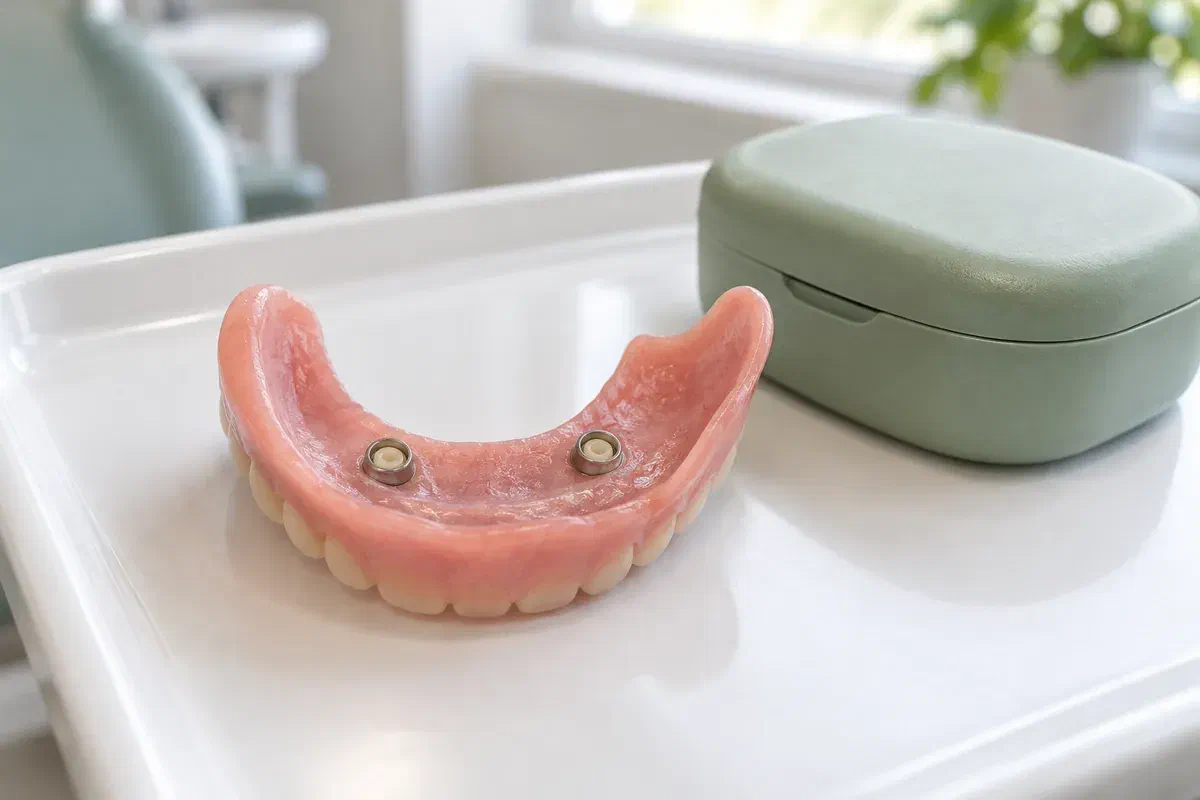
The details of how your denture behaves are genuinely useful. Explain whether it lifts at particular moments, whether both connections still engage, and what happens when you take it out, so the dentist can tell a retention issue from a fit or gum concern.
A gradual decline before a piece came free suggests wear, though it still needs checking. Tell us whether the movement shows up with meals, speech or removal, and which side seemed to go first.
If one connection has lost its part, the appliance may seat unevenly. Avoid biting it firmly into place or pushing harder to compensate; call for advice if it no longer settles the way it should.
That is fine; most people are. Keep it secure, do not glue it back, and do not order a look-alike online. The part and its system need to be identified before a compatible replacement can be chosen.
When arranging the visit, mention pain, swelling, bleeding, or any sense that an implant moves. Those signs need a wider assessment than replacing a part.
When the problem really is a worn or lost replaceable component, and the housings, base and implants remain in good condition, renewing that piece may bring back much of the security you had. Before work begins, the dentist should explain the finding, name the part, and give you a fair idea of what will change.
The goal is a denture you can rely on and still manage. You will be lifting it out and putting it back every day, so the tightest available grip is not always the kindest choice. Tell the team about your hands, any stiffness or tremor, sore areas, or whoever helps you at home.
Patient information: Health Research Authority — maintenance of implant overdentures
Losing a small part rarely, on its own, means the whole denture must be replaced. It is fair to ask which parts of the appliance are worth keeping, and what the dentist would have to see before suggesting a new appliance.
You should come away knowing whether the issue was the insert or clip, the housing it sits in, or the implant below. That makes the work, any ordering of parts, and the estimate easier to understand.
Take the denture out and put it in again yourself before the visit ends. If the renewed grip feels like a struggle, say so while you are still there, so the team can adjust the plan.
Not every visit looks the same. A missing insert may be a simple swap once the system is confirmed; other findings may call for records from another clinic, laboratory work, or care for the denture or gums.
The dentist looks at the piece you brought, asks about the denture’s age, past attachment work and your cleaning routine, and checks any records. Together, these help pin down the system and what may have happened.
Fit, attachment sites, the tissue around each implant and your bite are all assessed. The point is to confirm whether wear explains the loss or whether a cracked housing, altered base or gum problem needs attention first.
You and the dentist go over the proposed component, how it matches your system, whether it is in stock, and the cost. Replacement follows that system’s requirements; ordering parts or lab support may mean a second appointment.
With the new component in place, the denture is checked for seating, removal and comfort. Before leaving you should know how to handle it, what to watch at home, and when to come back if something feels off.
Care steps vary between attachment systems and denture materials, so ask for instructions written for yours. What works for someone else’s appliance may not suit your components.
Guide the denture to its correct position, then use the pressure you practised in the chair. If it does not click in as before, please call rather than forcing it, biting down, or modifying a piece yourself.
Brush the denture and the implant supports as shown, with suitable brushes and products. Ask which soak is safe for your parts and for how long, and leave abrasive pastes and household chemicals out of the routine.
A quick look in the rinse water can catch a part that has started to work loose. If another piece appears, or the hold fades along with rocking or soreness, book a review rather than another quick swap.
Records and an examination settle the answers for your own appliance. These questions may help you prepare to talk about lost parts, compatibility, handling, and ongoing care.
Book an assessment at our Bronte Street practice in Milton. We will examine your removable implant denture, identify the attachment parts, and explain what caused the change and which maintenance or repair would be suitable.
Bring the denture, the loose piece in a closed container, and any attachment records you have.
