Grip fades within weeks or months
Short-lived parts suggest something is speeding up wear. Note how long each set lasted, and whether meals, speech or removal are where you first feel it slipping.


When new inserts restore your implant denture’s grip for only a short while, swapping them again is rarely the full answer. For households around Campbellville, we offer an examination that looks for why the hold keeps slipping, covering wear, fit, housings and the implant supports.
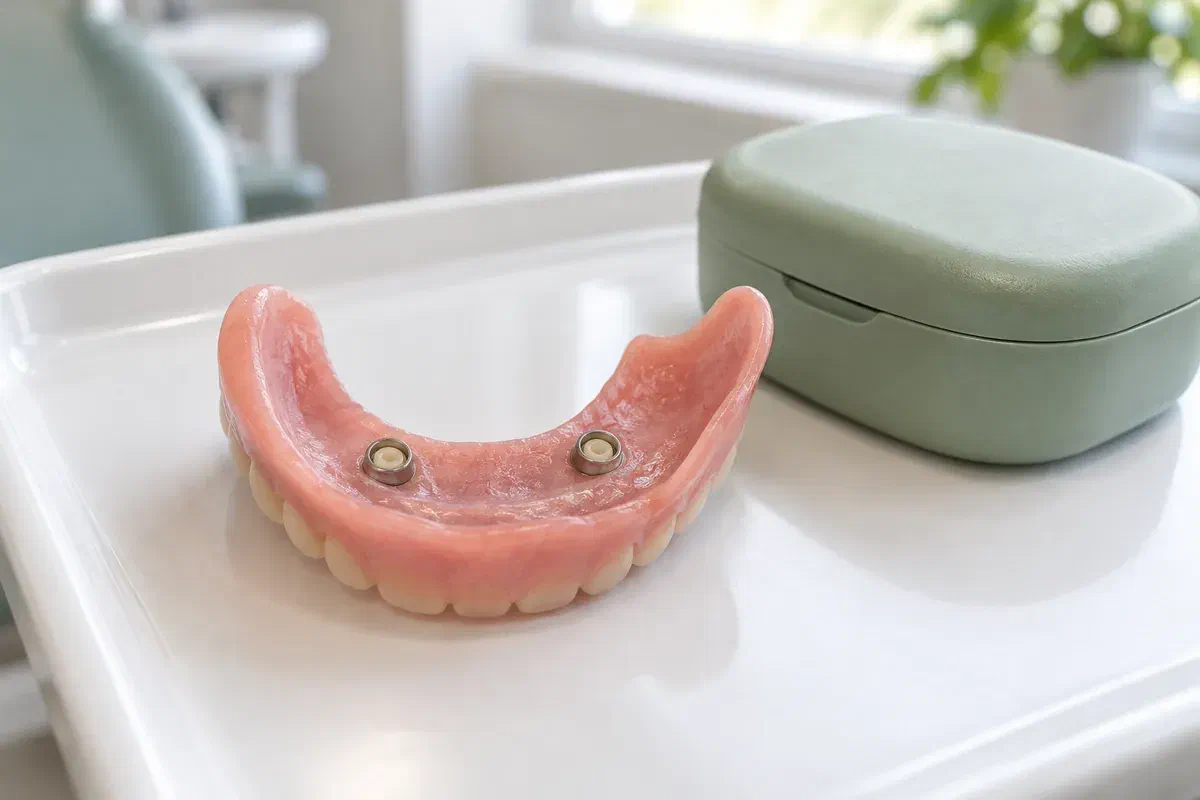
Retentive parts on an overdenture are expected to wear eventually. They are the small inserts, clips or similar pieces that hold the appliance to its implants and release when you lift it out, and they can be replaced without disturbing the implants. What is less expected is a cycle where fresh parts feel firm for a short spell, then quickly lose their grip again.
That pattern is a reason to step back. Rapid wear can follow from a base that no longer rests evenly on the gums, a housing set at a slight angle, implants that meet the denture at different angles, a cleaning product that does not suit the components, or a handling habit. The dentist reviews the whole appliance and your routine, rather than simply fitting another set of parts.
Living in the rural north of Milton, you may prefer to sort this in one well-planned visit. Bring the denture, any old inserts you kept, notes on when each replacement was done, and whatever implant or attachment records you have. Mention too whether the most recent loss of hold felt like the others or seemed different in some way.
Timing and pattern give the dentist useful clues. Say how long the last parts lasted, when the denture lifts, whether both connections engage, and how removal feels.
Short-lived parts suggest something is speeding up wear. Note how long each set lasted, and whether meals, speech or removal are where you first feel it slipping.
Repeated loss on one side points the dentist toward that connection and the fit around it. Avoid biting the denture down or forcing it to engage; call if it will not seat as before.
Save any loose or worn insert in a small sealed container. Do not glue pieces back or reorder by appearance alone, since the system and component need confirming.
If repeated looseness comes with pain, swelling, bleeding or an implant that seems to move, mention that when you call. Those need a wider assessment.
If the examination shows that the components really are the weak point, and the base, housings and implants are suitable, renewing them may again restore good hold. The dentist should also say what might make them last longer, and what difference you can realistically expect.
Lasting retention still has to be manageable. Choosing the firmest available part to make it last can make daily removal hard. Mention hand strength, joint pain, coordination or help you rely on, so the chosen hold works with your routine.
Patient information: Health Research Authority — maintenance of implant overdentures
Repeated wear often has a correctable reason, and finding it does not usually mean starting again from scratch. Ask which parts of the appliance are worth keeping, and what would need to be found before a new denture became sensible.
Knowing whether the insert, its housing, the base fit or an implant is driving the problem makes the plan, any ordering and the estimate easier to weigh up.
Before leaving, remove and reseat the denture yourself while the team watches. If your technique might be adding wear, they can show you a gentler way, and if the new hold feels hard to manage, say so before you go.
How much is involved depends on the system and what is found. Sometimes a replacement part is all that is required, while other times the fit, a housing, the gums or an implant needs attention first.
The dentist asks how often parts have been changed, how long each set lasted, what you clean with, and how you remove the denture. Records help confirm the system and earlier work.
The base fit, each attachment site, the gums around the implants and your bite are examined together. The goal is to find out whether the parts are simply aging or something is wearing them out early.
You discuss the proposed part or repair, compatibility, availability and cost. If a housing, base or lab stage is involved, another appointment may follow; ask to book it before you head home.
Seating, removal and comfort are checked after the work. You should leave with a sense of how long to expect, which signs to watch, and when to return for review.
Care advice should fit the specific components and base material in your overdenture. A product or habit that suits someone else’s appliance might be shortening the life of your parts.
Line it up so both connections meet together, then use the pressure you were shown. Biting it into place or forcing it at an angle can add wear, so call if it stops seating properly.
Use the brushes, soaks and timings recommended for your components. Ask whether your current products suit the parts, and keep scouring pastes and household cleaners away.
Keep a short log of when parts were renewed and when the hold faded again, along with any rocking or soreness. That record helps the dentist find the cause instead of repeating the cycle.
Your examination and records answer this for your own appliance. These questions can help you prepare to discuss wear patterns, compatibility, handling and follow-up.
Book time at our Bronte Street practice in Milton to have your removable implant denture, its attachments and the implants examined. We will look for the reason behind repeated wear and explain a repair plan that addresses it.
Bring the denture, any saved inserts, and notes on when each set of parts was replaced.
