The grip has faded over months
Slow loss of hold often involves the retentive parts, and knowing your system may let the team check part availability early. Mention when the movement happens and whether one side is worse.


Coming from Etobicoke for implant denture maintenance is easier when each visit is planned well. Sending records ahead, describing the problem clearly, and knowing which symptoms need closer urgent care can help us examine the attachments and fit with as few trips as possible.
From the west end of Toronto, the drive is long enough that you want each appointment to count. With an implant denture that has lost some hold, preparation makes a real difference. Most overdentures connect to their implants through inserts, clips or another kind of retentive part. Those pieces wear and can be renewed, and the attachment system they belong to determines which replacement parts are compatible.
Knowing the system helps, but it cannot settle the cause in advance. A denture can feel loose because its gripping parts have worn, or because a housing has moved, the base has changed against the gums, or the tissue around an implant is irritated. The dentist still needs to see how the whole appliance seats in your mouth before deciding that a component change is the right repair.
When you call, describe the change in detail and ask whether records can be sent before your visit. On the day, bring the denture, any piece that has come off, and paper copies of your implant information. Tell us if the looseness built slowly, started after a knock, or followed other dental treatment, since that history shapes the examination.
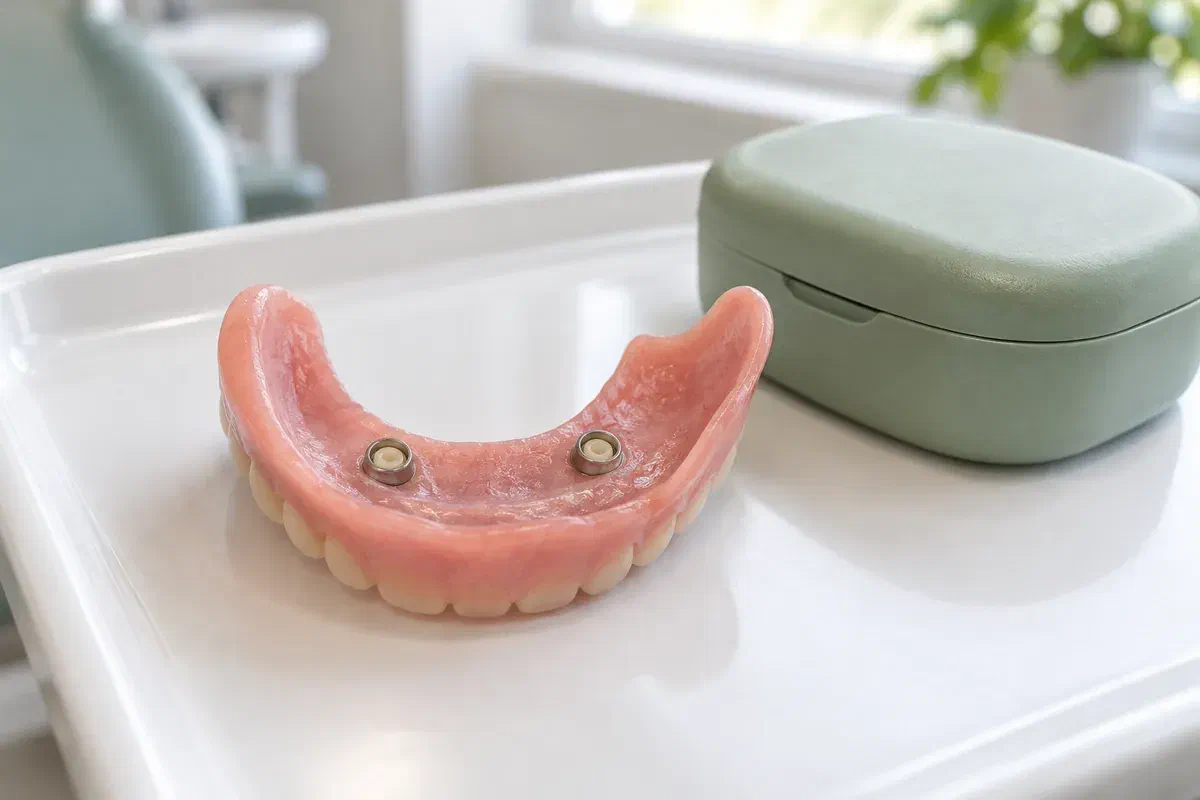
A clear description helps the team plan. Say when the denture lifts, whether both connections still engage, and how removal feels, so the dentist can start thinking about whether retention, fit or tissue health is involved.
Slow loss of hold often involves the retentive parts, and knowing your system may let the team check part availability early. Mention when the movement happens and whether one side is worse.
Uneven engagement needs both the appliance and its implant examined. Do not bite down hard or press with extra force before the trip; call for advice if it no longer seats normally.
Seal it in a small container for the journey and bring it in. Avoid gluing it back or ordering a match by appearance, because the exact component and system must be identified.
Pain, swelling, bleeding or a support that seems to move are not things to save for a planned visit. Call promptly, and seek care closer to home if you cannot reach us and symptoms are severe.
Should the examination confirm that a replaceable part has worn while the base, housings and implants remain suitable, renewing it may improve how securely the denture stays in place. You should hear what was found, which part is involved, and what you can reasonably expect to change.
Firmer is not always better, especially when you will be managing on your own between visits. The denture has to come out daily for cleaning. Tell the dentist about hand strength, stiffness, discomfort or anyone who helps you, so the retention chosen is one you can live with at home.
Patient information: Health Research Authority — maintenance of implant overdentures
One worn component does not by itself mean a new denture. Ask which parts of the appliance are suitable to keep, and what findings might change that view.
Understanding whether the insert or clip, its housing, or the implant was involved helps you explain the history to any provider you see closer to home, and makes the estimate clear.
Practise lifting the appliance out and seating it again before you set off home. If the hold feels difficult, say so then, while the team can still reassess fit and retention.
What can be done in one visit depends on your system and the findings. Some concerns need only a replaceable part; others need records, laboratory support, or treatment of the denture or gums first.
Before the appointment, the team asks about the denture’s age, earlier attachment changes, symptoms and any records. Where the system is known, this can help them prepare for the examination.
The denture, attachment sites, gums around each implant and your bite are assessed together. That establishes whether worn parts explain the change or whether another problem needs attention first.
You discuss the proposed component, compatibility, availability and cost. If parts or lab work must be ordered, ask how the next visit can be planned so travel is kept to a minimum.
After the work, seating, removal and comfort are checked. You should know how to handle the appliance, what to watch for, and when to come back if retention is uneven.
Ask for care instructions that match your attachment system and denture materials. A routine that works for another appliance may not suit yours, and good habits help the interval between visits.
Bring the denture to its correct position before pressing down as instructed. If it stops seating as expected, phone for advice rather than forcing it, biting it in, or reshaping a part.
Clean the appliance and the supports with the recommended brushes and products. Ask about soaking solutions and timing, and avoid abrasive cleaners or household chemicals not cleared for your denture.
If the hold weakens again, or rocking, soreness or cleaning trouble appears, phone first. The team can advise whether a visit is needed and help you plan it, rather than replacing parts without a review.
The details for your appliance depend on records and examination. These questions can help you plan around travel and prepare to discuss wear, compatibility, handling and care.
Book an assessment at our Bronte Street practice in Milton. We will examine your removable implant denture and attachments, explain what has changed, and plan any follow-up so the number of trips stays reasonable.
Send records ahead if you can, and bring the denture and any loose pieces on the day.
