Illustrative consultation about the attachments of a removable implant denture
Restorative Dentistry

Implant Denture Attachment Replacement in Old Milton

An implant denture you have worn for years may have had its inserts changed before, and the latest loss of hold may or may not have the same cause. From Old Milton, a short trip to our Bronte Street practice lets us review the whole appliance before deciding what to renew.

Older appliances, Old Milton

Is this the same old wear, or something new?

Someone who has lived with an implant overdenture for a long stretch often knows the pattern: the grip fades, the inserts are renewed, and the denture feels secure again. The parts that do this gripping, whether nylon inserts, metal clips or another design, sit between the appliance and the implants. They are meant to be serviced from time to time and are quite separate from the implants anchored in your jaw.

Familiar does not always mean identical, though. After several years, the base of the denture may sit differently on the gums, a housing may have loosened in the acrylic, or the tissue around one support may have changed. Any of those can feel like the usual wear. Before reaching for new parts, the dentist looks at the complete appliance in your mouth and how it behaves when you bite, talk and remove it.

If you are coming from Milton’s historic downtown, plan to bring the denture, any part that has worked loose, and every record you have kept, even old invoices or product cards. Tell us roughly when the last change was done and whether this time feels the same. A different pattern, such as rocking or soreness, is worth describing in detail.


Arrange an attachment review
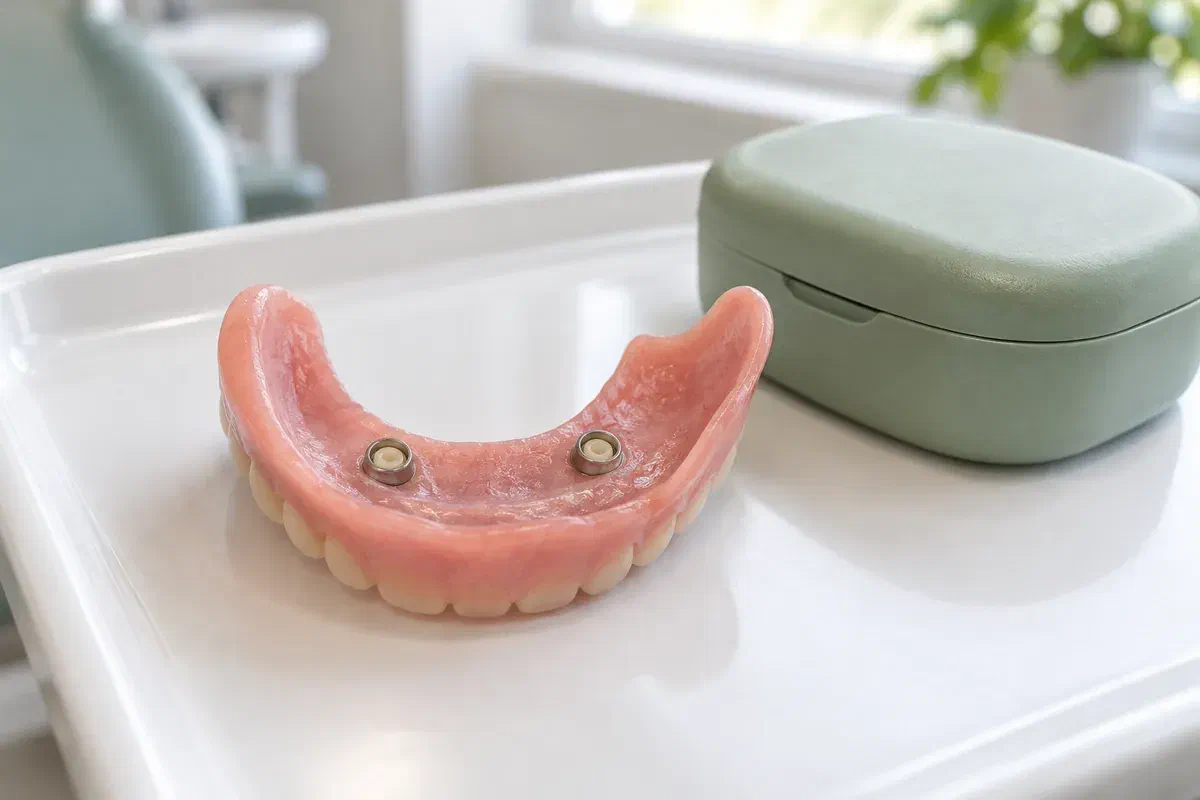
Illustrative fitting surface of a removable overdenture with two attachment housings
What has changed this time

Compare today’s looseness with last time.

Long-term wearers are often good at sensing small differences. Saying whether the hold faded at the usual pace, whether both attachments engage, and how taking it out feels now helps separate routine wear from a fit or tissue concern.

The grip faded sooner than usual

If the interval between changes seems shorter, mention it. Wear can speed up for several reasons, and the dentist will want to know whether the denture lifts while eating, speaking or being removed, and on which side.

It clicks in on the left but not the right

A connection that engages unevenly needs both the appliance and the supports examined. Resist pressing harder or biting it down to make the second side catch; call for guidance if it no longer sits as it used to.

An insert came out with your toothbrush

Store the loose piece in a small sealed pot and bring it in. Please do not glue it back or buy a match based on its look; the component and the system it belongs to need proper identification.

Mention any pain, swelling, bleeding, or a feeling that an implant itself is moving when you call. Those need a broader assessment than renewing an insert.

Why a careful repair is worth it

A denture you trust, and can still take out easily.

Should the examination show that a replaceable part has simply worn and that the rest of the arrangement remains suitable, focused maintenance may bring back useful hold. Expect to hear what was found, which component is involved, and a realistic sense of the improvement before anything is changed.

After years with one appliance, it is tempting to ask for the firmest grip available. Yet you still need to lift it out each day for cleaning, and hands can change over time. Let us know about arthritis, tremor, tenderness or a family member who helps, so the retention chosen matches what you can comfortably manage.

Patient information: Health Research Authority — maintenance of implant overdentures

Hold on to an appliance you know well

A single worn component is not, by itself, a reason for a brand-new denture. Ask whether the base, the teeth, the housings and the implants are fit to keep, and what would make the dentist suggest otherwise.

Clarity about the part in question

It helps to know whether the issue lies with the insert or clip, the housing that carries it, or the implant underneath. With that separation clear, the proposed repair, any ordering and the estimate are easier to follow.

Check removal with your own hands

Before you leave, take the denture out and put it back yourself while the team watches. If the new hold feels like too much, say so during the appointment, so fit and handling can be reconsidered right away.

The appointment, step by step

We start with your denture’s history.

The work depends on the attachment design and what the examination reveals. A replaceable part may be all that is needed; in other cases, records, a dental laboratory, or treatment for the denture or gums must come first.

  1. Piece together the appliance’s past

    The dentist will ask how long you have had the denture, how often attachments have been changed, what you clean it with, and what feels different. Older records help confirm the system and any earlier repairs.

  2. Assess the whole fit, not just the grip

    The denture, the attachment sites, the gums around each support, and your bite are examined together. This shows whether worn components explain the change or whether a separate issue should be dealt with first.

  3. Decide on the component work together

    You will go over the proposed part, whether it suits your system, how soon it can be sourced, and the cost. Suitable replacements follow the system’s requirements, and a further visit may be needed if parts or lab work must be arranged.

  4. Trial the result before you head home

    Once the work is done, the denture is checked again for seating and comfort. You should know how to handle it, what to watch for, and when to return if the grip is uneven or removal becomes difficult.

Keeping new parts in good order

Small habits make renewed attachments last.

Ask for care advice that fits your attachment system and the materials in your denture. Habits that suited an earlier appliance, or someone else’s, may not suit the components you have now.

Guide it in before pressing down

Settle the denture into the right position first, then apply the pressure you were shown. If it stops seating as expected, get in touch instead of forcing it, biting it in, or trimming a part at home.

Ask whether your cleaner still suits

Clean the appliance and the supports as advised, with suitable brushes and products. If you have used the same soak for years, ask whether it and the soaking time are right for these components, and avoid abrasives or household chemicals.

Keep a note of returning looseness

Write down when the hold starts to weaken again and whether rocking, tenderness or cleaning trouble comes with it. Renewing parts over and over without checking the cause can leave an underlying fit or support issue in place.

Possible next steps

Different causes, different repairs.

New attachments are one option for a loose implant denture, not the only one. The examination should make clear whether the problem lies in the connection alone or reaches into the appliance and its supports.

When the rest of the setup is sound

A fresh insert or clip

Once compatibility and condition are confirmed, a suitable retentive part can be renewed. Ask what is being replaced and how the dentist will judge whether it has worked.

When the appliance itself has changed

Repairing the base or a housing

A base that has drifted from the gums, a loose housing, or other wear in the denture may need a separate repair or lab stage. That finding should be treated directly instead of relying on a stronger grip.

When symptoms point beneath the denture

Looking at the implants and gums

Pain, inflamed tissue, or a support that seems mobile requires its own diagnosis. Further assessment of the implant, or a referral, may need to happen before the attachment can be managed well.

Questions long-term wearers ask

Experienced wearers still have good questions.

Your records and examination will decide the specifics. These questions are meant to help you prepare to talk about worn parts, matching components, handling, and care going forward.

(905) 876-4488
My implants went in many years ago. Can their attachments still be serviced?
Often they can, but it depends on identifying the system and whether parts for it are still available. Bring whatever records you have. If an older design is hard to source, the dentist will explain the options before any work is planned.
Why does my denture seem to loosen faster than it used to?
Wear can speed up with changes in fit, handling, cleaning products, or the condition of the housings and supports. A shorter interval is worth reporting, because it suggests the cause should be checked rather than simply renewing the parts again.
Could the base of my denture need attention as well as the inserts?
Possibly. Over time the gums can change shape, and a base that no longer rests evenly can make the attachments work harder. The examination looks at fit and retention together, so you know whether one or both need work.
If the inserts are all the same colour, are they interchangeable?
Not necessarily. Colour is not a reliable guide to compatibility between attachment systems. The team identifies the components from records and examination, then selects replacements based on the system, its condition and the way your denture sits.
Is it safe to sleep with my implant denture in?
Advice varies with the appliance and your own mouth, so ask the dentist directly. Many people are told to remove it overnight to rest the tissues and clean it thoroughly, but follow the instructions given for your denture.
Can I walk over from Old Milton for a quick insert swap?
You are welcome to book, but the visit begins with an examination rather than an immediate swap. If the same system and parts are confirmed, the work may be straightforward; if not, a further appointment may be needed.
Visit from Old Milton

Bring the denture you know. We’ll check what’s changed.

Book time at our Bronte Street practice for a review of your removable implant denture and its attachments. We will look for the reason the hold has shifted, talk through suitable maintenance, and explain what the next step needs.

Bring the appliance, any loose inserts, and older implant paperwork if you can find it.

Visit Milton Dental Clinic
Unit 1, 342 Bronte St. S, Milton, ON L9T 5B7
Get directions Clinic hours
Monday–Thursday
11am–7pm
Friday–Sunday
By appointment only

Areas we serve

  • Milton
  • Oakville
  • Mississauga
  • Georgetown
  • Halton Hills
  • Acton
  • Campbellville
  • Brampton
  • Burlington
  • Puslinch
  • Rockwood
  • Erin
  • Caledon
  • Etobicoke
  • Old Milton
  • Bronte Meadows
  • Timberlea
  • Dorset Park
  • Dempsey
  • Clarke
  • Beaty
  • Coates
  • Harrison
  • Scott
  • Willmott
  • Ford
  • Bowes
  • Cobden
  • Walker
  • Mountain View
  • Milton Heights
  • Hawthorne Village
  • Valley View
  • Fallingbrook
  • Nassagaweya
  • Trafalgar
  • Esquesing
  • Nelson
  • Brookville
  • Moffat
  • Glen Williams
  • Norval
  • Limehouse
  • Stewarttown
  • Ashgrove
  • Hornby
  • Silver Creek
  • Speyside
  • Scotch Block
  • North Oakville
  • River Oaks
  • Glen Abbey
  • West Oak Trails
  • Palermo
  • Bronte Creek
  • College Park
  • Joshua Creek
  • Uptown Core
  • Preserve
  • Iroquois Ridge
  • Lisgar
  • Meadowvale
  • Meadowvale Village
  • Churchill Meadows
  • Erin Mills
  • Central Erin Mills
  • Streetsville
  • East Credit
  • Creditview
  • Heartland
  • Sheridan
  • Mount Pleasant
  • Credit Valley
  • Huttonville
  • Churchville
  • Springbrook
  • Northwest Brampton
  • Bram West
  • Fletcher's Meadow
  • Fletcher's Creek South
  • Alton Village
  • Orchard
  • Millcroft
  • Headon Forest
  • Tansley
  • Brant Hills
  • Tyandaga
  • Kilbride
  • Lowville
  • Aberfoyle
  • Morriston
  • Arkell
  • Hillsburgh
  • Freelton
  • Carlisle
  • Waterdown
  • Flamborough
  • Mountsberg

How can we help?

Milton Dental Clinic

Have a question about your smile? Choose the option that works best for you.

For urgent dental concerns, please call.
Messages are reviewed during clinic hours.