Cleaning no longer feels straightforward
Reduced hand strength, a changed grip, or areas you cannot reach can make an old routine less effective. Explain the obstacle and ask for a demonstration with tools you can realistically use.


An implant denture needs care for the appliance, its connections, and the tissues around its supports. Plan implant denture maintenance in Milton with practical cleaning guidance, fit and attachment checks, and a review schedule suited to your mouth.
An implant denture has several parts to look after: the replacement teeth and base, the connections that retain it, and the implants with their surrounding tissues. Maintenance brings these parts into one review so that a clean-looking appliance is not the only measure of how well the arrangement is working.
The home routine depends on whether your restoration is removable by you or fixed in place. A removable overdenture can be taken out as instructed for cleaning; a fixed restoration needs access around and beneath it without being removed at home. Confirm which type you have before following advice intended for a different design.
At Milton Dental Clinic, we can help you organize continuing care around the appliance you use. Tell us what is easy, what is difficult, and whether your routine has changed since it was fitted. Maintenance should account for daily comfort, handling, cleaning access, and the practical support you may need between appointments.
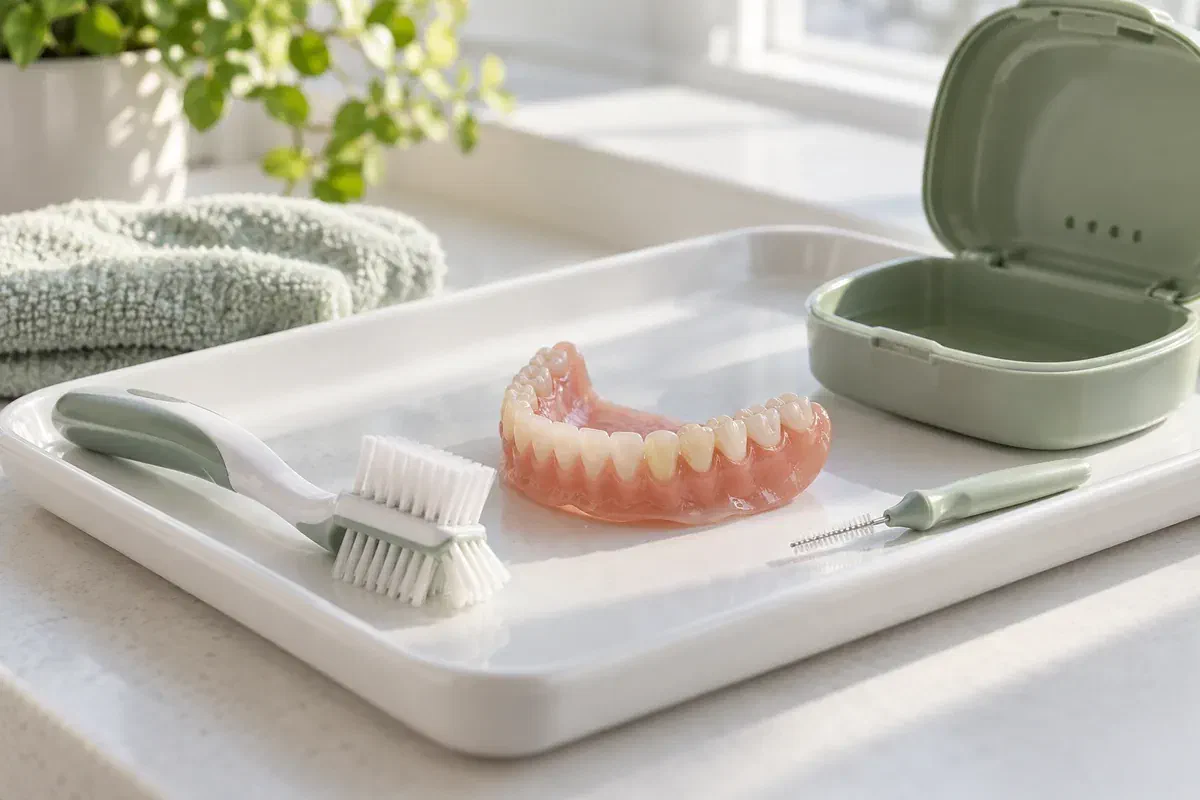
A maintenance appointment is a chance to discuss difficulties before they become part of everyday life. Bring the products and brushes you use, or their names, so the advice can be specific to your appliance.
Reduced hand strength, a changed grip, or areas you cannot reach can make an old routine less effective. Explain the obstacle and ask for a demonstration with tools you can realistically use.
A persistent collection point deserves attention to both cleaning and the appliance's shape or fit. Note where it occurs and whether it accompanies soreness, bleeding, or a change in how the denture sits.
Movement, clicking, pressure, or difficulty removing a normally removable denture should be assessed. The answer may involve attachment care, denture work, or another finding rather than simply a more intensive cleaning routine.
Contact the clinic sooner for new pain, swelling, discharge, or a loose restoration. A scheduled maintenance visit should not delay assessment of a developing problem.
Continuing review considers mechanical condition and oral health together. The denture may need attention even when it looks acceptable, while the surrounding tissues need care even when the replacement teeth cannot develop decay. The visit should explain what is stable, what has changed, and what deserves follow-up.
Maintenance also makes room for changes in your circumstances. A routine that worked when the appliance was new may need adapting after illness, a change in medication, or reduced dexterity. Discuss these developments so instructions remain achievable rather than becoming a list of tasks you struggle to complete.
Patient information: Cambridge University Hospitals — continuing care of dental implants
Ask how the team checks the appliance, its connections, and the tissues around the implants. Understanding those different areas makes it easier to recognize why professional review remains relevant even when you clean diligently.
Components and denture materials can wear with use. A review can identify whether a finding needs monitoring, maintenance, or a separate repair plan, with an explanation of the timing and costs before further work.
A short routine you can demonstrate is more useful than unfamiliar instructions. Bring a caregiver if you would like help, and ask the team to show the parts that need particular attention in your own appliance.
The appointment is guided by your restoration, oral health, and previous findings. Assessment, professional cleaning, and any repair needs should be explained clearly, including work that requires a separate visit.
The team reviews how the appliance feels and how you care for it. Mention changes in medicines, smoking, general health, or assistance at home, and bring available details of the implants and restoration.
Checks may include the condition around the implant supports, cleaning access, denture surfaces, attachments, and bite. Additional records or imaging are considered when clinically indicated, rather than assumed necessary at every visit.
Professional cleaning and other agreed maintenance are tailored to the restoration. Findings that require repair, further investigation, or another clinician's input are discussed with their reasons, practical arrangements, and estimated costs.
You leave with guidance on suitable tools and products, areas to monitor, and the proposed recall interval. Ask to demonstrate the routine and clarify what symptoms should prompt contact before the next planned appointment.
The appliance, its attachment system, and the tissues each need appropriate care. Follow the instructions provided for your restoration, and check before introducing a new cleaner, soaking method, or tool.
Remove an overdenture only as you have been shown and clean the relevant surfaces and supports. If your restoration is fixed, use the demonstrated access around it; do not attempt to loosen or dismantle it yourself.
Ask which brush, cleanser, and storage method are compatible with your denture and attachments. Avoid assuming that a solution suitable for ordinary acrylic dentures is appropriate for every metal component or retentive insert.
Report persistent soreness, bleeding, new movement, or an altered bite. Keep any detached part safely for assessment, and avoid household glue, filing, or makeshift attachment adjustments that could complicate the repair.
Patient information: European Federation of Periodontology — caring for dental implants
Your maintenance needs depend on the restoration and the health of the mouth around it. Use these questions to discuss appointment planning, home care, records, and changes that deserve attention.
Arrange a review at our Bronte Street clinic to discuss your implant denture, its condition, and the routine you use at home. We can help identify current needs and explain a practical plan for continuing care.
Bring available implant records and the names of the cleaning products you currently use.
