Your routine takes more effort
Stiff fingers, a sore wrist or difficulty seeing can make cleaning less thorough over time. Tell us which steps are hard and ask to try tools that match what your hands can do now.


A tender spot under your implant denture raises an awkward question: call now, or mention it at your next review? We help you tell the difference, then examine the appliance, its connections and the gum around each support.
Most changes with an implant denture are gradual: a little less grip, a spot that collects food, a brush that no longer reaches as easily. Those belong on your list for the next maintenance visit. A few changes are different. New pain, swelling, discharge or a restoration that has worked loose should be reported promptly.
Your design shapes what you can check yourself. With a removable overdenture, you can take it out, look at the gum and the supports, and see whether a sore spot matches an edge of the denture. A fixed restoration stays in, so you are judging comfort and appearance from the outside, and professional examination matters more.
From Acton, a call before setting out helps us judge timing and plan the visit properly. Describe what you feel, when it started and whether anything has changed in your health, medications or routine. That way the appointment covers both the immediate worry and your regular upkeep.
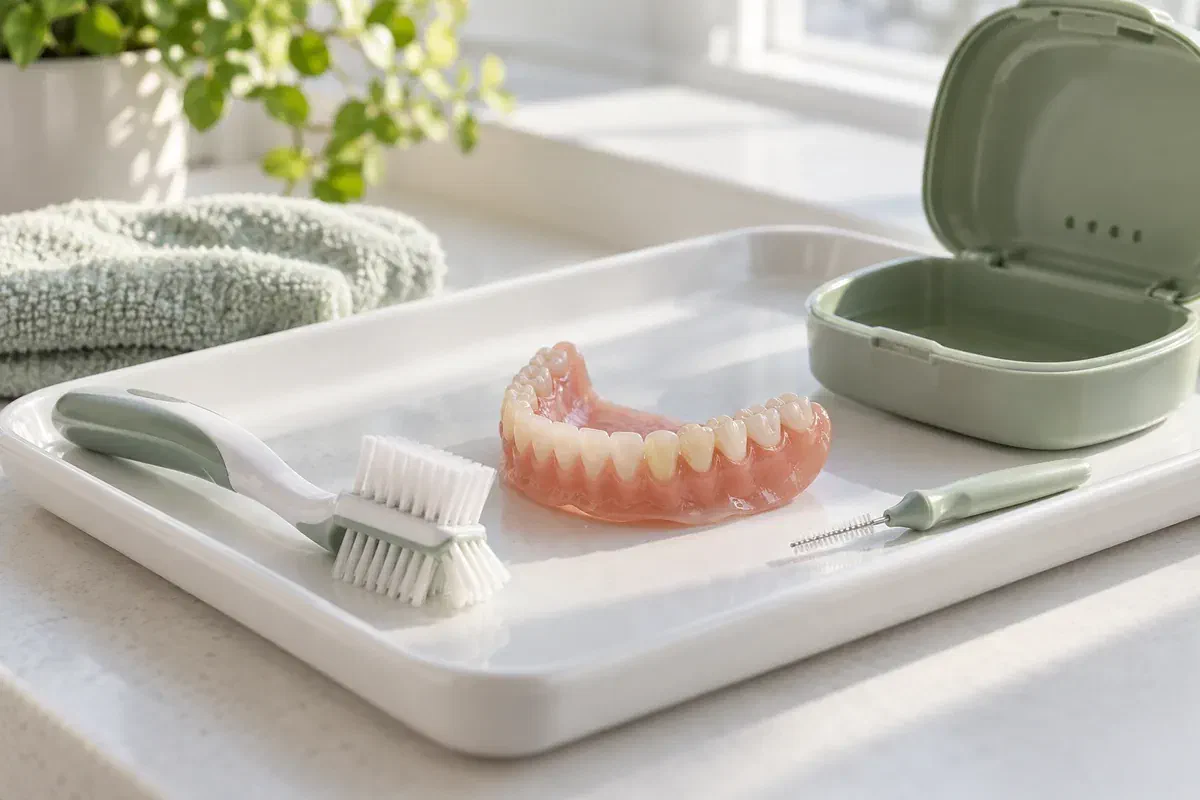
These usually do not need an emergency appointment, but they are worth raising. Bring your brushes and cleaning products, or note their names, so advice fits your appliance.
Stiff fingers, a sore wrist or difficulty seeing can make cleaning less thorough over time. Tell us which steps are hard and ask to try tools that match what your hands can do now.
A new food trap might relate to cleaning, wear or fit. Note where it is and whether it comes with tenderness, bleeding or a different feel when the denture is seated.
A little rocking, a new click, pressure or difficulty removing a removable denture should be examined. The cause may be attachments, the denture or something else rather than cleaning.
Do not wait for a routine slot if soreness is getting worse, the gum swells, there is any discharge, or a fixed restoration moves. Phone the clinic so the team can advise on timing.
Planned reviews give a chance to notice wear and irritation before they become painful. The team looks at the connectors, the denture surfaces and the gum around each implant. The teeth cannot decay, but the supporting tissue can still become inflamed, so you learn what is stable and what needs watching.
They also allow your routine to keep pace with life. A period of illness, a new prescription or reduced grip can make daily care harder and may make sore spots more likely. Mention these so the plan stays manageable and you know which signs mean calling sooner.
Patient information: Cambridge University Hospitals — continuing care of dental implants
Ask the clinician to walk you through each check, from the denture base to the retaining parts to the tissue at every support. Understanding these areas helps you judge what is worth reporting between appointments.
Inserts and denture materials wear with use. A review shows whether something needs watching, maintenance or a separate repair, and timing and costs are explained before further work.
Gentle, thorough cleaning around the supports can help keep tissue comfortable. Bring a helper if you like, and ask us to show the exact areas on your own appliance that need care.
What we do depends on your restoration, oral health and any earlier findings. The examination, cleaning and repair needs are explained clearly, including work that would need its own appointment.
Tell us where it is sore or different, how long it has been going on and how you clean. Mention changes in medication, smoking, health or home support, and bring implant records.
The clinician may look at the gum around each implant, the denture's fitting surface, the attachments and your bite. X-rays are considered if the findings suggest they would help.
Cleaning and any agreed upkeep are fitted to your restoration. If a repair, more investigation or another clinician is needed, you hear why, what is involved and an estimate of costs.
You leave with suggested tools and products, signs to watch and a recall date. We also confirm which symptoms should prompt a call before then.
The denture, its attachments and the gum each need suitable care. Follow your restoration's instructions, and ask before switching to a different cleanser, soak or brush.
Lift out an overdenture as you were taught and clean both the denture and the supports gently. Leave a fixed restoration in place and clean around and beneath it as shown.
Some cleaners suited to plain acrylic may not be right for metal parts or retentive inserts. Ask the team which brush, solution and case are appropriate for your system.
If an edge rubs, resist filing or padding it at home. Report persistent soreness, bleeding or a bite change, keep any piece that comes off, and let the team make the adjustment.
Patient information: European Federation of Periodontology — caring for dental implants
Your situation depends on your restoration and the condition of your mouth. These answers cover sore spots, swelling, loose parts and how to plan a visit.
Book a visit at our Bronte Street clinic to review your implant denture, any symptoms you have noticed and your routine. We will explain what we find and agree on a plan for continuing care.
Bring implant records, your medication list and the products you use.
