The person resists or tires during cleaning
Reluctance can mean discomfort, fatigue or a routine that is simply too long. Describe what happens and ask us to suggest shorter steps and tools that suit both of you.


Helping a parent or partner look after an implant denture is easier when everyone learns the same routine. Bring them in and we will review the appliance, its connections and the gum around its supports, then show you both how to care for it.
In many households, an adult son, daughter or spouse ends up helping with an implant denture after a stroke, a fall or simply as hands get stiffer. That help is valuable, but it often starts without any instruction. Helpers guess at products and steps, and the person wearing the denture may not like to say what hurts.
The first thing both of you should know is the design. A removable overdenture is lifted out and cleaned, then the supports in the mouth are cleaned separately. A fixed restoration stays where it is, so the helper works around and under it. Mixing those approaches up can cause discomfort or damage.
When a family drives in from Brampton together, we can use the visit to examine the appliance and teach in the same hour. The patient leads the conversation, and with their agreement the helper joins in. Tell us what each of you finds hard and what has changed recently.
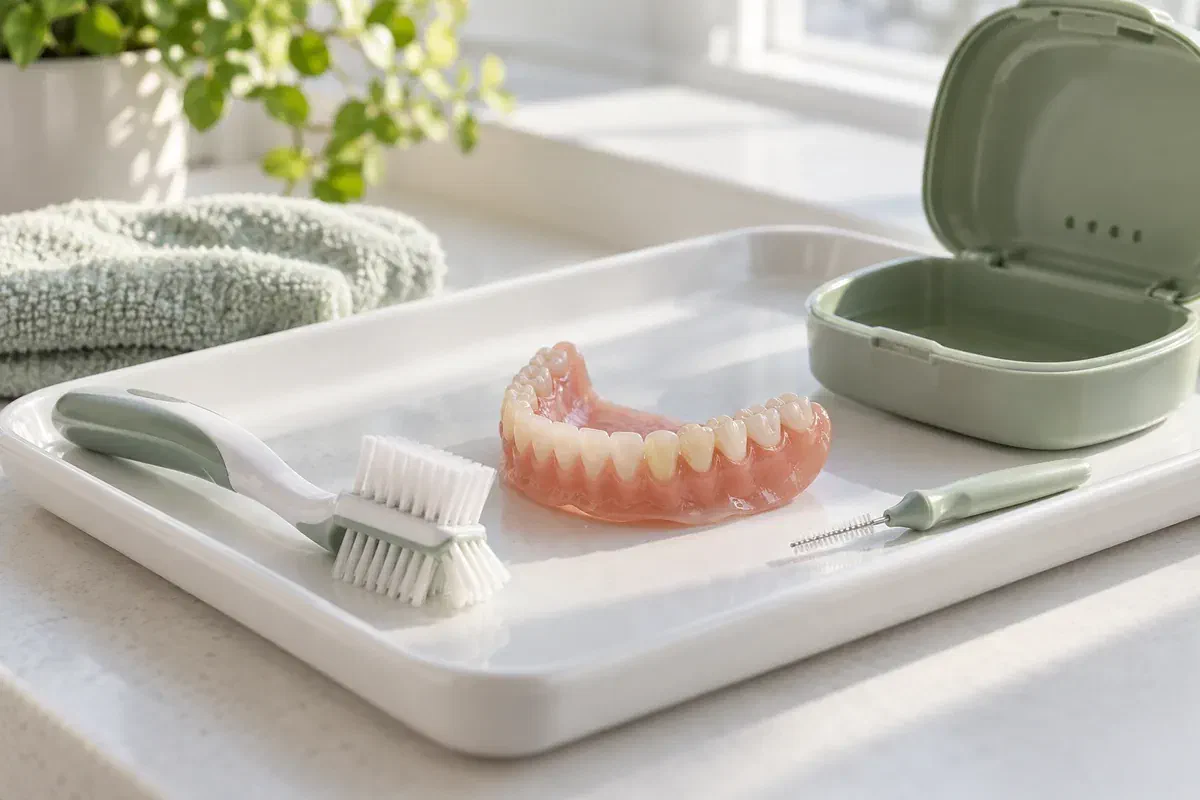
Helpers often see changes the wearer is reluctant to raise. Bring the brushes, cleansers and storage case you use at home, or photos of them, so our advice suits the real routine.
Reluctance can mean discomfort, fatigue or a routine that is simply too long. Describe what happens and ask us to suggest shorter steps and tools that suit both of you.
If the same spot collects debris despite your efforts, the shape or fit of the denture may play a part. Note the location and whether you also see redness, bleeding or a change in seating.
Wobbling, clicking, pressure marks or a removable denture that is harder to take out should be examined. Attachments, the denture or another finding could be involved.
Call promptly if the wearer has fresh pain, puffiness, any discharge or a restoration that has come loose, or seems to be avoiding chewing. These should not wait for the next planned visit.
A professional review looks at what a helper cannot easily judge at home: the condition of the connectors, signs of gum inflammation around each implant and how the bite is working. Replacement teeth do not decay, but the tissue supporting them still needs care. You both hear what is stable and what to watch.
Caregiving situations change. A new medication, a hospital stay or a move to a different routine can all affect the denture. Raising these at each visit keeps the plan realistic for both the wearer and whoever helps, rather than leaving one person to cope alone.
Patient information: Cambridge University Hospitals — continuing care of dental implants
Ask how the team examines the denture, its connectors and the gum around the supports. Understanding the purpose of each check helps a helper know what to report between visits.
Inserts and denture materials wear. A review can show whether something should be watched, maintained or repaired separately, and costs and timing are explained to the patient before any work begins.
Ask for a hands-on demonstration with both people present. A short routine that the wearer and helper perform the same way is easier to keep consistent from week to week.
The visit follows the restoration, the wearer's oral health and any earlier findings. We explain each stage so the helper can follow along, and mention anything that would need a later booking.
We ask how the denture feels and who does which part of the cleaning. Share changes in medications, smoking, general health or mobility, and bring any implant or denture records.
The team may assess the tissue around the supports, how easily they can be cleaned, the denture surfaces, attachments and bite. X-rays are suggested if the findings warrant them.
Professional cleaning and agreed upkeep are tailored to the restoration. Anything needing repair, further tests or another clinician is explained with reasons, arrangements and estimated costs.
The helper and wearer practise the steps with us, using suitable tools. We agree on what to watch, when to return and which symptoms mean you should call sooner.
The denture, its attachments and the gum each need the right care. Follow the instructions given for this restoration, and check with the clinic before trying new products or tools.
Remove an overdenture only in the way you were shown, over a folded towel or a basin of water in case it slips. Clean the denture and the supports. A fixed restoration stays in place and is cleaned around.
Ask which brush, cleanser and storage method suit this denture and its attachments. Avoid assuming a product for ordinary acrylic dentures is suitable for metal parts or retentive inserts.
Tell us about lasting soreness, bleeding, looseness or a changed bite. Keep any piece that comes away, and avoid glue, filing or improvised adjustments that make repairs harder.
Patient information: European Federation of Periodontology — caring for dental implants
Needs depend on the restoration and the wearer's oral health. These answers cover consent, handling, shared routines and practical concerns that come up when care is shared.
Book an appointment at our Bronte Street clinic to review the implant denture, its condition and the routine used at home. We will explain current needs and show the wearer and helper a practical plan for continuing care.
Bring implant records, a list of medications and the products used for cleaning.
