The routine feels harder than it was shown
Steps demonstrated in the clinic can feel different at home. If you are struggling with reach, grip or visibility, tell us, and we can adapt the technique or the tools.


Treatment ends, the new teeth settle in, and then the longer job begins. We help you move from having an implant denture made to keeping it well, with checks of the appliance, its attachments and the gum, plus a routine you can rely on.
During treatment, appointments come thick and fast, and someone always tells you what happens next. Once the final denture is in, the visits space out, and it is easy to assume the job is done. In truth, this is when your own routine and periodic professional checks start to carry the load.
Those checks follow three threads. The replacement teeth and their base can wear or chip. The hardware connecting them to the implants, whether clips, a bar or screws, can loosen or lose grip. And the gum around each implant needs to stay healthy. A removable overdenture and a fixed restoration are cared for differently, so be clear on yours.
From Bolton and the other villages, trips to the clinic are usually planned with some care. Make the first maintenance visit count by bringing your treatment summary, noting anything that feels different and telling us how the routine is going and whether your health has changed.
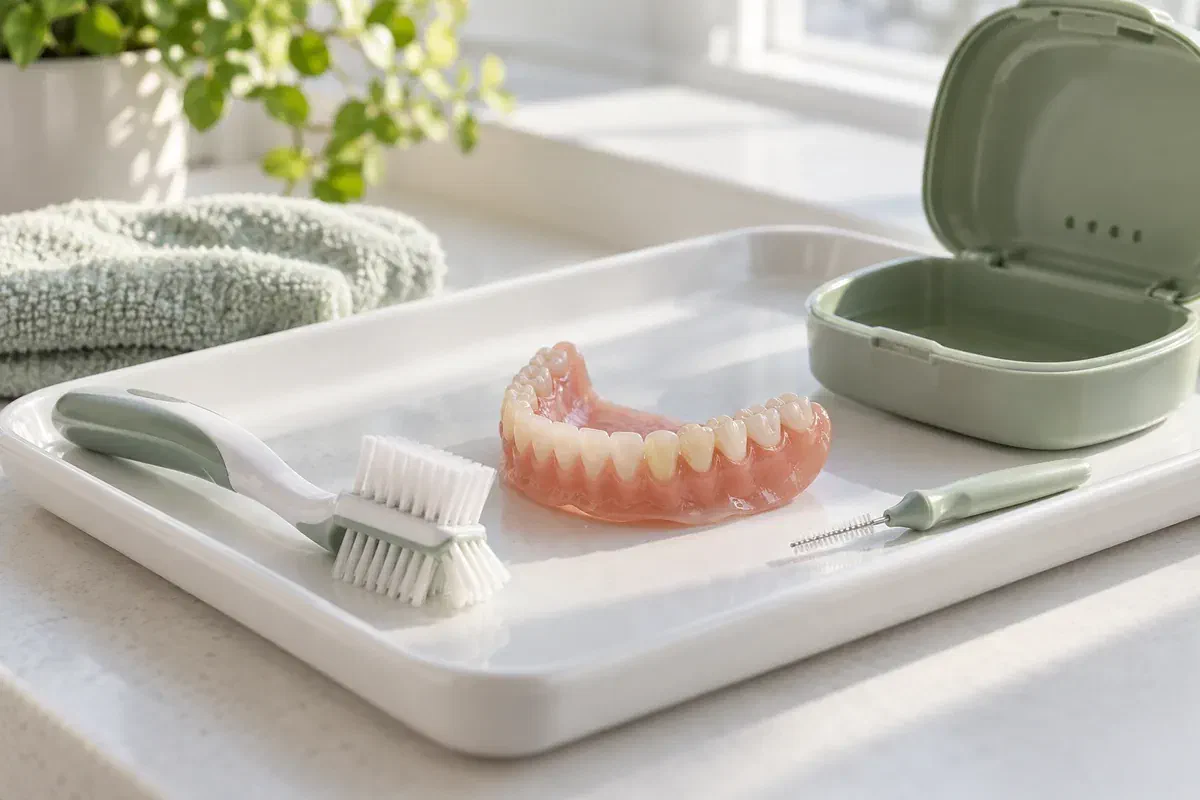
The early months often reveal small things that are worth fine-tuning. Bring the cleaning tools and products you were given, or their names, so we can check they still suit you.
Steps demonstrated in the clinic can feel different at home. If you are struggling with reach, grip or visibility, tell us, and we can adapt the technique or the tools.
A new denture can reveal places where debris collects. Keep track of the spot, and mention whether the gum nearby feels tender, bleeds when brushed or seems to sit differently against the base. That pattern helps us decide between a cleaning tip and an adjustment.
Movement, clicking, pressure or trouble removing a removable denture should be checked. Early adjustments to attachments or the denture are common and better made sooner than later.
Call the clinic without delay about pain you did not expect, any swelling or discharge, or a restoration that becomes loose. These do not belong on a list for the next review.
Early maintenance visits record how the new appliance and the tissue around it are behaving. That gives later reviews something to compare against. The teeth themselves cannot decay, but the gum and bone around implants still need monitoring, and parts may need minor attention as they bed in.
Your circumstances may also shift once treatment ends. You may have been extra careful at first and now find the routine slipping, or a change in health or medication may make it harder. Say so, and we can reshape the steps into something you can keep doing for years.
Patient information: Cambridge University Hospitals — continuing care of dental implants
Ask the team to describe how they inspect the teeth and base, the clips, bar or screws, and the tissue at each implant. Knowing these are distinct areas shows why professional care continues after treatment ends.
Inserts and denture materials will wear over time. A review clarifies whether something should be watched, serviced or repaired separately, and timing and estimated costs come first.
A short routine you can show us is worth more than a printed sheet. A helper is welcome at the appointment, and we can mark out the corners of your particular appliance where extra attention pays off.
Each visit reflects your restoration, oral health and earlier findings. We explain the examination, cleaning and any adjustments plainly, and mention anything that would need a separate appointment.
We ask how the denture has felt since it was finished and how the routine is working. Mention medication or health changes, smoking or help at home, and bring your treatment summary.
The clinician may look at the gum around each implant, cleaning access, the denture surfaces, attachments and bite. Imaging may be considered to establish a reference, depending on what records already exist.
Professional cleaning and any agreed adjustments match your restoration. Where a repair, further investigation or another clinician's input is needed, we explain the reasons, the arrangements and an estimate of cost.
You leave with tool suggestions, signs to watch and a proposed schedule for the coming months. Practise the routine with us, and ask which symptoms should prompt an earlier call.
Your denture, its connections and the tissue around the implants each need the right care. Follow the guidance for your restoration, and ask us before adding new products or tools.
An overdenture comes out only as demonstrated, and both it and the supports are cleaned. A fixed restoration stays put; clean around and beneath it with the method shown, never trying to remove it.
Stick with the brush, cleaner and storage approach suggested for your appliance. Products sold for ordinary acrylic dentures may not suit metal components or retentive inserts.
Let us know about sore spots that linger, bleeding, new looseness or a bite that feels different. Keep any part that comes off, and avoid glue, filing or do-it-yourself fixes.
Patient information: European Federation of Periodontology — caring for dental implants
Every restoration and mouth settles differently. These questions cover the first months, who provides care, professional removal and how to prepare for each visit.
Come to our Bronte Street practice for a review of your implant denture, how it has settled since treatment and the routine you follow at home. We will set a baseline, explain current needs and plan continuing care with you.
Bring your treatment summary, implant details and the cleaning products you use.
