One step feels too fiddly
If a small brush is hard to grip or a corner is hard to see, that step tends to disappear. Tell us which one, and ask to try handles, angles or aids that make it easier.


The best routine for an implant denture is the one you can do every day without dreading it. We look at the appliance, its retaining parts and the gum around each implant, then help you shape a morning and evening habit that lasts.
Clinical advice only works if it survives a busy Tuesday. For many people, the real challenge with an implant denture is not knowing what to do but doing it consistently, at the end of a long day, with tired hands and poor light over the sink. A good maintenance plan starts from that reality.
The steps depend on your restoration. With a removable overdenture, the denture comes out, gets cleaned, and the supports in your mouth are cleaned too. A fixed restoration stays where it is, so the routine means reaching around and under it with the right aids. Confirm which you have before you settle on any habit.
In households across Erin village, Hillsburgh and the surrounding countryside, dental visits are often planned well ahead. Use the appointment to rehearse. Show us how you clean, tell us which steps you skip and why, and mention anything about your health or schedule that has changed recently.
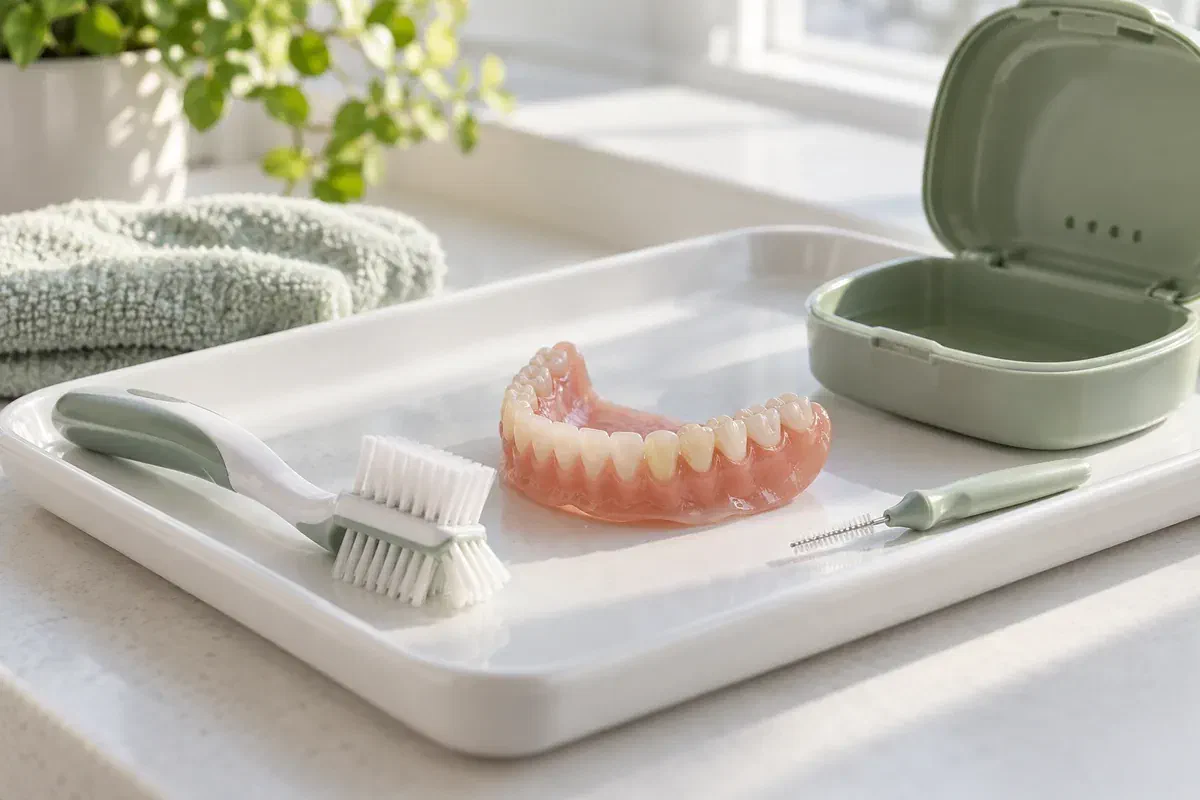
Most routines lose a step or two over time. Bring your brushes, picks and cleansers, or their names, and be honest about which parts you leave out, so we can help rebuild the habit.
If a small brush is hard to grip or a corner is hard to see, that step tends to disappear. Tell us which one, and ask to try handles, angles or aids that make it easier.
Recurring deposits often point to the step that gets skipped, but they can also reflect the denture's shape or fit. Note the spot and whether the gum there is sore or bleeds.
Rocking, clicking, pressure or a removable denture that is harder to take out needs examination. Attachments, the denture base or other causes may be involved, not just your routine.
Some things should never wait for the next review. Phone straight away about pain you have not had before, a swollen or weeping area of gum, or a restoration that feels loose.
Even the most consistent routine cannot show you everything. Reviews look at wear in the retaining parts, the condition of the denture surfaces and the health of the gum around each implant. Replacement teeth do not decay, but the tissue beneath them can become inflamed. You hear what is going well and where to focus.
Habits also need adjusting as life changes. A new job schedule, caring for a grandchild, illness or reduced dexterity can push cleaning later or make it rushed. Mention these, and we can trim the routine to essentials you can keep up instead of an ideal you rarely reach.
Patient information: Cambridge University Hospitals — continuing care of dental implants
Ask the team how they look at the denture, its retentive parts and the surrounding gum. Seeing those separate areas helps explain why a professional visit adds value to careful daily cleaning.
Inserts and acrylic gradually wear. A review sorts findings into those to watch, maintain or repair, and if a separate repair plan is needed, you are told the timing and estimated costs first.
Practising in the chair, with a hygienist watching, can make the steps stick. A family member is welcome too, and we can point out the areas on your own denture that need extra care.
Your restoration, oral health and previous findings shape the appointment. We explain each stage, from examination to cleaning to any repair, and tell you if something would need its own booking.
We ask when and how you clean, what gets skipped and how the denture feels. Tell us about medication changes, smoking, general health or help at home, and bring implant records if available.
The clinician may examine the tissue around each support, how easily you reach it, the denture surfaces, attachments and bite. Imaging is considered if the examination points to a need.
Professional cleaning and any agreed maintenance suit your particular restoration. If repair, further tests or another clinician's opinion is needed, the reasons, arrangements and estimated costs are explained.
You try the morning and evening steps with suitable tools while we watch. We agree on what to monitor, when to return and which symptoms should prompt a call sooner.
Each part of the arrangement benefits from the right care. Keep to the instructions you were given for your restoration, and ask us before you swap in a different cleaner, soak or brush.
Take out an overdenture as shown and clean it and the supports, ideally at a set time each day. For a fixed restoration, clean around and beneath it with the tools you were given; never try to remove it.
Store the recommended brush, cleaner and case together so the routine is easy to start. Check that products suit your denture and attachments, as some made for plain acrylic may not suit metal parts or inserts.
Let us know if a sore patch will not settle, the gum bleeds, the denture starts to move or your teeth meet differently. Keep any detached part, and avoid glue, filing or makeshift adjustments that complicate a repair.
Patient information: European Federation of Periodontology — caring for dental implants
Every restoration and routine differs a little. These questions cover timing, daily steps, travel, soaking and how to keep care consistent over the long term.
Book a visit at our Bronte Street clinic to review your implant denture, its condition and how you care for it each day. We will look at what it needs and help you settle on a routine you can keep.
Bring the brushes and products you use so we can practise with them.
