Some steps have become a struggle
Tired hands, a stiff neck or difficulty seeing the back of the mouth can leave areas missed. Tell us which steps feel hardest so we can demonstrate easier tools and positions.


Food that keeps catching under your implant denture after dinner is easy to blame on brushing. Sometimes it is, and sometimes the fit or the attachments have changed. We look at the appliance and the gum around each support to find out which.
You finish a meal, and there it is again: a seed or a scrap of bread wedged beneath the denture or around a support. One occasional piece is ordinary. A pattern that keeps repeating in the same spot is worth a professional look, because the explanation can sit in your technique, in the denture's shape or in a change of fit.
How you deal with it at home depends on your appliance. An overdenture that clips onto implants can be taken out, rinsed and cleaned, along with the supports it rests on. A fixed restoration stays put, so you need tools that reach under and around it. Knowing your design avoids well-meant but unsuitable fixes.
Across Halton Hills, from Georgetown and Acton to Glen Williams and the smaller hamlets, people often fit dental care around work, farms and family. Let us know what your week looks like, what parts of the routine are difficult and whether your health has shifted lately. That helps us shape advice you can actually use.
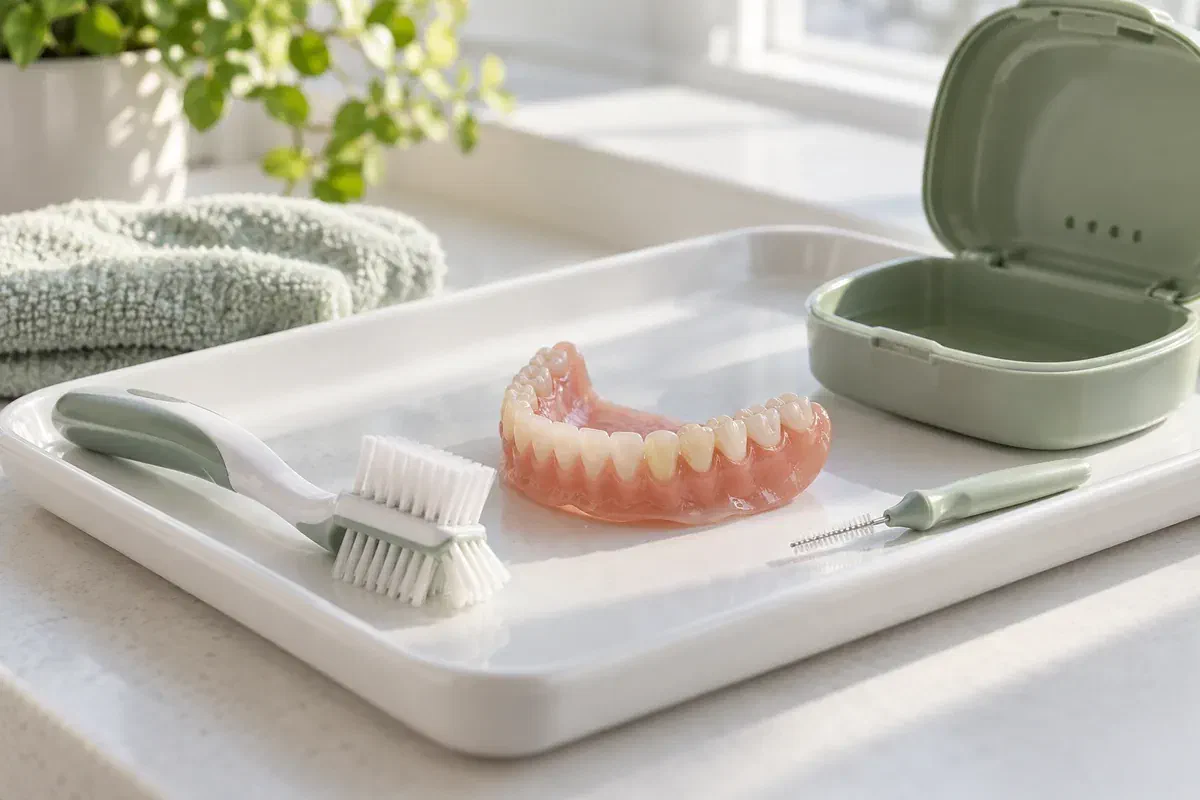
Try noting when and where food or discomfort appears for a week or two before the visit. Bring the brushes, picks and cleansers you rely on, or their names, so suggestions fit your appliance.
Tired hands, a stiff neck or difficulty seeing the back of the mouth can leave areas missed. Tell us which steps feel hardest so we can demonstrate easier tools and positions.
Recurring debris in one area may come from cleaning, from wear or from a gap that has opened up. Note whether that spot is also tender, bleeds or feels different when the denture is seated.
Rocking, a new click, pressure or trouble taking out a removable denture should be examined. Loose fit can let food in, and the cause may be attachments, the denture base or something else.
Do not save urgent symptoms for a routine slot. Swelling, new pain, any discharge, or a restoration that has come loose should prompt a call to the clinic soon.
When food keeps lodging, it helps to know whether the solution is a different brush or a change to the appliance. A maintenance review looks at both. It checks the wear on connectors, the denture's contours and the condition of the gum around each implant. Acrylic teeth do not decay, but the tissue beneath can still become sore or inflamed.
It also takes account of your life outside the dental chair. Long days, a new medication or reduced grip strength can all chip away at a routine. Mention them, and the plan can be trimmed to a handful of steps you can keep doing instead of a list you abandon.
Patient information: Cambridge University Hospitals — continuing care of dental implants
Find out how the denture, its retaining parts and the gum around the supports are examined. Knowing these are separate areas explains why professional review still helps when you clean carefully.
Wear is expected over time. If a finding needs monitoring, routine upkeep or its own repair, you will hear the timing and estimated costs before anything else is done.
Two or three targeted steps around the problem area may do more than a long general list. Bring someone who helps if you like, and ask us to show you the exact spots on your denture.
Your restoration, oral health and past findings guide the appointment. Each part, from examination to cleaning and repairs, is explained as we go, along with anything needing its own booking.
We ask where food collects, when it started and how you clean. Mention changes in medication, smoking, general health or help at home, and bring any implant or denture records.
We may check the gum around each support, how accessible it is, the denture surfaces and attachments, and your bite. Imaging is added when the examination suggests it would help.
Professional cleaning and agreed upkeep suit your particular restoration. If an adjustment, repair or second opinion is needed, you hear why, how it would be arranged and what it is likely to cost.
We show you tools suited to the problem area, go over what to watch and agree on a recall. Ask which signs should bring you back sooner than planned.
Your denture, its attachment system and your gums each need suitable care. Use the instructions for your restoration, and check with us before adding a new product or soaking method.
Remove an overdenture only as demonstrated and clean the fitting surface and supports. With a fixed restoration, reach underneath with the tools you were shown rather than trying to lift it.
An interdental brush, a soft-bristled denture brush or another aid may suit your trouble spot. Confirm the products and storage method are compatible with your denture and any metal parts or inserts.
Report ongoing soreness, bleeding, new movement or a changed bite. Keep anything that detaches, and avoid filing, gluing or adjusting the denture yourself, since that can complicate repair.
Patient information: European Federation of Periodontology — caring for dental implants
What you need depends on your appliance and oral health. These questions look at food traps, cleaning aids, fit changes and planning visits around a busy schedule.
Arrange an appointment at our Bronte Street practice to look at your implant denture, the problem areas you have noticed and how you clean. We will explain what we find and suggest a plan for continuing care.
Bring your cleaning tools, any implant records and a note of where food tends to collect.
