Fingers that no longer cooperate
Stiff joints, tremor or poorer eyesight can turn a quick routine into a frustrating one. Describe what is hard and ask to practise with handles, brushes or aids that suit your hands now.


Habits set the year your implant denture was fitted may not suit the hands, health or appliance you have today. We review the denture, the parts that hold it and the gum around its supports, then refresh a routine you can keep up.
Plenty of people around Milton's historic downtown have worn an implant denture long enough that cleaning it feels automatic. Automatic is good, until something underneath has changed. Inserts soften with use, gum tissue responds to the years, and a brush that once reached every corner may now miss one.
Start with a simple question: can you take your denture out yourself, or does it stay put? A removable overdenture comes out for cleaning as you were taught. A fixed bridge on implants stays in, and the work happens around and beneath it. Mixing up the two sets of instructions can do more harm than good.
A review is a chance to compare the routine you began with against the one you follow now. Tell us what has drifted, what you skip on tired evenings and what has become uncomfortable. We would rather know the honest version so the plan reflects your real week.
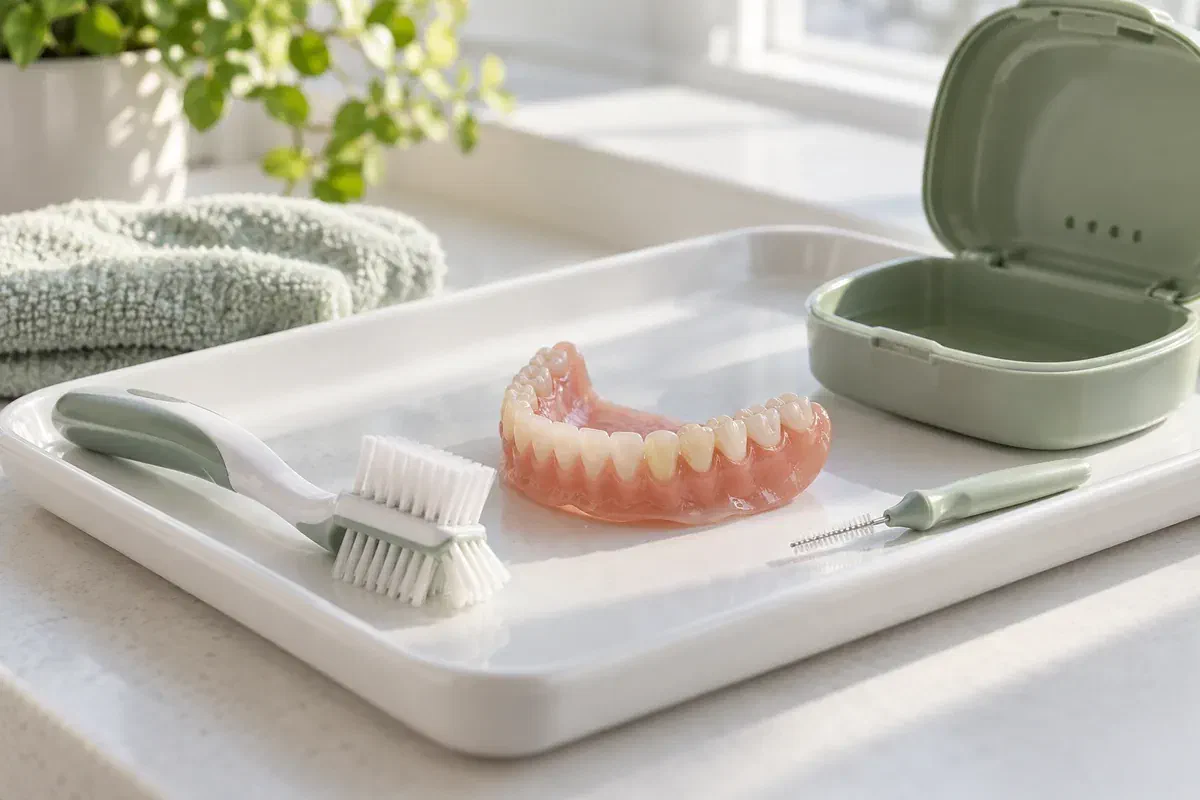
Gradual changes are easy to accept without question. Bring the brushes, cleansers and any aids you use now, or a list of their names, so we can judge them against your particular appliance.
Stiff joints, tremor or poorer eyesight can turn a quick routine into a frustrating one. Describe what is hard and ask to practise with handles, brushes or aids that suit your hands now.
If the same area keeps collecting food or hardened deposits, look at both technique and the denture's contours. Note whether the spot is also tender, bleeds, or seems linked to the denture sitting differently.
A denture that lifts more easily, clicks, presses or becomes hard to remove deserves assessment. The cause may be worn attachments, denture changes or something else, and extra scrubbing will not fix it.
Please phone the clinic promptly about new pain, swelling, discharge or a loose restoration instead of holding the concern until your planned review.
Long service is a credit to the appliance, but it also means parts have done a great deal of chewing. Reviews look at the hardware and the living tissue together. The denture cannot decay, yet the gum around each implant can still become inflamed. You should hear clearly what is holding, what has moved on and what to watch.
Your circumstances may have changed more than the denture has. Retirement, a new diagnosis, different medications or the loss of a partner who once helped can all affect daily care. Raise them, and the instructions can be reshaped into something you can manage instead of a routine that quietly falls away.
Patient information: Cambridge University Hospitals — continuing care of dental implants
Ask the team to explain how they look at the denture, its connectors and the gum around the supports. Seeing these as distinct areas shows why a professional review adds something to careful home cleaning.
Components and denture materials wear over time. The review can sort a finding into monitoring, upkeep or a separate repair, and the timing and estimated costs are explained before any further work goes ahead.
Fewer steps, done well, beat a long list. Bring a relative or friend if you like, and ask us to show you the exact places on your own denture that need the closest attention.
Your restoration, your health and earlier findings guide the visit. We explain the examination, professional cleaning and any repair needs as we go, and tell you if something would need its own appointment.
We ask how the denture behaves and how you look after it. Mention changes in medication, smoking, overall health or the help you have at home, and bring any implant or restoration records you can find.
The examination may cover the tissue around each support, how well you can reach it, the denture surfaces, the attachments and your bite. Imaging or other records are added if the clinician sees a reason for them.
Cleaning and other maintenance are adapted to your restoration. When something needs repair, further investigation or input from another clinician, we explain why, how it would be arranged and what it is likely to cost.
Before you leave, we go over suitable tools and products, things to watch and the suggested time until your next visit. Show us your routine and ask which signs should prompt a call in between.
The denture, its attachment system and the gum each need suitable care. Keep to the instructions given for your restoration, and ask before trying a new cleanser, a different soak or an unfamiliar tool.
An overdenture should only come out the way you were taught; clean it and the supports it attaches to. A fixed restoration stays where it is. Use the access you were shown and never try to unscrew or lever it.
Ask which brush, cleanser and storage approach suit your denture and its attachments. A soak made for a basic acrylic plate is not automatically safe for metal parts or the small inserts that provide grip.
Let us know about soreness that persists, bleeding, new looseness or a bite that has changed. Keep any part that breaks off in a safe place, and avoid glue, sandpaper or homemade adjustments that complicate the fix.
Patient information: European Federation of Periodontology — caring for dental implants
Every appliance ages differently, and so does the mouth holding it. These answers cover long-term wear, records, changing health and the signs that deserve attention.
Arrange an appointment at our Bronte Street practice to talk about your implant denture, its current condition and how you clean it. We can identify what it needs now and set out a practical plan for the years ahead.
Bring any implant cards or records and the names of the products you use.
