Less energy or dexterity for the routine
Recovery from illness, joint pain or a tremor can make thorough cleaning hard. Tell us honestly what you can manage, and we can suggest a shorter routine or adapted tools.


A new diagnosis, a change in prescriptions or a stretch of poor health can quietly change how an implant denture feels and how well you can care for it. We review the appliance, its attachments and your gums with those changes in mind.
It is easy to think of an implant denture as a fixed object that only wears with chewing. In practice, the mouth around it responds to the rest of your body. A medicine that dries the mouth, a condition that affects healing, a surgery that leaves you tired for weeks: each can alter comfort, gum health and how much energy you have for cleaning.
The appliance still needs its usual attention. That means the replacement teeth and base, the attachments that hold it, and the tissue around the implants. With a removable overdenture you take it out to clean; a fixed restoration is cleaned in place. Knowing which you have keeps the advice relevant.
Rural households in Puslinch often plan medical and dental visits carefully, so bring the details with you: an up-to-date medication list, any recent hospital stays and what has become harder at home. That lets the team adjust your routine to the person you are today.
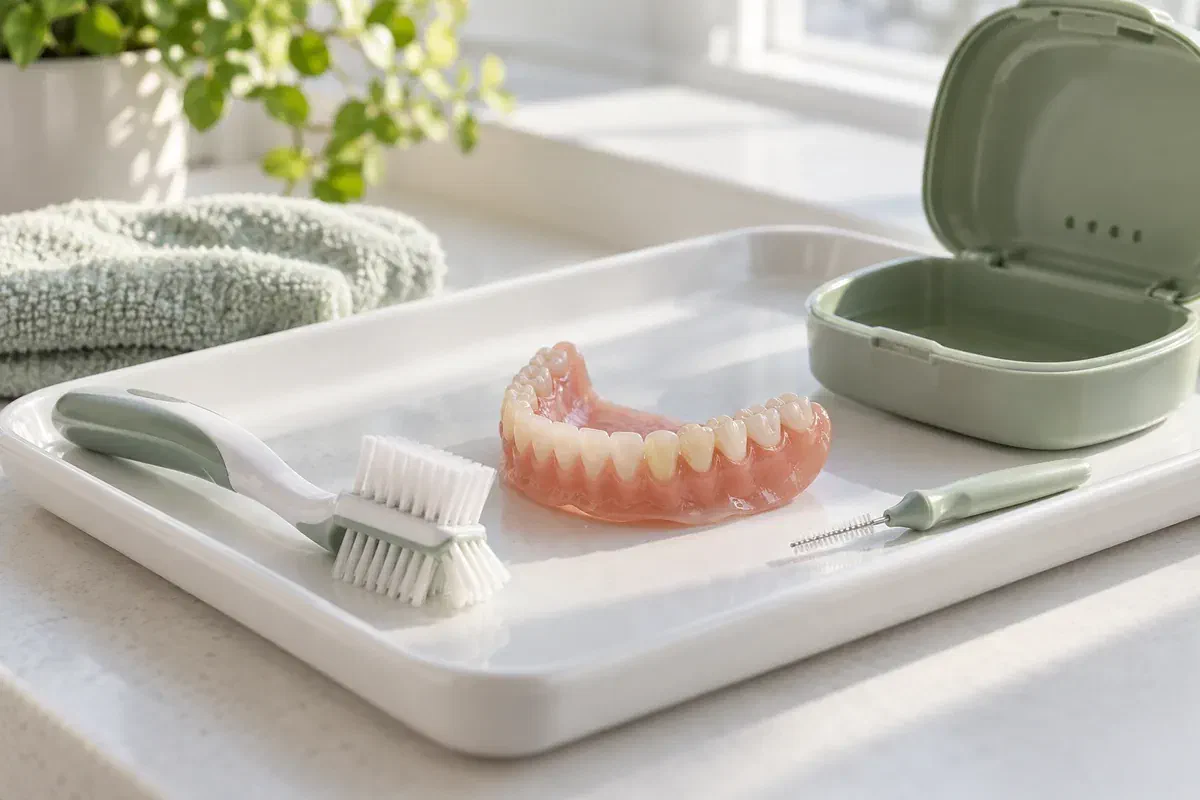
Even changes that seem unrelated to your teeth can matter. Bring your medication list and the products you use, or their names, so recommendations account for your health and your appliance.
Recovery from illness, joint pain or a tremor can make thorough cleaning hard. Tell us honestly what you can manage, and we can suggest a shorter routine or adapted tools.
Some medicines reduce saliva, which can change how deposits form and how the denture feels. Note where build-up gathers and whether the gum looks red, sore or bleeds.
Changes in the tissue, weight loss or attachment wear can all affect fit. Movement, clicking, pressure or trouble removing a removable denture deserve examination.
Sudden soreness, a swollen area, any discharge, or a restoration that no longer feels secure is a reason to phone without waiting. Mention any recent illness or medication change when you call, since it may affect how soon you should be seen.
A maintenance visit checks the mechanical side and the biological side together. Connectors wear, and gum around implants can become inflamed, sometimes more readily when general health is under strain. The teeth themselves do not decay. You should leave understanding what is stable, what has changed and what to monitor.
Health changes can also mean your routine has to change. Someone recovering from a stroke, managing diabetes or adjusting to new prescriptions may need simpler steps or more help. Raise those circumstances so the plan is achievable and you are not left trying to follow instructions that no longer suit you.
Patient information: Cambridge University Hospitals — continuing care of dental implants
Ask how the team examines the denture, its retaining parts and the surrounding gum, and whether your health changes affect what they look for. That link explains why professional review still adds value.
Inserts and the denture base wear over time. If a repair is needed, ask whether timing should take your health into account, and expect estimated costs before further work goes ahead.
On difficult days, a few essential steps done well are better than none. Bring a family member if they help you, and ask us to show which areas matter most on your own appliance.
Your restoration, oral health and earlier findings shape the visit. The team explains each part of the examination, cleaning and any repair, and tells you if something needs separate scheduling.
We go through medications, recent illness, smoking and the support you have at home, then ask how the denture feels and how you clean it. Bring any implant records you have.
The clinician may look at the gum around each implant, cleaning access, the denture surfaces, the attachments and your bite. Imaging is considered when the findings or your history suggest it.
The cleaning and any upkeep we agree on are chosen with your restoration and your health in mind. If you need a repair, further tests or another clinician's input, including coordination with your doctor, we explain why and outline costs.
You leave with tools and products that suit your current health, a list of things to watch and a proposed next visit. Ask which symptoms should prompt an earlier call.
The denture, its attachments and your gums each need suitable care. Keep to your restoration's instructions, and ask the clinic before you change products or methods.
Remove an overdenture only as you were shown and clean it and the supports. Leave a fixed restoration in place and clean around and under it, without trying to loosen it.
If your mouth is drier than it used to be, mention it. Some cleansers or rinses may feel harsh. Ask which brush, cleaner and case suit your denture and any metal parts or inserts.
Let us know about lasting soreness, bleeding, new movement or an altered bite. Keep any part that comes loose, and avoid glue, filing or homemade adjustments.
Patient information: European Federation of Periodontology — caring for dental implants
Your plan depends on your restoration, your mouth and your general health. These questions cover medications, dry mouth, smoking, recovery and planning visits.
Arrange an appointment at our Bronte Street clinic to discuss your implant denture, your current health and the routine you use. Together we will look at the findings and settle on a plan that suits you as you are now.
Bring your medication list, any implant records and the names of your cleaning products.
