Bleeding at the same implant again
If gentle cleaning brings blood at one site repeatedly, have it assessed. Say whether the area is tender and whether you have changed products. On its own, bleeding gives no reliable reading of bone support.


A sour taste near an implant, or gum that looks slightly swollen in the mirror, is easy to blame on lunch. From Georgetown, you can have that site examined at our Milton clinic, find out what the change is likely to be, and leave with a plan for cleaning and review.
Not every implant problem starts with blood on a brush. Sometimes it is a stale or metallic taste that returns after cleaning, or a slight fullness in the gum that you only notice when your tongue runs over it. These signs can be mild and come and go, which makes them easy to ignore and worth mentioning.
Inflammation around an implant can stay in the gum, which dentists call peri-implant mucositis, or extend to the bone that supports the implant, known as peri-implantitis. A taste or swelling can occur with either, and also with problems unrelated to the implant. Sorting out the cause takes an examination, a look at earlier records, and sometimes an X-ray.
When you come from Georgetown, describe the change as precisely as you can: which side, when you notice it, and whether anything makes it better or worse. Our Bronte Street team will look at the site, ask about the implant’s history, and help you decide on the next step, from simple maintenance to a closer investigation.
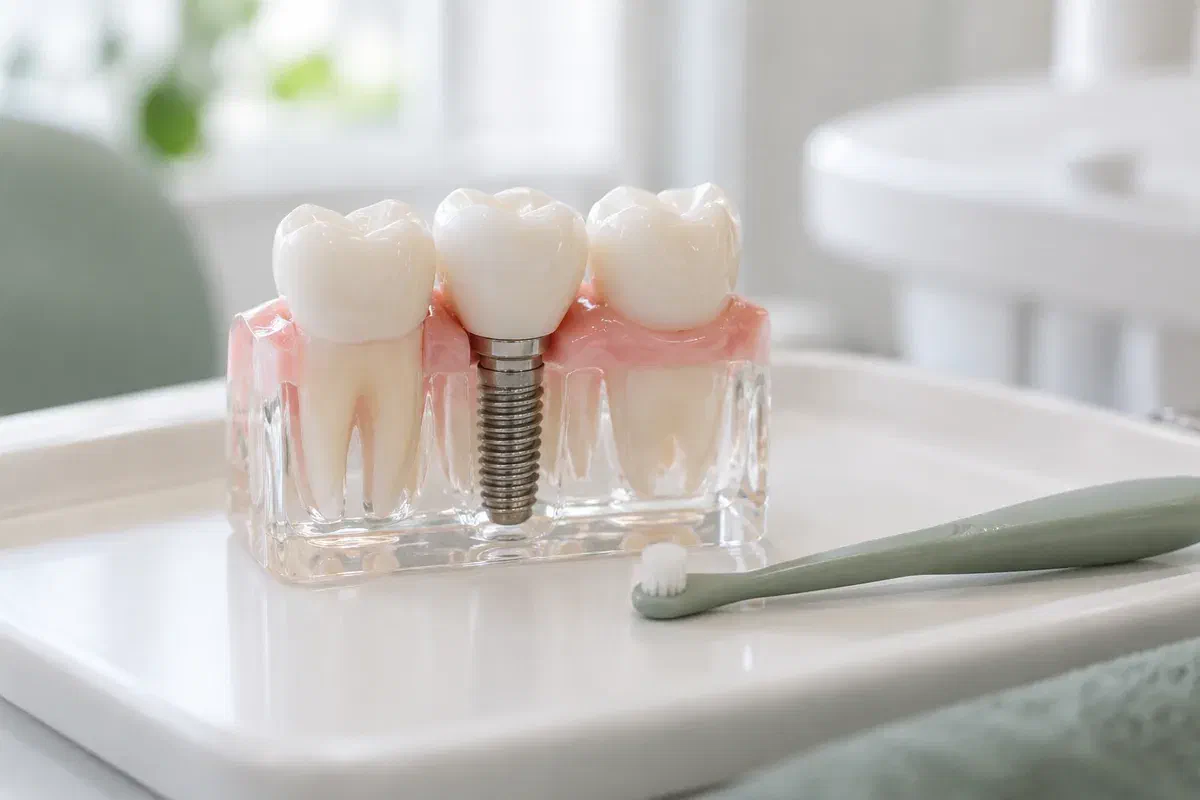
Changes around an implant are often brief and easy to forget by the time you are in the chair. A short description of where, how often, and since when is more useful than a guess at the diagnosis.
If gentle cleaning brings blood at one site repeatedly, have it assessed. Say whether the area is tender and whether you have changed products. On its own, bleeding gives no reliable reading of bone support.
A recurring bad taste, puffiness, redness, or a margin that looks different should be raised. The dentist can consider inflammation along with other explanations instead of linking every change to one cause.
Tenderness can make you clean a spot less, which may make things worse. Point out the site so the team can look at how you clean it and whether the restoration’s shape is a factor.
Swelling that appears quickly, pus or discharge, pain that keeps increasing, or an implant that feels loose needs attention before any routine booking. Phone us to describe the symptoms and we will arrange the right assessment.
A taste that came and went last spring may mean little alone. Recorded alongside measurements and bleeding at each review, it becomes part of a pattern the team can interpret. Ask what is being monitored at your implant and whether anything has changed since the previous visit.
Support is tailored to you. Past gum disease, smoking, certain health conditions, and difficulty reaching the site all play a part. These details guide how often you are seen and what help you get, and they are no reason to hold off booking when your routine has been patchy.
Patient information: American Academy of Periodontology — peri-implant diseases
Some findings need a defined treatment plan rather than another wait-and-see review. You should understand the concern, the proposed care, and how the team will judge its effect.
If a site keeps trapping debris, the solution may be a different brush, a new angle, or a closer look at the restoration’s contour. Scrubbing harder rarely solves an access problem.
The teeth around the implant, and any other implants, need care too. Keeping the whole mouth in the plan avoids missing a gum problem a few teeth away.
You should go home understanding what is happening around your implant and why the next step was chosen. If the area is tender, or earlier checks felt rough, let us know before we start.
We ask what you have noticed, when the implant was restored, any previous inflammation or treatment, and changes in health or medicines. Your account helps us decide what to look at most closely.
The clinician inspects the site and may take gentle measurements. Along with any bleeding, the ease of cleaning and the tissue’s appearance are taken into account. An X-ray may be advised if bone support needs a closer look.
We explain whether the findings suggest routine maintenance, focused treatment, or more investigation, including the possibility of a cause unrelated to the implant. Proposed care or referral should come with its reason and an estimate where relevant.
You will know which areas to prioritise, how to clean them, and when we will check the response. A post-treatment check can serve a different purpose from regular maintenance.
Choose a routine you can follow every day without discomfort. Ask for a demonstration around your implant and tell us if anything practical, such as limited grip, makes it harder.
Use the brush and interdental cleaners matched to the space around your implant. Do not push a tool that is too big into a tight gap, and avoid aggressive brushing after bleeding.
Make a note when a bad taste, swelling, soreness, or bleeding returns. Call us if it persists or worsens. Feeling little pain does not mean the gum is healthy.
New medicines, changes in diabetes care, smoking, or a new difficulty with cleaning are worth mentioning. Ask about support for risk factors, and keep up medical care as prescribed unless advised otherwise by your doctor.
Ask about what you have noticed, what the measurements mean, or what follow-up looks like. Your implant’s own details matter more than general descriptions of someone else’s problem.
Bring the change you have noticed to our Bronte Street clinic in Milton. We will examine the gum around your implant, explain what we see and what we do not yet know, and agree on home priorities and when to review.
When you book, mention any taste, swelling, bleeding, or soreness near the implant, and which side it is on.
