

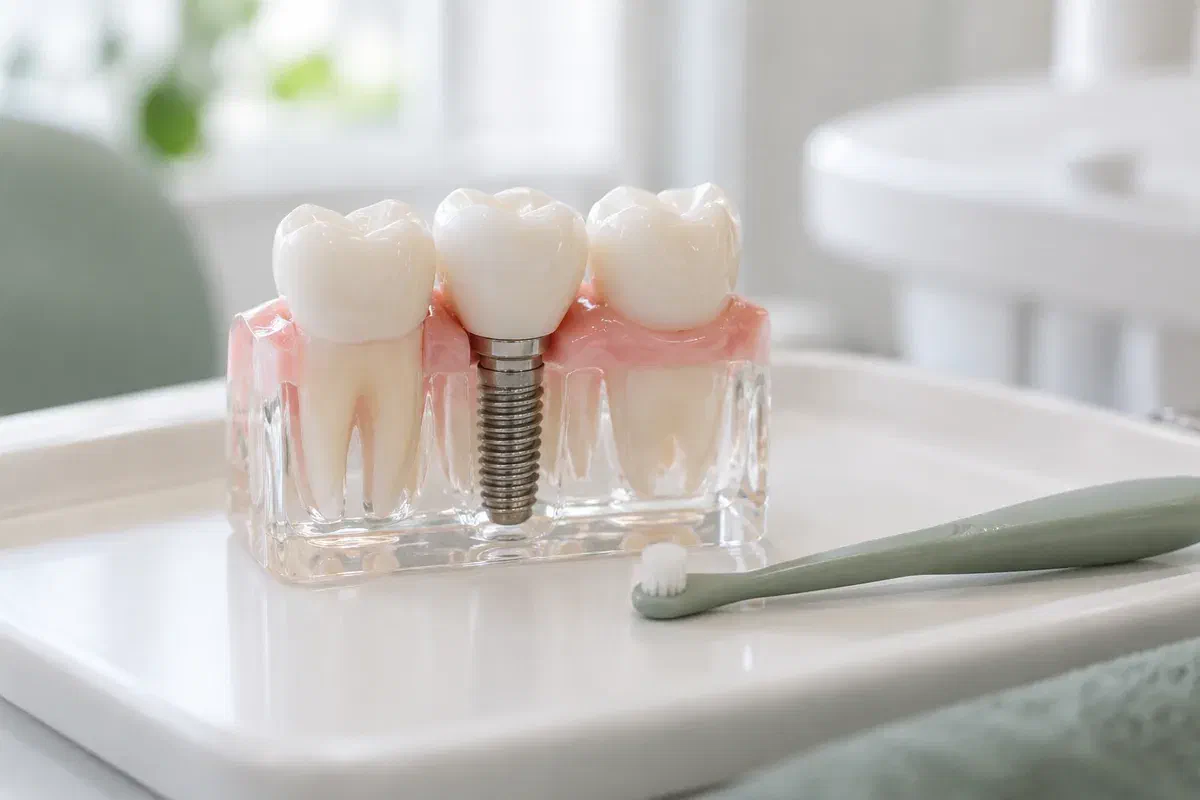
Illustrative consultation about maintaining gum health around a dental implant
Restorative Dentistry

Implant Gum-Care Maintenance in Old Milton

An implant placed ten or fifteen years ago has lived through a lot of changes in your health and habits. For people in Old Milton, we review the gums around long-standing implants, compare what we can with older records, and plan follow-up around today’s findings.

Long-standing implants

Years of good service, and still worth a fresh look

Plenty of implants have been in place so long that their owners barely remember the surgery. The crown may still look tidy, yet the tissue around it has aged with you. Medicines change, hands get less nimble, a partner’s habits rub off, and the gum and bone that hold the implant respond to all of it over time.

When the team looks at an older implant, the key question is what kind of change, if any, is present. Inflammation limited to the gum is called peri-implant mucositis. When bone support is also being lost, the term is peri-implantitis. A mirror and a sense of comfort cannot separate the two, so clinical findings, previous records, and imaging where useful are needed.

Many people in Old Milton, Milton’s historic downtown, have dental histories spread across several offices. Bring whatever you still have, such as the name of the implant system, an old treatment summary, or the year it was placed. Our Bronte Street practice is close by, and we can work from those details to understand where things stand and what a sensible plan looks like.

Ask about an older implant
Implant teaching model beside a small brush used to illustrate targeted cleaning
Changes that creep in

Something feels a little different. Is that enough to book?

Yes, it can be. Gradual changes are easy to dismiss because they arrive slowly. Instead of guessing at a diagnosis, describe where you notice the change, how often, and roughly when it began.

A familiar spot has started to bleed

An implant that never bled before and now does on most days is worth a check. Say whether it is tender and whether you have changed brushes, floss, or technique recently. Bleeding does not show, by itself, how the supporting bone is doing.

The gum line looks lower or puffier

A darker or swollen margin, a gum edge that seems to have moved, or a sour taste that keeps returning should be mentioned. The dentist will think about inflammation and other causes rather than treating every change as the same problem.

Cleaning has become harder than it used to be

Stiff fingers, a new bridge next door, or a crown shape you have never quite mastered can leave a site poorly cleaned. Show us the area so we can consider your tools, your technique, and the restoration together.

Swelling that is new, discharge, pain that keeps building, or any looseness should not wait for a routine visit. Phone the clinic, describe the symptoms, and we will arrange an appropriate assessment.

Why history matters

Today’s findings mean more beside yesterday’s.

A long-standing implant has a story, and maintenance works best when that story is written down. Clinical notes from each review let the team see whether measurements, bleeding, or bone levels are holding or drifting. If older records exist, they add context. Feel free to ask what is being tracked and why.

The plan is also built around your circumstances. Earlier gum disease, smoking now or in the past, health conditions, and practical limits on cleaning all count. They are a reason to adjust support and timing, never a reason to feel you have left it too long to ask.

Patient information: American Academy of Periodontology — peri-implant diseases

Notice when monitoring should become treatment

Some reviews show findings that need a defined plan rather than another round of watching. You should know what the concern is, what is being suggested, and how the result will be reassessed.

Look at the crown as well as the cleaning

Older restorations were sometimes shaped in ways that make cleaning tricky. If a site stays hard to reach, the team can consider new instructions, different aids, or a closer assessment of the restoration.

Include every tooth and implant

Remaining natural teeth and any other implants need care too. Planning for the whole mouth keeps one implant from getting all the attention while a gum problem nearby is missed.

What the visit covers

Four steps from the first question to the next review

You should leave knowing what is happening around the implant and what the next step is meant to do. If the area is tender, or past checks have been uncomfortable, say so at the start.

  1. Piece together the implant’s background

    We ask roughly when it was placed and restored, whether it has been treated for inflammation before, and what has changed in your health or medicines since. Any records you bring help us decide what to compare.

  2. Check the tissue and its support

    The clinician examines the site and may take gentle measurements around the implant. Bleeding, access for cleaning, and other findings are read together. An X-ray may be recommended when it would help assess the bone.

  3. Talk through the findings

    We explain whether what we see suggests routine maintenance, focused treatment, or more investigation. Any proposed cleaning, added care, or referral should come with its reason, what it is expected to do, and an estimate where relevant.

  4. Agree on priorities and timing

    Find out which areas need the most care at home, how to clean them, and when we will look again. A recheck after treatment may serve a different purpose from your longer maintenance schedule.

Daily care that fits

Simple, gentle, done the same way each day

A routine helps only if you can repeat it without strain. Ask for a demonstration on your own implant, and tell us about arthritis, poor eyesight, or anything else that gets in the way.

Clean along the route you were shown

Use the brush and aids recommended for the space you have. Choose a smaller tool rather than forcing a large one into a tight spot, and resist scrubbing harder when the gum bleeds.

Write down what keeps coming back

A short note of repeated bleeding, swelling, soreness, or a bad taste is helpful. Call if these changes linger or worsen. Feeling little pain is not proof that the tissue is healthy.

Tell us when your health changes

New medications, changes to diabetes care, smoking, or a new difficulty with cleaning are all worth sharing. Ask about support with risk factors, and carry on with prescribed medical care unless your physician advises otherwise.

Where the findings lead

Healthy, inflamed, or losing support: each needs its own plan.

Ongoing maintenance and treatment of active disease overlap, but they do different jobs. The dentist should say which picture the findings suggest and what else needs to be learned before recommending further care.

If the area is stable

Carry on with maintenance

Continue a schedule of professional reviews and home cleaning set for you. Discuss the interval, the sites being followed, and the symptoms that should bring you in earlier.

If the gum needs focused attention

Treat the inflamed tissue

Treatment may involve professional cleaning, changes to home care, and dealing with contributing factors. A later reassessment shows whether the tissue has responded as hoped.

If bone support or lasting disease is a worry

Look into deeper disease

Advanced disease calls for a specific plan and may involve a specialist. Talk through the diagnosis, treatment choices, their limits, and follow-up rather than counting on routine maintenance to solve it.

Patient information: European Federation of Periodontology — peri-implant disease treatment

Old Milton questions

Answers for people with older implants

Ask about symptoms, measurements, records, or follow-up. Your implant’s own history and care matter far more than how someone else’s gum problem was described to you.

(905) 876-4488
I do not know which implant system I have. Is that a problem?
Not for an initial review. The team can still examine the gum and support. If parts or specific maintenance instruments turn out to matter, it helps to contact the original office for records, and we can explain what information would be useful.
Can an implant that has been fine for many years still develop gum problems?
Yes. Changes in health, medicines, cleaning ability, or the neighbouring teeth can affect the tissue at any stage. That is why ongoing reviews matter even for an implant with a long, uneventful record.
My hands are less steady now. How can I keep my implant clean?
Tell the team. Larger-handled brushes, different interdental aids, or a simpler routine may be easier to manage. The aim is a method you can carry out gently and consistently, demonstrated on your own mouth.
Does a bleeding implant mean the bone around it is going?
Not necessarily. Bleeding often reflects inflammation in the soft tissue and cannot reveal the bone level on its own. An examination, comparison with past findings, and imaging if needed help clarify what is happening.
Why would you take an X-ray of my implant this time but not last time?
Imaging is decided by clinical need, what earlier records show, and the question being asked. Ask the dentist what the image is meant to clarify and how it fits into monitoring or diagnosis.
Should I be seeing a specialist for my implant instead?
Many implants are maintained well in a general practice. If findings suggest more advanced disease or the area does not respond to initial care, the team can discuss a referral and explain why it is being suggested.
Close to Old Milton

Bring the history. We will look at the present.

Our Bronte Street clinic is a short trip from Old Milton. Come in to talk about the gums around your implant and a maintenance plan that suits you. We will go through what you have noticed, explain the findings, and agree on home priorities and the next review.

When booking, mention any bleeding, swelling, tenderness, or earlier treatment around the implant, and bring old records if you have them.

Visit Milton Dental Clinic
Unit 1, 342 Bronte St. S, Milton, ON L9T 5B7
Get directions Clinic hours
Monday–Thursday
11am–7pm
Friday–Sunday
By appointment only

Areas we serve

  • Milton
  • Oakville
  • Mississauga
  • Georgetown
  • Halton Hills
  • Acton
  • Campbellville
  • Brampton
  • Burlington
  • Puslinch
  • Rockwood
  • Erin
  • Caledon
  • Etobicoke
  • Old Milton
  • Bronte Meadows
  • Timberlea
  • Dorset Park
  • Dempsey
  • Clarke
  • Beaty
  • Coates
  • Harrison
  • Scott
  • Willmott
  • Ford
  • Bowes
  • Cobden
  • Walker
  • Mountain View
  • Milton Heights
  • Hawthorne Village
  • Valley View
  • Fallingbrook
  • Nassagaweya
  • Trafalgar
  • Esquesing
  • Nelson
  • Brookville
  • Moffat
  • Glen Williams
  • Norval
  • Limehouse
  • Stewarttown
  • Ashgrove
  • Hornby
  • Silver Creek
  • Speyside
  • Scotch Block
  • North Oakville
  • River Oaks
  • Glen Abbey
  • West Oak Trails
  • Palermo
  • Bronte Creek
  • College Park
  • Joshua Creek
  • Uptown Core
  • Preserve
  • Iroquois Ridge
  • Lisgar
  • Meadowvale
  • Meadowvale Village
  • Churchill Meadows
  • Erin Mills
  • Central Erin Mills
  • Streetsville
  • East Credit
  • Creditview
  • Heartland
  • Sheridan
  • Mount Pleasant
  • Credit Valley
  • Huttonville
  • Churchville
  • Springbrook
  • Northwest Brampton
  • Bram West
  • Fletcher's Meadow
  • Fletcher's Creek South
  • Alton Village
  • Orchard
  • Millcroft
  • Headon Forest
  • Tansley
  • Brant Hills
  • Tyandaga
  • Kilbride
  • Lowville
  • Aberfoyle
  • Morriston
  • Arkell
  • Hillsburgh
  • Freelton
  • Carlisle
  • Waterdown
  • Flamborough
  • Mountsberg

How can we help?

Milton Dental Clinic

Have a question about your smile? Choose the option that works best for you.

For urgent dental concerns, please call.
Messages are reviewed during clinic hours.