Bleeding that returns despite rinsing
If the same implant keeps bleeding during gentle cleaning even after switching products, have it checked. Mention any soreness and what you have changed. Bleeding by itself says nothing definite about the bone.


When the gum near an implant feels sore, the first instinct is often a stronger mouthwash or a salt-water rinse. For people coming from Puslinch, our team looks at what is actually causing the change, examines the tissue, and explains which home measures help and which do not.
A tender gum around an implant tends to send people looking for a quick fix: an antiseptic rinse, a whitening paste that promises healthier gums, a harder brush. Those products may ease a symptom for a while, but none of them can tell you why the tissue is irritated, and some can make matters worse. Meanwhile, the underlying problem carries on unchecked, and the signs a dentist would use to judge it may be dulled by the time you come in.
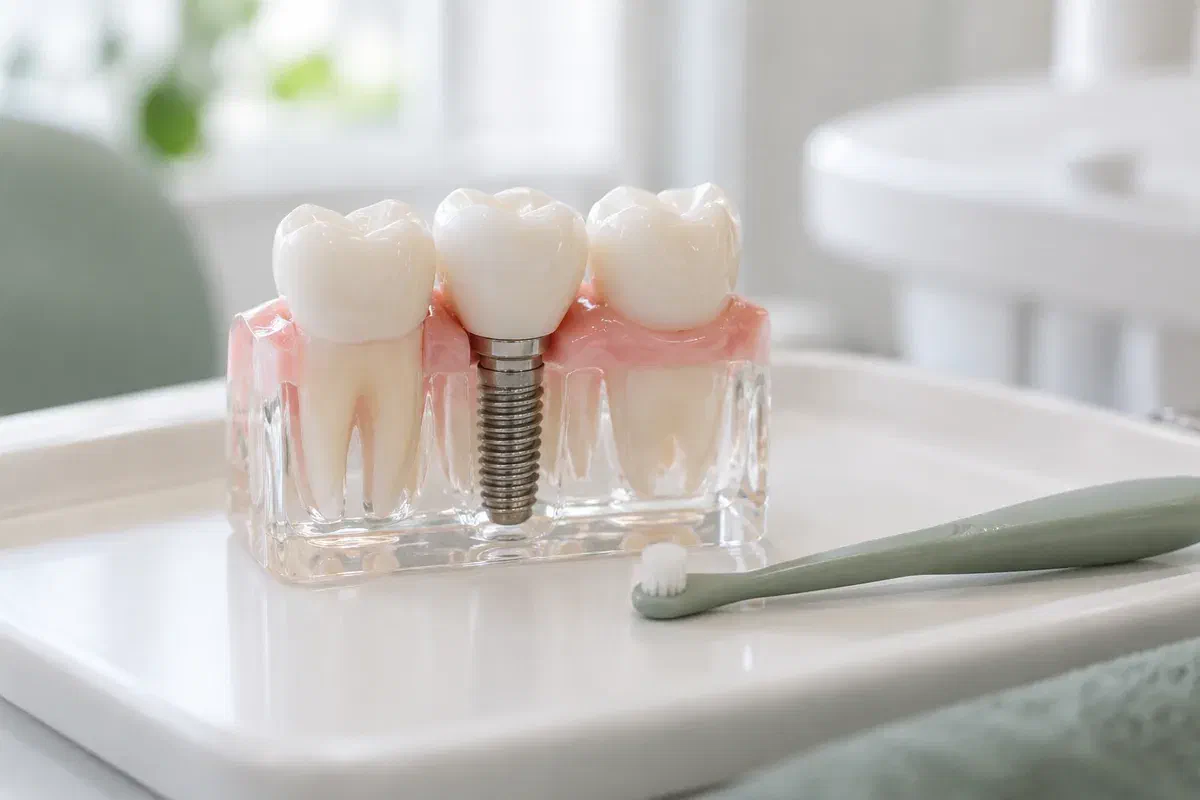
What the dentist wants to know is whether inflammation is present and how deep it goes. In peri-implant mucositis, it is confined to the gum. In peri-implantitis, the bone that anchors the implant is affected too. Symptoms feel much the same either way, so the answer comes from the examination, previous records, and imaging where it serves a purpose.
People from Puslinch can bring the products they have been using to our Milton office, along with what they know about their implant. Our Bronte Street team will look at the site, tell you what is likely going on, and help you build a home routine that supports the tissue rather than just masking how it feels.
Home remedies can hide the very signs the examination relies on. Describe what you have noticed, where, how often, and for how long, and tell us what you have tried.
If the same implant keeps bleeding during gentle cleaning even after switching products, have it checked. Mention any soreness and what you have changed. Bleeding by itself says nothing definite about the bone.
Puffiness, colour change, an altered gum line, or a persistent bad taste should be discussed. An examination considers inflammation and other possible causes instead of assuming they all share one.
When cleaning one area hurts, it is natural to skip it. Show us where, so we can look at whether the method, the tools, or the shape of the restoration is causing the difficulty.
If swelling develops quickly, there is discharge, pain keeps increasing, or the implant seems to move, call us rather than trying another product. Explain what you are seeing, and the team will decide how soon you should be examined.
Swapping products from week to week gives no clear picture. Clinical records from regular reviews do. They let the team see whether bleeding, measurements, and access around the implant are improving, steady, or slipping. Ask what is recorded and how today compares with your previous visit.
Your plan considers your own circumstances, such as earlier gum disease, smoking, health conditions, and how easily you can clean. Those factors shape the support you are given. They are not a reason to wait until a remedy fails before booking.
Patient information: American Academy of Periodontology — peri-implant diseases
Some reviews reveal findings that need a defined treatment plan rather than more home experimenting. You should understand the concern, the proposal, and how progress will be checked.
A site that stays difficult to clean may need a different interdental aid, a revised angle, or an assessment of the crown’s contour. The right tool usually does more than a stronger product.
Natural teeth and other implants need care too. A coordinated plan avoids concentrating on the sore implant while a problem elsewhere goes unaddressed.
You should finish the visit knowing what is happening at the implant and why any next step is proposed. Tell us if the area stings or earlier examinations were uncomfortable.
We ask about the implant’s history, past inflammation or treatment, health and medication changes, and the rinses or pastes you have been using. All of it helps us interpret what we see.
The clinician examines the gum and may record gentle measurements. Bleeding, ease of cleaning, and the tissue’s appearance are considered together. Imaging may be suggested if it would clarify bone support.
We tell you whether findings point to routine maintenance, targeted treatment, or further investigation. Any cleaning, added care, or referral should come with a clear reason and an estimate where relevant.
We agree which products and tools to keep, which to drop, and when to check the response. Often the result is a shorter routine than the one you started with. Follow-up after treatment may have a different purpose from regular maintenance.
The most effective routine is usually simpler than people expect. Ask us to demonstrate it on your own implant, and mention anything that makes it difficult to follow.
Use the soft brush and interdental aids recommended for your implant. Avoid harsh pastes or hard bristles unless advised, never force a tool into a tight space, and resist scrubbing when the gum bleeds.
Keep a brief record of bleeding, swelling, tenderness, or an unpleasant taste. Contact us if it carries on or worsens. Feeling better after a rinse does not mean the tissue is healthy.
Tell us about new medicines, diabetes care, smoking, or changes in your ability to clean, since each can alter how the gum responds. We can talk about support for those factors. Keep taking anything your doctor has prescribed unless they suggest a change.
Ask about products, symptoms, measurements, or follow-up. Your implant and its history matter more than advice written for everyone.
Visit our Bronte Street clinic in Milton with the rinses and pastes you have been using. We will examine the gum around your implant, explain what we find, and agree on a simpler routine and a review date.
When booking, mention any soreness, bleeding, or swelling near the implant and which products you have tried.
