

Illustrative consultation about maintaining gum health around a dental implant
Restorative Dentistry

Implant Gum-Care Maintenance in Rockwood

Gentle probing, a few numbers called out, maybe an X-ray: implant reviews can feel mysterious from the chair. For people travelling from Rockwood, we explain what each check is for, what your findings mean, and how they shape the maintenance plan for your implant.

Making sense of the checks

What are those numbers, anyway?

You lie back, a thin instrument slides gently along the gum around your implant, and someone reads out a string of figures. Then you are asked if an X-ray would be all right. It is reasonable to wonder what all of that is for. Each step answers a particular question about the tissue that holds your implant in place.

The central question is whether there is inflammation and, if so, whether it is limited to the gum or has begun to affect bone. Soft-tissue inflammation alone is known as peri-implant mucositis. When supporting bone is also being lost, it is called peri-implantitis. Neither can be identified from how the area looks or feels, which is why measurements, earlier records, and selective imaging matter.

From Rockwood, people sometimes arrive at our Milton office with a printout or a set of figures from another clinic. Bring them. Our Bronte Street team will talk through your implant’s history, carry out the checks, and then explain the results in plain language, so you know whether the site is steady, needs treatment, or warrants a closer look.

Have your implant findings explained
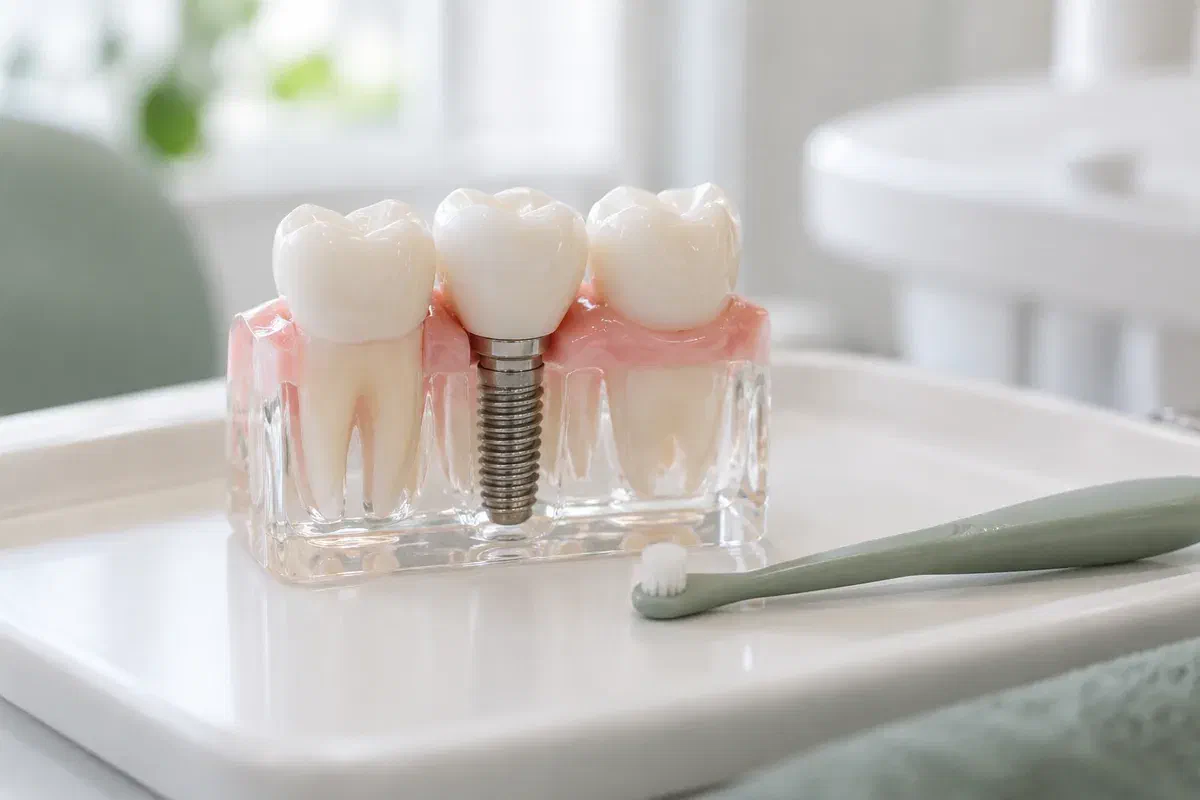
Implant teaching model beside a small brush used to illustrate targeted cleaning
Things to report before the checks

Your observations come first.

Measurements are useful, but they make most sense alongside what you have experienced. Rather than naming a condition, tell us where you notice a change, how often, and how long it has been happening.

Blood on the brush at one implant

Repeated bleeding during gentle cleaning at a single site is a clear reason to mention it. Say whether the area is tender and if your tools have changed. Bleeding is noted during the examination, but it cannot on its own indicate bone levels.

A gum margin that looks different

Redness, swelling, a change in outline, or a stubborn bad taste is worth describing. The dentist will interpret it with the other findings and consider causes beyond inflammation too.

Difficulty reaching one area

Trouble cleaning a particular side often shows up in the findings later. Point it out now, so both the technique and the shape of the restoration can be looked at.

If you notice fresh swelling, discharge, pain that keeps getting worse, or any movement of the implant, call before your planned review. Explain the symptoms, and we will arrange an assessment that fits them.

Why the numbers matter over time

A reading means most when it can be compared.

One set of measurements is a snapshot. The real value comes from comparing them with earlier visits. If readings, bleeding, and the X-ray picture stay consistent, that supports stability; if they shift, it is a prompt to look harder. Ask the team which findings are being followed and how today’s compare with the last.

The interpretation also depends on you. Past gum disease, smoking, health conditions, and difficulties cleaning all affect what a finding means and what support makes sense. None of these should discourage you from booking, even if it has been a while or your routine has slipped.

Patient information: American Academy of Periodontology — peri-implant diseases

See when findings point to treatment

Changes in readings or imaging may mean monitoring alone is no longer enough. You should understand what the concern is, what is proposed, and which measurements will show whether it is working.

Connect readings to cleaning access

Persistent findings at one spot often relate to how easily it can be cleaned. The team may adjust instructions, suggest other aids, or assess the restoration’s contour.

Track the whole mouth

Natural teeth and other implants are measured and monitored too. Looking at everything together keeps one site in context and helps catch problems elsewhere.

The appointment, explained

What each step is checking

By the end, you should know what the findings say about your implant and what the next step is meant to achieve. If probing has been uncomfortable before, tell us so we can be especially gentle.

  1. History: what has happened so far

    We ask when the implant was restored, about any previous inflammation or treatment, and about changes in health or medicines. Earlier records give us something to compare against.

  2. Measurements: how the gum is doing

    The clinician gently measures around the implant and notes any bleeding and how accessible the site is for cleaning. If bone support needs assessment, an X-ray may be recommended, with the reason explained.

  3. Interpretation: what it all means

    We tell you whether the results fit routine maintenance, targeted treatment, or further investigation. Proposed cleaning, care, or referral should come with a clear purpose and an estimate where relevant.

  4. Plan: when we will measure again

    We agree on home priorities and on when the next readings will be taken. A recheck after treatment can serve a different purpose from the long-term maintenance schedule.

Between measurements

Your home routine shows up in the next readings.

The findings at your next review partly reflect what happens at home. Ask us to demonstrate cleaning on your own implant, and tell us if anything practical gets in the way.

Use the method you were shown

Clean with the brush and interdental aids recommended for the gaps around your implant. Avoid forcing an oversized tool, and do not swap gentle technique for hard scrubbing when there is bleeding.

Keep a simple log

Jot down when bleeding, swelling, soreness, or an unpleasant taste occurs. It adds context to the measurements. Call if changes continue or worsen, since mild discomfort is not a sign of health.

Let us know about health changes

New medicines, diabetes management, smoking, or new difficulties cleaning can all affect findings. We can discuss support with these, and you should stay on prescribed medical care unless your doctor says otherwise.

What the results suggest

Numbers that hold, numbers that rise, and what follows

Supportive maintenance and active disease treatment are related but different. The dentist should explain which situation your findings fit, and what information is still missing, before suggesting more care.

Findings are stable

Stay on maintenance

Continue a personal schedule of reviews and home care. Discuss the interval, which readings are being watched, and the symptoms that should bring you in sooner.

Soft-tissue findings have changed

Treat the inflamed gum

Treatment may include professional cleaning, changes to home routine, and addressing contributing factors. Follow-up readings show whether the tissue has responded.

Bone support or persistent disease is a concern

Investigate further

More extensive disease calls for its own plan and may need a specialist. Ask about the diagnosis, options, their limits, and how follow-up will be measured.

Patient information: European Federation of Periodontology — peri-implant disease treatment

Rockwood asks

Questions about probing, readings, and X-rays

Ask about what is measured, why, and what it means for you. Your implant’s own findings matter far more than comparisons with someone else’s numbers.

(905) 876-4488
Does probing around an implant hurt or damage it?
It is done gently and is a standard part of monitoring. Some tenderness is possible if the gum is inflamed. Tell the clinician if it is uncomfortable so they can adjust.
What is a normal measurement around an implant?
There is no single number that suits everyone. Readings are interpreted against your own earlier findings, bleeding, and imaging. Changes over time often say more than one figure.
How often will my implant be X-rayed?
That varies from person to person. Imaging is guided by clinical need, your records, and the question being asked. Ask why an image is recommended and what it is meant to show.
Can the X-ray tell whether my implant gum is inflamed?
Not directly. An X-ray shows bone, not gum inflammation. That is why it is combined with the clinical examination, measurements, and bleeding to build a full picture.
Should I worry if one reading is higher than last time?
Not necessarily, but it is worth discussing. The team will consider it alongside bleeding, other findings, and your history, and explain whether it calls for monitoring or action.
If my readings do not improve after treatment, what then?
The area is reassessed. New readings are compared with the old ones, and the team asks why the site has not responded: access, health factors, or a problem deeper than first thought. Further treatment or a specialist opinion may follow.
Implant reviews for Rockwood

Clear findings, clearly explained

Come to our Bronte Street clinic in Milton for an implant gum review where every check comes with an explanation. We will listen to what you have noticed, share what the measurements show, and agree on home priorities and timing.

When you book, mention any bleeding, swelling, or tenderness near the implant, and bring earlier readings or X-rays if you have them.

Visit Milton Dental Clinic
Unit 1, 342 Bronte St. S, Milton, ON L9T 5B7
Get directions Clinic hours
Monday–Thursday
11am–7pm
Friday–Sunday
By appointment only

Areas we serve

  • Milton
  • Oakville
  • Mississauga
  • Georgetown
  • Halton Hills
  • Acton
  • Campbellville
  • Brampton
  • Burlington
  • Puslinch
  • Rockwood
  • Erin
  • Caledon
  • Etobicoke
  • Old Milton
  • Bronte Meadows
  • Timberlea
  • Dorset Park
  • Dempsey
  • Clarke
  • Beaty
  • Coates
  • Harrison
  • Scott
  • Willmott
  • Ford
  • Bowes
  • Cobden
  • Walker
  • Mountain View
  • Milton Heights
  • Hawthorne Village
  • Valley View
  • Fallingbrook
  • Nassagaweya
  • Trafalgar
  • Esquesing
  • Nelson
  • Brookville
  • Moffat
  • Glen Williams
  • Norval
  • Limehouse
  • Stewarttown
  • Ashgrove
  • Hornby
  • Silver Creek
  • Speyside
  • Scotch Block
  • North Oakville
  • River Oaks
  • Glen Abbey
  • West Oak Trails
  • Palermo
  • Bronte Creek
  • College Park
  • Joshua Creek
  • Uptown Core
  • Preserve
  • Iroquois Ridge
  • Lisgar
  • Meadowvale
  • Meadowvale Village
  • Churchill Meadows
  • Erin Mills
  • Central Erin Mills
  • Streetsville
  • East Credit
  • Creditview
  • Heartland
  • Sheridan
  • Mount Pleasant
  • Credit Valley
  • Huttonville
  • Churchville
  • Springbrook
  • Northwest Brampton
  • Bram West
  • Fletcher's Meadow
  • Fletcher's Creek South
  • Alton Village
  • Orchard
  • Millcroft
  • Headon Forest
  • Tansley
  • Brant Hills
  • Tyandaga
  • Kilbride
  • Lowville
  • Aberfoyle
  • Morriston
  • Arkell
  • Hillsburgh
  • Freelton
  • Carlisle
  • Waterdown
  • Flamborough
  • Mountsberg

How can we help?

Milton Dental Clinic

Have a question about your smile? Choose the option that works best for you.

For urgent dental concerns, please call.
Messages are reviewed during clinic hours.