Questions about which aid to use
Spaces around implant work can vary from one tooth to the next. Bring the aids you own and explain how each one performs, so guidance can consider access, comfort, and the shape of the restoration.


Travelling in from Etobicoke means each implant hygiene visit should be well planned. We aim to combine careful cleaning, any needed checks, and practical home-care coaching for your crown, bridge, or overdenture into appointments that make the trip worthwhile.
If your implant maintenance means a longer drive, planning ahead becomes part of good care. Telling us in advance what restoration you have, whether a crown, a bridge, or an implant-retained denture, helps the team set aside enough time for cleaning, assessment, and coaching in a single sitting where that’s appropriate.
Inside the appointment, the work is the same careful process anyone receives. The tissue around each implant is reviewed, deposits are located, and you’re asked where cleaning gets difficult. Should a finding need the dentist’s examination or a separate plan, you will hear about it directly, along with what it might mean for future visits.
Coming from Etobicoke, it pays to arrive prepared. Write down any symptoms and questions, bring the brushes and aids from your bathroom, and be ready to show how you use them. Practising a new technique before leaving matters even more when a quick return visit isn’t simple.
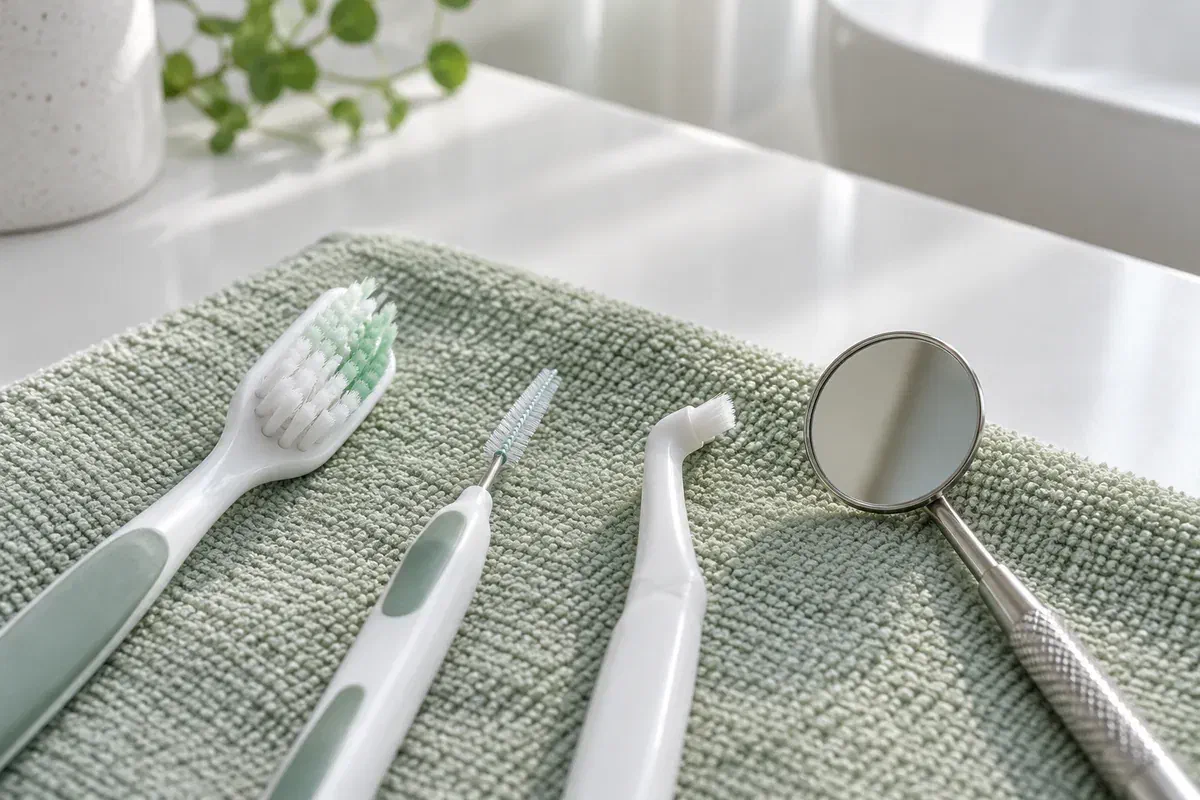
Knowing your concerns ahead of time helps the team allow suitable time. A brush that won’t pass, the underside of a bridge you can’t see, or a sore spot are all worth describing on the phone and again in the chair.
Spaces around implant work can vary from one tooth to the next. Bring the aids you own and explain how each one performs, so guidance can consider access, comfort, and the shape of the restoration.
Calculus needs professional removal and a conversation about why that spot collects it. Avoid working at it with sharp household items or trying a scaling tool at home.
A longer visit may suit your travel plans, but tell the team about jaw fatigue, anxiety, sensitivity, or gagging. Breaks and comfort measures can be agreed in advance so the time stays manageable.
Sudden swelling, significant pain, or bleeding that won’t stop may need prompt care, and a closer urgent-care option can make sense. Call first to describe looseness or new symptoms so the team can advise on the right next step.
Each maintenance appointment allows deposits to be removed with suitable methods and shows whether your cleaning reaches the right surfaces. It’s also your chance to ask about products and technique while looking at your own implant work, which serves you far better than a demonstration on a model that doesn’t resemble your mouth.
Because visits may be spaced out, the routine you keep between them carries real weight. Professional care can’t keep making up for an area that’s never reached or a method too complex to manage. Aim to leave with suitable care completed, a routine that’s clear to you, and a plan for anything still unresolved.
Patient information: European Federation of Periodontology — implant care and prevention
Ask to have each recommended aid demonstrated and to show the team your own technique. You want reliable access without forcing a brush, overlooking an important area, or building a routine you won’t follow.
Gum findings shape your care plan. If an area bleeds or stays tender, ask what it suggests and whether it needs monitoring, further assessment, or specific treatment, and how that fits with your travel.
Reduced vision, a weaker grip, or changes in who helps at home can affect cleaning. Mention them so the team can suggest a simpler method and an appropriate level of professional support.
What the visit includes depends on your restoration and findings. Ask whether an examination can be arranged alongside the cleaning and how sensitive spots will be handled, so you know what to expect before travelling.
The team reviews your health details, implant history, and routine. Let them know about repairs, attachment changes, or instructions from another clinician so time can be planned around them.
Implant sites and other areas are checked as appropriate. This identifies where deposits gather, whether your routine reaches them, and whether a further assessment should be scheduled.
The clinician selects techniques suited to the surfaces involved. Mention discomfort as it arises and use your agreed pause signal; every appointment is planned for the individual.
Try each recommended aid while the team checks your technique. Before leaving, confirm products, focus areas, and your next date, along with any separate follow-up that needs arranging.
Use the guidance given for your restoration. If a technique becomes difficult at home, phone the clinic; a quick call can often sort out a problem without an extra trip, and saves forcing the aid or skipping the spot.
Each cleaning aid is chosen for a particular gap and path. Larger doesn’t equal better, and what works under one bridge may need another approach around a different implant.
Implants and your own teeth are built differently but share the same mouth. Continue fluoride toothpaste and normal tooth care alongside the implant-specific techniques you practised.
Ask what’s normal after your care. If soreness or bleeding persists or worsens, contact the team for advice, and keep any reassessment rather than holding off until your next routine visit.
Practical details often make or break a routine. Ask for a second demonstration, request written instructions to take home, or explain why earlier advice hasn’t worked.
Call our Bronte Street practice to set up an implant hygiene appointment organised around your travel. Bring your current cleaning aids and a list of questions so the visit can address everything in one go where possible.
Describe your crown, bridge, or overdenture on the phone, plus any bleeding, discomfort, or movement, so we can allow enough time.
