Unclear which aid fits each space
Gaps around implants and around natural teeth affected by past gum disease can vary widely. Bring the aids you own and describe how each performs, so advice can reflect access, comfort, and your restoration’s form.


Lost a tooth to gum disease and now have an implant in its place? Implant hygiene care for people from Georgetown keeps a close eye on the tissue, cleans the restoration thoroughly, and builds a routine that respects your history.
Many implants replace teeth that were lost to gum disease. That background matters, because a past of periodontal problems is generally considered a reason for careful, regular maintenance around implants too. Whether the restoration is one crown, a span of bridge, or an overdenture, its edges and undersides need consistent attention.
Your visit is therefore about more than making the visible tooth look clean. The team assesses the tissue around each implant, looks for deposits, and checks the natural teeth that remain. They will ask where you struggle. If something suggests the dentist should examine further or a separate treatment plan is needed, they should say so instead of quietly carrying on.
From Georgetown, it’s worth bringing whatever you know about your earlier gum treatment, even if it was years ago at another office. Describe your present routine honestly, bring the aids you use, and point to the places where a brush catches or the gum feels tender. Practise any suggested change before you go home.
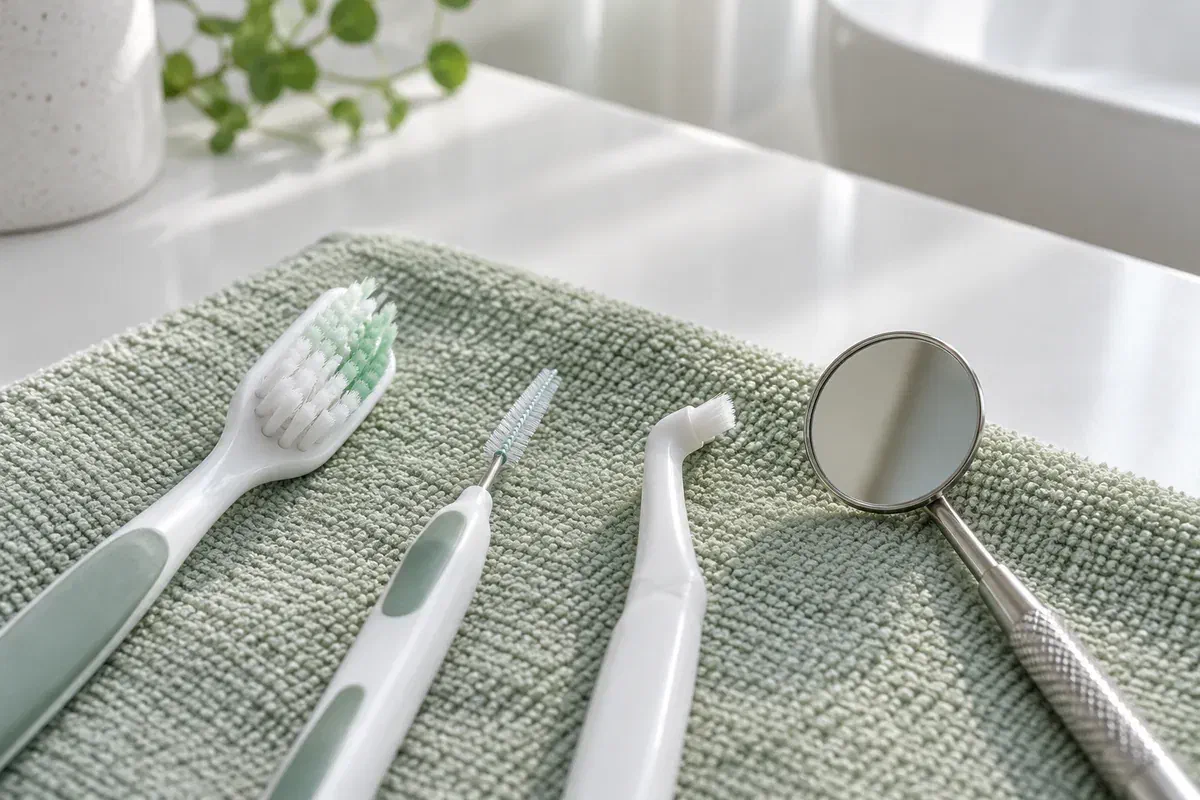
With a history of gum problems, details matter. Tell the team about the area that bleeds sometimes, the bridge that traps food, or the brush that never seems to fit, rather than hoping it will sort itself out.
Gaps around implants and around natural teeth affected by past gum disease can vary widely. Bring the aids you own and describe how each performs, so advice can reflect access, comfort, and your restoration’s form.
Some people collect hard deposits faster than others. These need professional removal and a discussion of why they gather where they do. Avoid scraping with metal tools or buying a home scaler.
If earlier gum treatment left you wary, say so. Mention sensitivity, anxiety, jaw tiredness, or gagging, and agree on breaks and comfort measures before care begins so the visit is planned around them.
Bleeding that keeps returning, swelling, new pain, or any movement of the restoration should be assessed. Describe these when booking so a suitable appointment can be made.
Regular professional care makes it possible to remove deposits appropriately and to see whether your home routine reaches the surfaces it needs to. With a history of gum disease, that check-in has extra value. It also gives you time to ask about technique and products while the clinician points to your actual restoration and teeth.
Day-to-day cleaning is still the foundation. Professional visits can’t indefinitely make up for a surface that’s never reached or a routine that has become too hard to keep. By the end of the visit, the cleaning should be done, the home method should make sense to you, and any open question should have a named next step.
Patient information: European Federation of Periodontology — implant care and prevention
Ask the team to demonstrate the approach they suggest and to watch you try it. The aim is to reach each surface without forcing a brush, overlooking important areas, or complicating the routine.
Changes in the gum around implants and teeth guide care decisions. If an area bleeds or remains tender, ask what that finding suggests and whether it needs watching, further assessment, or specific treatment.
Changes in eyesight, grip, coordination, or available help can make cleaning harder. Discuss them so the team can propose a manageable method and appropriate support rather than repeating old instructions.
The steps depend on your restoration and what the team observes. Ask what’s included, whether an examination or X-rays are being considered, and how tender areas will be handled.
The team reviews your health details, past periodontal treatment, implant history, and routine. Mention recent repairs, changes in attachments, or instructions from a periodontist or other clinician.
The implant sites and natural teeth are checked as appropriate. This helps show where deposits form, whether your routine reaches them, and whether the dentist should arrange further assessment.
The clinician selects instruments and techniques for implant restorations and natural teeth. Mention discomfort as it happens and use the agreed pause signal; your care is planned for you specifically.
Practise the recommended aids while the team checks your technique. Confirm products, priority areas, and when to return, along with any separate follow-up for findings from this visit.
Follow the advice given for your restoration and your gums. If a technique is hard to manage at home, contact the clinic for help instead of scrubbing harder or giving up on the area.
Each aid suits a particular space and path. A larger brush isn’t necessarily more effective, and what works beneath one bridge may need adjusting around another implant.
Your own teeth and your implants are structured differently, and both deserve attention. Keep using fluoride toothpaste and your tooth-cleaning routine alongside the implant methods shown.
Ask what to expect after your care. Contact the team about bleeding or tenderness that persists or returns, and attend any reassessment instead of waiting for routine maintenance.
Little details often decide whether a routine lasts. Ask for a demonstration, ask the team to explain a finding again, or describe why earlier advice didn’t stick.
Set up a visit at our Bronte Street practice for careful implant cleaning and guidance that takes your gum history into account. Bring your current aids and any records of past treatment so the time is well spent.
Let us know about your implant restorations, any past gum treatment, and whether you have noticed bleeding, discomfort, or movement.
