Illustrative patient and hygienist discussing cleaning tools for an implant restoration
Restorative Dentistry

Implant Hygiene Appointments in Halton Hills

Helping a parent or partner look after their implants? Implant hygiene appointments for Halton Hills households can include the person who helps at home, so professional cleaning comes with a routine both of you understand.

When cleaning becomes a shared job

Two sets of hands, one clear routine.

Sometimes the person with the implants isn’t the only one doing the cleaning. Stiff fingers, a change in eyesight, or a recent illness can mean a spouse, adult child, or caregiver starts helping. Cleaning around a crown, beneath a bridge, or under the attachments of an overdenture is tricky enough for the wearer, let alone someone guiding a brush from outside.

In the appointment, the team assesses the gum around each implant, finds where plaque or tartar is collecting, and asks what is proving hard. Anything needing the dentist’s closer examination or a separate treatment plan should be explained in plain terms, so both of you know it is more than a cleaning matter.

For families in Halton Hills, from Georgetown and Acton to Glen Williams, it can help for the helper to come along. Bring the aids currently in use, show how cleaning is done at home, and ask to try any new approach together. A method works best when the person actually holding the brush has practised it.

Plan a visit for you both
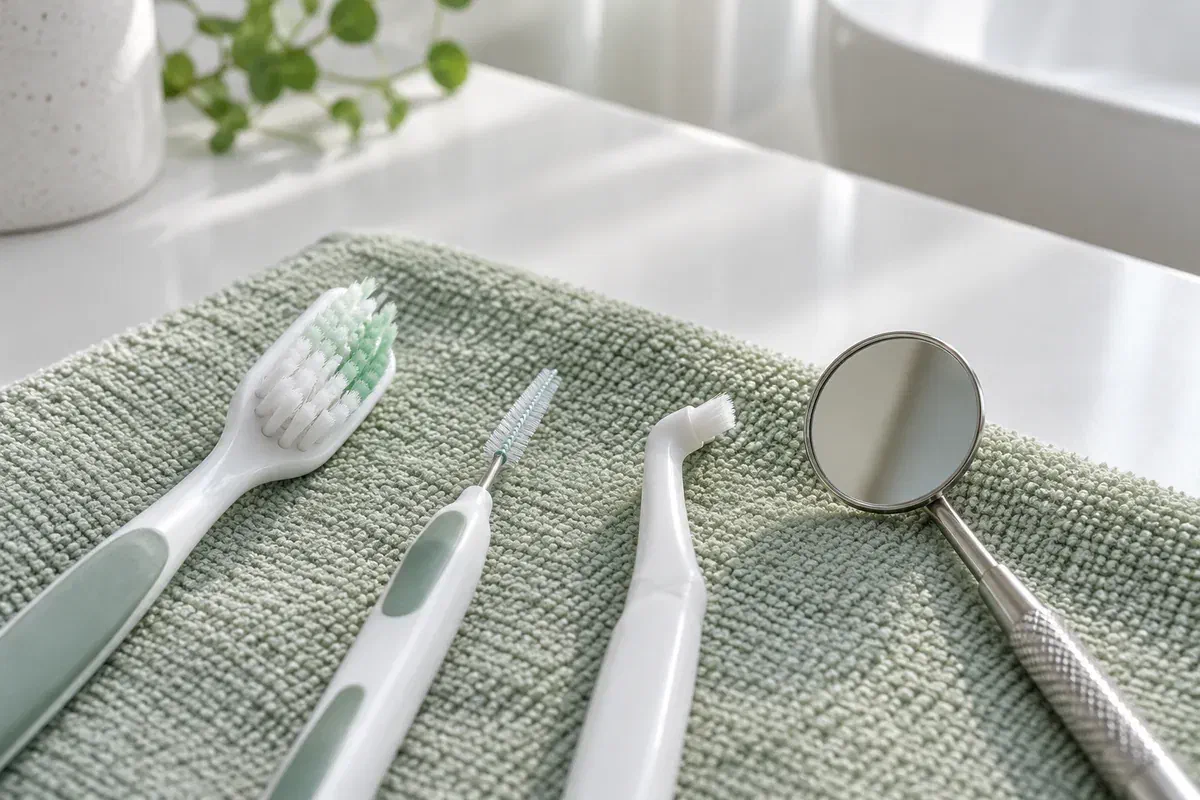
Soft toothbrush, interdental brush, single-tuft brush and dental mirror on a pale towel
Helpful to tell us up front

What makes cleaning harder at home?

The more specific you are, the more useful the advice. Mention the brush that won’t reach, the bridge nobody can see beneath, or the tender spot that makes the person flinch.

Neither of you is sure which aid to use

Different spaces may need different tools, and some are easier to use on someone else. Bring what you have and explain what happens, so advice reflects reach, comfort, and the restoration’s shape.


Deposits building up despite daily effort

Hard buildup needs professional removal and a look at why it collects. Please don’t try to scrape it away with household objects or a scaler bought online.

Appointments are physically demanding

Let the team know about mobility concerns, anxiety, tender areas, difficulty keeping the mouth open, or gagging. Breaks and comfort measures can be planned ahead so the visit suits the person.

A restoration that feels loose, swelling, recurring bleeding, or new pain needs assessment. Mention any of these when booking so the right visit can be arranged.

What these visits achieve

Professional cleaning plus a routine that can be shared.

Hygiene care in the chair lets deposits be cleared with suitable techniques and reveals whether the home routine reaches the areas it should. It is also the moment to ask questions about aids and methods while looking at the actual restoration, rather than relying on instructions that don’t fit this particular mouth.

Daily care at home remains central. Professional appointments can’t forever offset an area nobody can reach or a routine too complicated to keep up. A useful result is appropriate professional care, a method both of you understand, and a clear step for any concern still open.

Patient information: European Federation of Periodontology — implant care and prevention

Aids that a helper can handle

Ask the team to demonstrate the method they recommend and to watch whoever will be doing the cleaning. The goal is good access without forcing a brush, missing key surfaces, or adding unnecessary steps.

Understanding what the gum shows

The tissue around an implant guides decisions about care. If a spot bleeds or stays sore, ask what that means and whether it needs monitoring, more assessment, or its own treatment plan.

Planning for changing needs

Declining vision, reduced grip, poorer coordination, or new caregiver arrangements can all affect cleaning. Discuss them openly so the team can suggest a manageable method and the right level of professional support.

What the visit involves

Review, examine, clean, and teach.

How care proceeds depends on the restoration and the findings. Ask what’s included, whether a separate examination is required, and how sensitive areas will be managed.

  1. Share health details and the home routine

    The team reviews medical information, implant history, and how cleaning is done at home. Mention medications, recent repairs, attachment changes, or another clinician’s instructions.

  2. Check the tissue and what can be reached

    Implant areas and other parts of the mouth are examined as appropriate. This shows where deposits form, whether the routine reaches them, and whether further dental assessment is needed.

  3. Clean around the restoration

    The clinician uses instruments and methods suited to the surfaces. Speak up about discomfort right away and use the agreed pause signal; each appointment is adapted to the individual.

  4. Practise together and plan the return

    The patient, and the helper if present, try the recommended aids while the team checks technique. Confirm products, focus areas, and the next visit, plus any separate follow-up.

Back home in Halton Hills

Short, steady, and easy to hand over.

Follow the guidance given for this restoration. If a technique turns out to be awkward at home, call the clinic for clarification rather than forcing the aid or letting that area slide.

Use the sizes the team chose

Each aid suits a particular gap and direction. A bigger brush doesn’t mean a better clean, and a tool used beneath one bridge may need a different technique around another implant.

Include the natural teeth

Natural teeth and implant restorations are structured differently. Keep up fluoride toothpaste and regular tooth care as well as the implant-specific methods practised at the visit.

Watch for symptoms that linger

Ask what to expect after care. Contact the team about soreness or bleeding that continues or worsens, and keep any reassessment rather than waiting for the next routine appointment.

Finding the right appointment

Routine upkeep or something more?

A hygiene appointment may bring a concern to light that can’t be fully dealt with in the same visit. The team should explain what is maintenance and what needs a separate assessment.

For regular professional upkeep

Ongoing implant cleaning

Appropriate cleaning and coaching help maintain an established restoration. Visit intervals and focus areas depend on individual needs and previous findings.

When gum changes need a closer look

Evaluation of inflamed gums

Gums that keep bleeding, look puffy, or change in other ways may need a diagnosis followed by a treatment plan. Routine cleaning isn’t a substitute for investigating concerns about the support around an implant.

When something is loose or damaged

Repair or attachment review

A crown that moves, a worn denture attachment, or a cracked bridge may need a repair plan. Describe the mechanical problem so it can be checked, instead of assuming it’s about cleaning.

Halton Hills caregiver questions

Helping someone else care for their implants.

Practical details decide whether a routine works for two people. Ask for another demonstration, request notes, or explain why previous advice was hard to manage.

(905) 876-4488
Can I come into the appointment to help my parent?
Ask when booking. With the patient’s agreement, a family member or caregiver may be able to join part of the visit to watch the demonstration, learn the routine, and ask their own questions. Seeing the technique in person is often easier than following a description later.
Are there aids that are easier to use on someone else’s mouth?
Some aids may be easier for a helper to control, such as designs with longer or thicker handles. Ask the team to demonstrate options and to watch you try them, so the chosen method is comfortable for the wearer and still reaches the important surfaces.
How do we clean an overdenture for someone with limited hand strength?
The team can suggest techniques and aids that are easier to grip and handle. Bring the denture-care products you use at home, and ask to practise removing, cleaning, and replacing the appliance, as well as cleaning the attachments that stay in the mouth.
Should medications be mentioned at an implant hygiene visit?
Yes. Some medications and health conditions can affect the mouth, the gums, or how care is planned. Bring an up-to-date list, including recent changes, so the team can take it into account and ask the dentist if anything needs coordinating with a physician.
What signs should a caregiver watch for between visits?
Look out for bleeding, swelling, new discomfort, food trapping that wasn’t there before, or a restoration that seems loose. Call the clinic to describe any of these so the team can advise on next steps rather than waiting for the next scheduled cleaning.
Can implant cleanings be scheduled alongside other family appointments?
The clinic can try to coordinate bookings, depending on availability and each person’s needs. Mention it when you call, and let the team know how much help the implant wearer needs getting in and settled, so enough time is allowed.
Implant hygiene for Halton Hills

Bring the helper along.

Arrange a visit with our Bronte Street team for careful implant cleaning and a home routine that both the wearer and helper can manage. Bring the aids you use so advice can focus on what is hardest.

Let us know about the implant restorations, any mobility needs, and whether bleeding, soreness, or movement has been noticed.

Visit Milton Dental Clinic
Unit 1, 342 Bronte St. S, Milton, ON L9T 5B7
Get directions Clinic hours
Monday–Thursday
11am–7pm
Friday–Sunday
By appointment only

Areas we serve

  • Milton
  • Oakville
  • Mississauga
  • Georgetown
  • Halton Hills
  • Acton
  • Campbellville
  • Brampton
  • Burlington
  • Puslinch
  • Rockwood
  • Erin
  • Caledon
  • Etobicoke
  • Old Milton
  • Bronte Meadows
  • Timberlea
  • Dorset Park
  • Dempsey
  • Clarke
  • Beaty
  • Coates
  • Harrison
  • Scott
  • Willmott
  • Ford
  • Bowes
  • Cobden
  • Walker
  • Mountain View
  • Milton Heights
  • Hawthorne Village
  • Valley View
  • Fallingbrook
  • Nassagaweya
  • Trafalgar
  • Esquesing
  • Nelson
  • Brookville
  • Moffat
  • Glen Williams
  • Norval
  • Limehouse
  • Stewarttown
  • Ashgrove
  • Hornby
  • Silver Creek
  • Speyside
  • Scotch Block
  • North Oakville
  • River Oaks
  • Glen Abbey
  • West Oak Trails
  • Palermo
  • Bronte Creek
  • College Park
  • Joshua Creek
  • Uptown Core
  • Preserve
  • Iroquois Ridge
  • Lisgar
  • Meadowvale
  • Meadowvale Village
  • Churchill Meadows
  • Erin Mills
  • Central Erin Mills
  • Streetsville
  • East Credit
  • Creditview
  • Heartland
  • Sheridan
  • Mount Pleasant
  • Credit Valley
  • Huttonville
  • Churchville
  • Springbrook
  • Northwest Brampton
  • Bram West
  • Fletcher's Meadow
  • Fletcher's Creek South
  • Alton Village
  • Orchard
  • Millcroft
  • Headon Forest
  • Tansley
  • Brant Hills
  • Tyandaga
  • Kilbride
  • Lowville
  • Aberfoyle
  • Morriston
  • Arkell
  • Hillsburgh
  • Freelton
  • Carlisle
  • Waterdown
  • Flamborough
  • Mountsberg

How can we help?

Milton Dental Clinic

Have a question about your smile? Choose the option that works best for you.

For urgent dental concerns, please call.
Messages are reviewed during clinic hours.