The aisle of cleaning aids is overwhelming
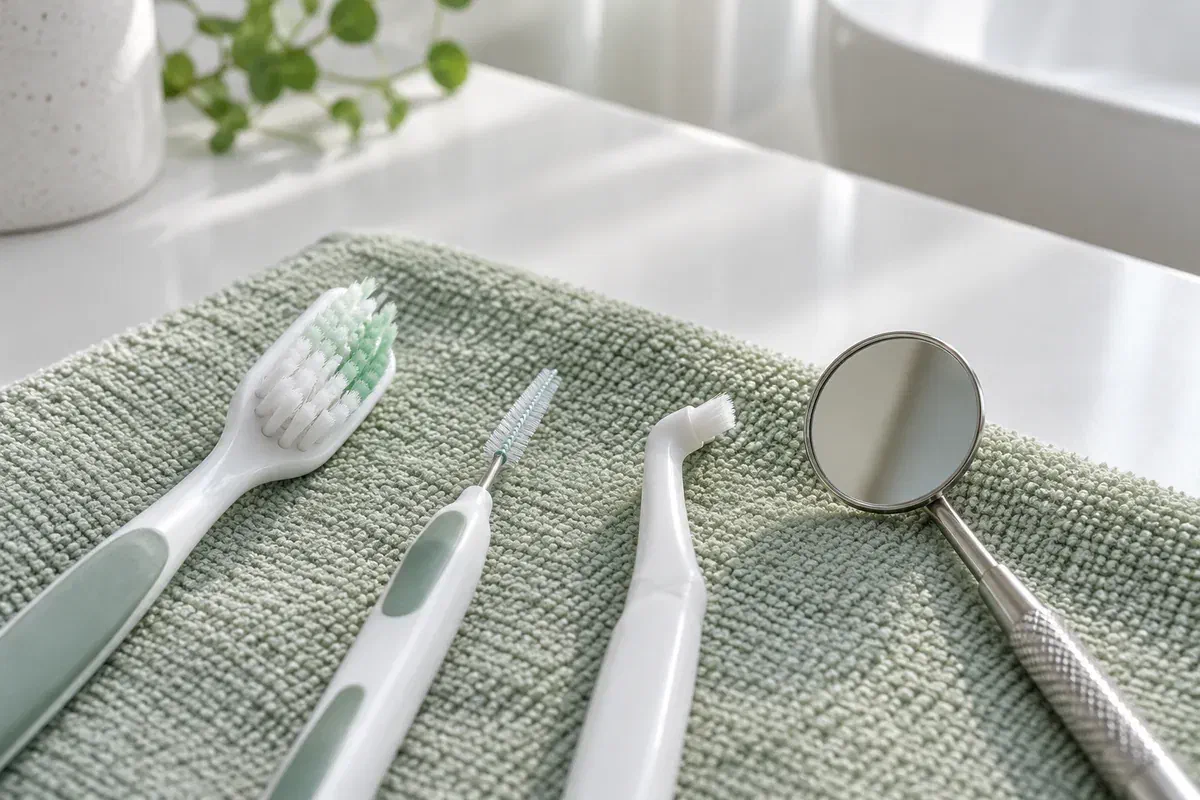
With so many brushes and threaders available, choosing can feel like guesswork. Bring the ones you own and say how they behave, so advice can take account of reach, comfort, and your restoration’s profile.


How is cleaning around an implant different from a regular checkup cleaning? For anyone coming from Mississauga, our implant hygiene visits explain the difference in your own mouth, then leave you with a home method built for your restoration.
From the outside, an implant hygiene appointment looks like any other cleaning. The difference is in the focus. Restorations attached to implants have contours, joins, and undersides that natural teeth do not, and the instruments, angles, and coaching are chosen with those features in mind, whether you have one crown, a bridge, or an overdenture.
Expect the team to spend time on assessment as well as cleaning. They look at the gum around each implant, see where deposits are settling, and ask about the places that give you trouble. When a finding needs the dentist to examine it or calls for a separate plan, you should be told so directly instead of having it absorbed into maintenance.
Coming in from Meadowvale, Churchill Meadows, or elsewhere in Mississauga, you can make the visit work harder by preparing a little. Jot down what your routine involves on a busy weeknight, pack the aids you use, and be ready to show where floss frays or a brush won’t pass. You can practise any new step before leaving.
An exact description gets you exact help. Mention the gap that defeats every brush, the bridge you have never managed to clean beneath, or the gum that feels raw, before the appointment gets under way.
With so many brushes and threaders available, choosing can feel like guesswork. Bring the ones you own and say how they behave, so advice can take account of reach, comfort, and your restoration’s profile.
Calcified deposits need professional removal and some thought about why they form where they do. Avoid prodding at them with metal objects or trying an online scaling kit.
Say if you feel anxious, have tender areas, tire quickly with your mouth open, or gag easily. Agree on pauses and comfort options at the outset so the visit is arranged around them.
Any loosening, swelling, ongoing bleeding, or new discomfort near an implant should be examined. Describe the symptom when you call so the booking matches what you need.
Hygiene visits make it possible to clear deposits with suitable methods and to check whether your home care is reaching everything it should. They also give you a chance to talk through products and technique while the clinician shows you your real restoration, which is more practical than following a generic demonstration.
What happens at home matters just as much. No schedule of appointments can keep making up for a surface you never reach, or for a technique so complicated it gets skipped. The best outcome blends appropriate professional care, a routine you understand, and a clear plan for anything left unresolved.
Patient information: European Federation of Periodontology — implant care and prevention
Have the team demonstrate the approach they suggest, then try it while they watch. You want proper access without wedging, without leaving an important area untouched, and without an unnecessarily long routine.
How the gum looks around an implant guides the discussion about care. Where an area bleeds or stays tender, ask what it means and whether it needs monitoring, more assessment, or a particular treatment plan.
Changes to vision, dexterity, or the support available at home can affect cleaning. Bring them up so the team can suggest a workable method and suitable professional help rather than repeating outdated instructions.
How the visit runs depends on the restoration and what turns up. You can ask what it includes, whether an examination is booked separately, and how sensitive areas will be looked after.
Your medical details, implant history, and present routine are reviewed. Flag any recent repairs, changes to attachments, or instructions from another provider that might affect how care is approached.
The implant sites and, where appropriate, other areas are checked. The findings reveal where deposits gather, whether your cleaning gets there, and if further dental assessment is advisable.
Instruments and methods are selected for the surfaces in question. Mention discomfort straight away and use the pause signal you agreed; your appointment won’t necessarily match someone else’s.
Work through the recommended aids while the team checks your technique. Make sure you know which products to use, which areas deserve extra attention, and your return date, including separate follow-up for any finding.
Follow the advice you were given for your restoration. If a new technique becomes frustrating at home, ask the clinic for a quick clarification instead of forcing the aid or letting that spot go.
An aid is picked for a certain space and path. Going up a size won’t necessarily clean better, and a tool that suits one bridge may need a different technique around another implant.
Your own teeth and your implant work share a mouth but differ in structure. Continue fluoride toothpaste and your regular tooth care along with the implant-focused steps you practised.
Ask what is expected after your care. Reach out about symptoms that continue or worsen, and attend any reassessment you were booked for instead of leaving the issue for routine maintenance.
Little details often decide whether a routine sticks. Ask for a fresh demonstration, ask for something to be repeated, or explain why past advice hasn’t fitted your life.
Book at our Bronte Street practice for professional implant hygiene care and a routine that fits a busy week. Bring the aids you use and your questions so the guidance is focused on the areas you care about.
Share which implant restorations you have and whether you have noticed bleeding, soreness, or movement.
